Old Dogs, New Tricks
Teaching The Next Generation of Water Well Drillers
How can today’s drilling industry evolve? Foster the curiosity of tomorrow’s young and eager workforce.
Today’s water well drilling workforce is a small, yet mighty breed.
A multi-billion dollar annual industry across a variety of fields in the United States is propped up on just 8,500 companies with roughly 48,000 workers who specialize in this trade across the nation. To do the math, that equates to about 4.4 employees per company supporting an industry — and many of those workers are aging out.
Specifically, in the case of water well drilling, market data estimates that the total U.S. water well industry revenue as of year-end 2025 reached approximately $9.8 billion.
According to data from the U.S. Geological Survey, we’ve come along way from when the first artesian well was drilled just a few miles from Myrtle Beach, in Charleston, South Carolina in 1823. In the decades since, while technology and efficiency continue to meet demand, it’s been only a matter of time before either a new crop of eager, knowledgeable professionals enter the workforce before the drilling industry at its core suffers a crippling labor setback.
But the interest is there. Fleming College in Ontario, Canada is proof. As of the 2025 school year, Fleming has consistently fielded a vibrant student base and boasts a 92% graduation rate in eight different sectors of drilling. While historically, the field of drilling has seen workers move up the ranks from helper to seasoned professional outside of traditional classroom environments, more and more students are showing interest in getting hands-on learning to become leaders in the field.
“It’s not terribly hard to drill a hole, but I want to know why I’m drilling, why I’m blasting,” said Thomas Polyak, a 20-something first-year student at Fleming. “Understanding why you’re drilling the hole, and how to drill the hole properly … for whatever the application, that’s where it’s hard, but that’s what’s important, and what I’m excited to learn.”
From wonder to career
The trick is transferring that sense of wonder into a career that lasts for many of these prospective drillers, and doing that takes a variety of factors. Loyalty from the future of drilling comes from having clearly defined pathways for young industry professionals to aspire to.
From helper to lead driller, fostering those who enter the field with strong, technical, hands-on training in everything from rig operations and safety to understanding hydraulics is essential.
But it doesn’t stop there. In addition to enabling future drillers to take certification courses particularly in sectors where more and more innovation is happening, compensation is key and like any role in any profession should reflect the level of expertise required.
“My life has been drilling for the last three years, and I love it, personally I do love it,” said Jacob, a 20-something third-year student at Fleming, who is looking to get into horizontal directional drilling working on fiber optic cables and water lines. “I didn’t go into [drilling] originally, I went into forestry, but … being here and listening to professors talk about HDD, I was hooked from day one.”
And while it might appear that the current workforce across many of those aformentioned 8,400 companies might be too insular and tough for newbies to crack into, data suggests that the future of the industry would benefit from welcoming in this new wave with open arms.
“I just have a general love for it, Jacob said. “Honestly, I don’t know as much about the industry as I’d like to, but for me it’s just about getting my foot in the door and once I’m in there, learning from someone who’s been doing it and sharing what they know. I’m a student, but I think I’ll always have that student-like curiosity because there’s always something to know in this profession.”
Attracting young professionals like Polyak and Jacob is key to inspiring the next generation to evolve into the trade and be the ones to move it forward. These types of workers are also perfect for smaller companies, who can immerse eager young professionals into different aspects of the job, given the lack of employees. Drilling is unique is that a Jack of All Trades today can become the Master of Many, with the right hands-on guidance from a seasoned professional.
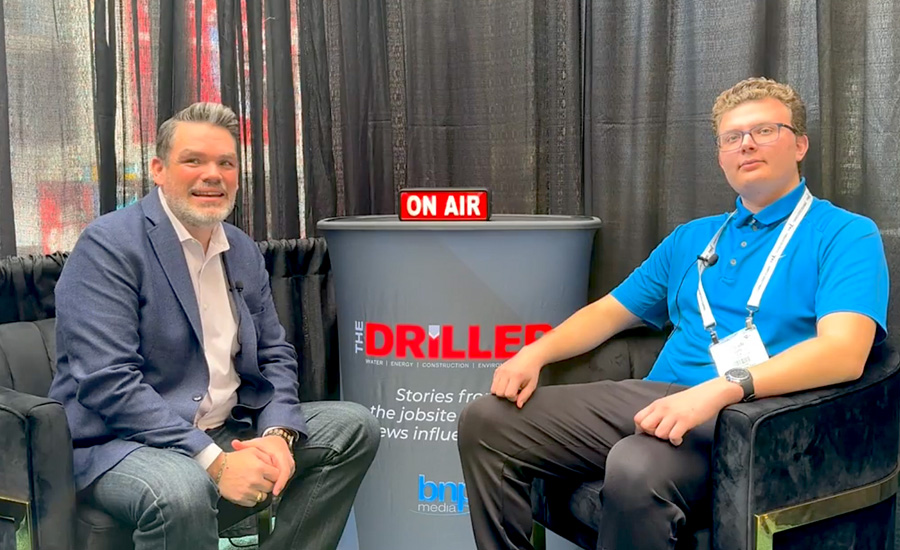
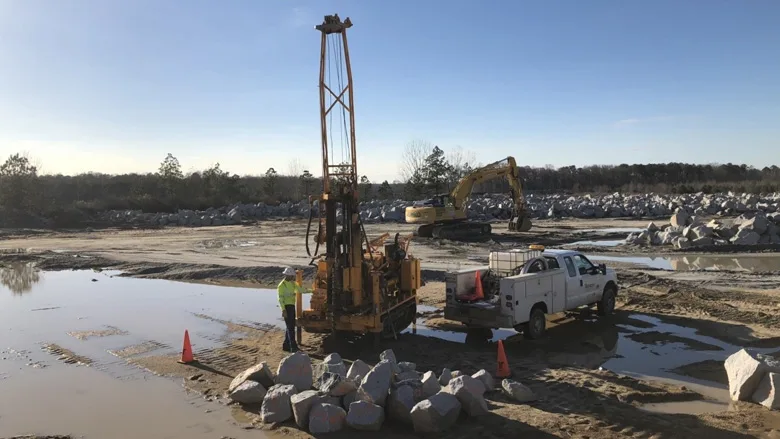
A second wave of the drilling workforce is young, eager and say they are willing to learn how to do the job -- the right way.
Photo: Brock Yordy
The details is in data
While the workforce might be aging and shrinking, the demand and potential growth in sectors like water and geothermal are immense. As it stands currently, there are approximately 18,300 workers who are classified as Earth (non-oil and gas industry) driller in the United States.
According to a 2026 analysis titled, Potential Workforce Implications of the Geothermal Industry Across the United States, created by Louisiana State University, in the geothermal sector alone, construction work is projected to support 7,400 jobs at a minimum with a potential of over 39,400 total jobs per year by 2050.
Additionally, the same report says that geothermal facilities once fully operational, are estimated to distribute anywhere from $470 million to $1.8 billion per year in earnings, and will account for $1.1 billion to up to $4.2 billion annually in gross domestic product (in 2025 dollars) by the year 2050.
When you consider that this is one sector that makes up less than 1% of the energy mix in the United States, the possibilities for young professionals coming up, particularly ones eager to get hands-on know-how like Jacob, are boundless.
So what are these young drillers telling themselves and others like them?
“If I were to speak to myself say a year or two ago as someone who doesn’t really have any drilling experience or even a mechanical background, or thinks that going to a trade school is daunting … I’d just laugh and say you can do it, and it’s very possible to learn,” said Polyak. “I always thought that I would be seen as an outsider [in this industry] and I’ve been accepted with open arms. So I would just say to people like me that you should do it, and furthermore — you should want to do it.”
Looking for a reprint of this article?
From high-res PDFs to custom plaques, order your copy today!

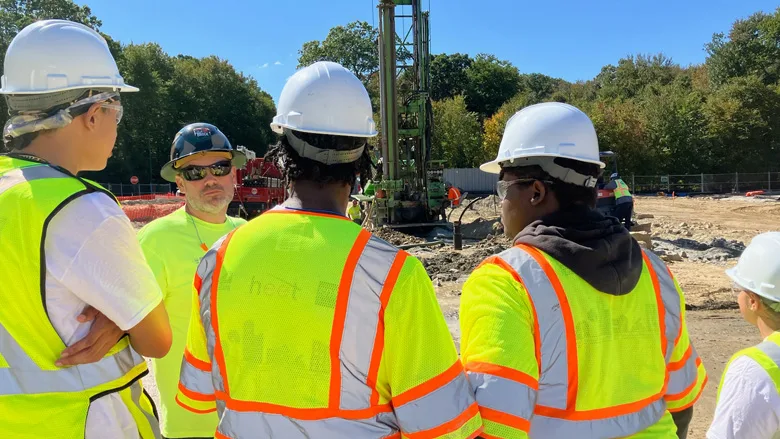


.webp?height=200&t=1784662993&width=200 "Geothermal Students with Trainer Brock Yordy")