Old Pipes
Are We Developing Thermal Energy Infrastructure While the Grid Dies? The Case for Immediate Deployment
Geothermal’s biggest obstacle isn’t technology—it’s getting thermal infrastructure in place before building owners are forced to replace aging HVAC systems.
Key Takeaways
- Geothermal adoption depends on thermal networks reaching buildings before aging HVAC systems require replacement.
- Missed replacement windows can lock buildings out of shared geothermal infrastructure for another 15 to 20 years.
- Utilities must accelerate deployment and give drilling contractors the project certainty needed to build thermal infrastructure at scale.
As the roar of an active geothermal project echoes behind me, I can't help but smile thinking about the roar of dinosaurs at last week's GRC mixer. Throwing a geothermal networking event in the paleontology hall of the Houston Museum of Natural Science was a stroke of absolute genius. Mingling beneath the towering, fossilized skeleton of a Tyrannosaurus rex in the undisputed capital of oil and gas makes the metaphor practically write itself. Millions of years ago, these apex predators dominated their era, completely oblivious to the massive environmental shift about to knock them off the top of the food chain.
Stepping out of the air-conditioned museum and into the reality of Day 2 brought that evolutionary pressure into sharp focus. It was September 22, the Autumnal Equinox. Instead of crisp air, Houston was baking under a punishing, unseasonal heat dome pushing well past 90 degrees Fahrenheit. Texas built a global energy empire by combusting the compressed hydrocarbons of ancient behemoths, and now the grid burns even more just to power struggling HVAC units fighting a battle against the heat.
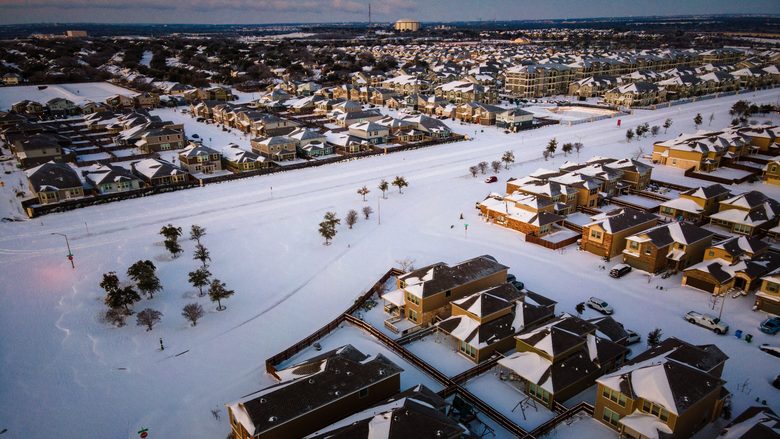
Photo: RoschetzkyIstockPhoto / iStock / Getty Images Plus / via Getty Images
For far too long, the geothermal exchange industry has been pigeonholed into heating-dominant climates, where the focus is on replacing fossil fuel furnaces in the dead of winter. But sitting in Houston, the narrative completely expands. The Electric Reliability Council of Texas (ERCOT) faces catastrophic threats from blistering summer highs along with recent historic winter lows. Whether battling peak heat or bitter lows, air-source heat pumps and heaters strain electrical capacity while fighting extreme outdoor temperatures. Subsurface thermal exchange bypasses that atmospheric bottleneck. By harnessing the firm, constant temperature of thermal energy resources, these systems maintain peak operating efficiency year-round, shaving critical gigawatts off a strained power grid precisely when it is closest to the brink.
The Day 2 plenary panel on Thermal Energy Networks (TENs) Development addressed this urgent energy reality. The panelist positioned the opportunity to decarbonize our built environment through shared geothermal infrastructure, exploring how integrating advanced closed-loop (ACL) systems and ground-source heat pumps could accelerate adoption through utility engagement and innovative financing.
Yet, one piece was missing: the profound systemic disconnection between development and deployment. While the plenary panel explored the theoretical collaboration of these systems, Nicholas Fry of Jacobs Engineering presented data in an early-morning breakout session that shifted the focus from "how" to the paradox of "when" physical deployment happens.
Fry and his team's system-dynamics model for New York shows that the single biggest bottleneck to widespread consumer adoption of geothermal is timing. Specifically, it comes down to whether the physical loop network infrastructure is already in the street when a building's HVAC equipment reaches retirement. The data is a sobering reality check: building owners do not replace mechanical plants on abstract policy timelines. They replace boilers and chillers during critical end-of-life failures. If the utility thermal energy resource is not already in the right-of-way when that replacement window opens, owners will default to traditional or hybrid systems. When that occurs, that building is effectively locked out of connecting to shared infrastructure for another 15 to 20 years. Multiply that single missed connection across an entire city, and you see how an energy transition stalls before it even begins.
This leaves traditional gas utilities facing a severe structural decline, bluntly described as a potential “death spiral”. The data model suggested that even under highly favorable deployment conditions, it would take approximately 25 years to replace existing gas grids, yielding only a 15% reduction in total heating and cooling emissions. If utilities drag out deployment as isolated pilot demonstrations, building turnover will outpace infrastructure expansion, eroding the utility customer base and stranding fossil assets faster than new thermal loops can be connected.
This timing gap highlights the wider disconnections stalling our industry:
Policy vs. Operational Pace
Regulatory approvals and feasibility studies crawl at a bureaucratic pace, while commercial mechanical systems fail in real time. By the time a neighborhood pilot project gets greenlit, engineered, and funded, half the buildings along that corridor have already re-equipped with standalone combustion units. We are trying to solve an immediate, rolling mechanical crisis with a sluggish administrative process that lacks operational urgency.
Thermodynamic Inefficiency vs. Pure Electrification Dogma
Professor Adam Hawkins of Clemson University highlighted the importance of geoexchange: under Carnot efficiency limits, roughly 25% of primary U.S. energy consumption occurs at temperatures below 150 degrees Celsius. Burning fuel to generate high-temperature fluids, converting them to electricity at a massive efficiency loss, and transmitting that power simply to warm or cool a room is thermodynamically backwards. Direct thermal exchange utilizes ambient subsurface temperatures to eliminate that efficiency penalty entirely. Yet, current policy frameworks often treat brute-force electrification as the only acceptable path, ignoring the elegant, physics-based reality beneath our feet.
Integrated Ambition vs. Fragmented Ownership
Zeyneb Magavi, Geothermal Revolutionist and Executive Director of HEET, noted that roughly 50% of total energy usage goes toward heating and cooling. She detailed how single-pipe ambient temperature loops unlock a new market, capturing geothermal heat and industrial waste energy to balance loads. However, to truly scale this vision, we must evolve our vocabulary and operational mindset. We aren't just stringing together temporary networks; we are constructing generational thermal energy infrastructure and developing shared thermal resources. Daniel Flaherty of CDM Smith underscored that point, saying that executing this requires aligning loads, thermal sources, and distribution systems. The disconnect arises because ownership of this critical infrastructure is fiercely fractured between municipal planners, electric utilities, and gas operators reluctant to cannibalize legacy business models.
Surface Design vs. Subsurface Reality
Giovanni Sosio from SLB pointed out that the greatest project uncertainties live deep in the subsurface. Engineers frequently model ground loops on paper as idealized thermal sinks, glossing over the brutal realities of lithology, rock permeability, and fluid dynamics. Whether designing district-scale ambient loops or deep geothermal wells approaching 100 degrees Celsius, projects fail if the drilled resource is improperly dimensioned.
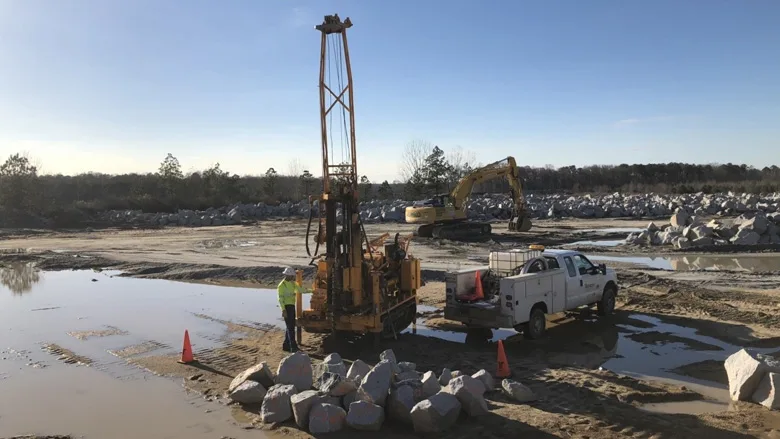
Connecting these dots takes the debate out of conference rooms and back to the people building the networks. Ambitious decarbonization roadmaps mean nothing without drilling rigs reaching depth, skilled crews working alongside engineers, and utilities managing civil right-of-way operations. Contractors cannot invest millions to expand equipment fleets or train apprentices based on speculative pilots; they require the certainty of a committed project pipeline.
The mandate for the drilling, civil construction, and utility sectors is absolute. Nick Fry presented that waiting for perfect policy alignment guarantees structural failure. If we treat geothermal solely as a northern winter heating alternative or leave thermal energy infrastructure trapped in endless feasibility loops, our electrical grid will suffer the exact same fate as the fossilized giants in the museum hall. To protect vulnerable grids like ERCOT from crushing summer heat domes, we must aggressively bridge the disconnect between utility boardrooms and civil construction reality.
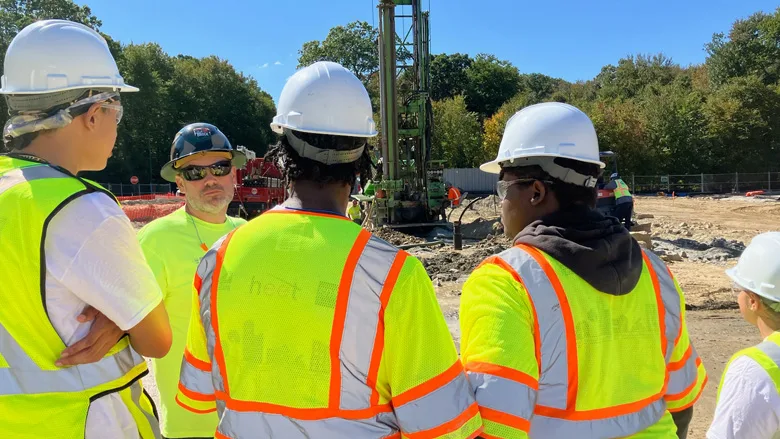
It is time to get energy decision-makers out of breakout rooms and into the field to witness rigs drilling, professionals installing loops, and utilities connecting them directly to homes. We are rapidly building the thermal energy infrastructure needed to keep the power on whether it's a 100-degree heat dome or a sub-zero polar vortex. Eversource, HEET, and visionary partners are proving the model in real time by continually expanding the Framingham loop, taking neighborhood-scale geo-exchange from an isolated pilot to a replicable utility standard. They are showing the industry exactly how to transition legacy gas systems into shared thermal resources.

Want More Geothermal Insights?
Explore the inaugural Ground2Grid Thermal Energy Summit, launching in 2027, and connect with the ideas shaping the future of geothermal energy. Learn more.
Looking for a reprint of this article?
From high-res PDFs to custom plaques, order your copy today!

Brock Yordy, Director of Industry Engagement for The Driller, is a third-generation driller and globally recognized subject matter expert who has written for The Driller since 2013. Driven by a passion for industry education and digital media, he anchors The Driller Newscast and hosts weekly podcasts for the trade. His technical authority is backed by decades of extreme fieldwork worldwide for organizations like Halliburton, SUEZ, and the U.S. Government. Dedicated to ensuring clean water for all and advancing equitable geothermal heating and cooling, Brock actively collaborates with states nationwide through The Developed Well Group and the Geothermal Drillers Association to shape policy, safety, and workforce training.
email: brock@thedriller.com | office: (269) 348-5156