As Temperatures Rise, So Do the Risks: Why Safety Can't Take a Day Off
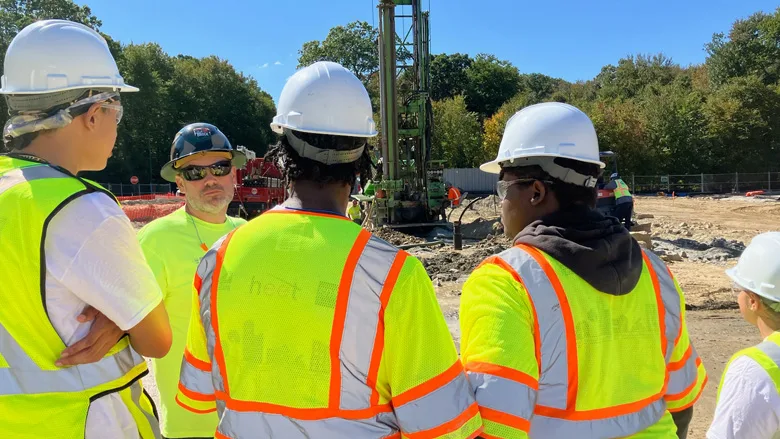
With much of the U.S. baking under extreme heat, experts say now is the time to revisit the everyday safety habits that prevent serious injuries on drilling jobsites.
Every driller understands the risks that come with the job.
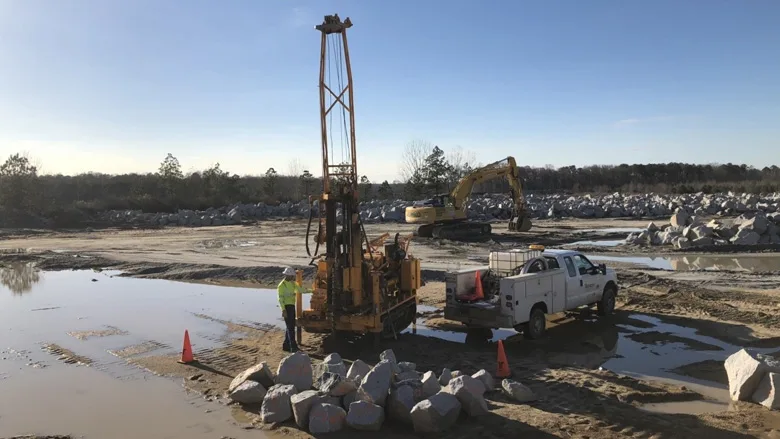
Heavy equipment, spinning drill rods, suspended loads, high-pressure systems, and unpredictable ground conditions all come with the territory.
For most drilling crews, managing those risks is just another part of the workday, relying on experience, careful planning, and looking out for one another.
The industry has made strides in safety over the years, thanks to better equipment, stronger training programs, and a greater emphasis on jobsite awareness. But the job is still inherently dangerous. According to the U.S. Bureau of Labor Statistics, more than 1,000 construction workers were killed on the job in 2024, making construction one of the country's deadliest industries. OSHA also investigated 826 workplace fatalities during fiscal year 2024, underscoring that while progress has been made, there's still plenty of work left to do.
Excavation and drilling-related work remains among the highest-risk activities. Following a series of fatal trench collapses, OSHA recently renewed its call for employers to follow established excavation safety practices, noting that 11 workers had already died in trench-related incidents during 2025. The agency emphasized that cave-ins are almost always preventable through proper protective systems, inspections, and hazard assessments. The danger is hard to overstate. OSHA notes that a single cubic yard of soil can weigh as much as a midsize car, leaving workers with little chance of escape if a trench collapses.
Long-term data tells a similar story. The National Institute for Occupational Safety and Health (NIOSH) found that 373 workers were killed in trench collapses between 2003 and 2017, with more than 80% of those fatalities occurring in construction. While many drilling contractors don't spend every day working in trenches, the lesson is universal: serious incidents are rarely caused by one catastrophic mistake. More often, they're the result of several small failures lining up at the worst possible moment.
That's why safety has to be more than a checklist.
Don’t Get Too Comfortable
Every day, crews mobilize rigs, make connections, trip pipe, change tooling, service equipment, and move from one hole to the next. That repetition builds efficiency and confidence, but it can also create a false sense of security.
The jobs that feel the most routine are often the ones that deserve the most attention. After performing the same task hundreds or even thousands of times, it's easy to assume the equipment is in good working order or that the next step can wait another few minutes. A walk-around inspection gets shortened.
Rarely does a serious incident come down to one catastrophic mistake. More often, it's a chain of seemingly minor decisions, overlooked hazards, or changing jobsite conditions that build on one another until something goes wrong. Breaking that chain before it leads to an injury is what separates a strong safety culture from one that's simply checking boxes.
A near miss isn't just a lucky break. It's a chance to identify a weak spot before someone gets hurt. The best crews don't ignore those moments. They learn from them, talk about them, and make sure the same mistake doesn't happen twice.
Ask almost any veteran driller, and they'll probably remember a close call.
Those moments rarely make headlines or show up in OSHA statistics, but they often provide the best opportunity to prevent the next serious incident. Every dropped tool, unexpected equipment movement, or close call around a rotating machine is a chance to identify a hazard before someone gets hurt.
Companies with strong safety cultures encourage workers to report near misses without fear of blame. Instead of asking who made the mistake, they ask what can be learned from it.
That mindset helps identify hazards before someone gets hurt.
Drilling equipment operates in some of the harshest conditions imaginable. Regular inspections and preventative maintenance are essential, not only to keep projects moving, but to protect the people operating the equipment.
Incidents involving unexpected equipment movement, stored hydraulic energy, and caught-between hazards remain among the most serious risks on drilling jobsites. That's why maintenance records, lockout/tagout procedures, and thorough inspections deserve the same attention as production schedules.
Heat Can Be Just as Dangerous
While heavy equipment often gets the most attention, the weather can be just as unforgiving.
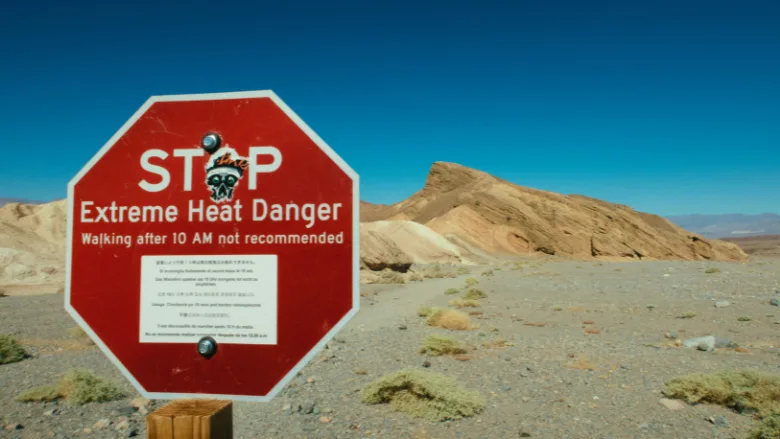
As much of the United States continues to experience record-breaking temperatures this summer, drilling contractors are once again being reminded that heat is more than an inconvenience. It's a serious workplace hazard.
According to OSHA, millions of workers are exposed to heat on the job each year, and thousands suffer heat-related illnesses, with some cases proving fatal. Construction workers are among the most vulnerable because of the physically demanding nature of the job and the amount of time spent working outdoors.
For drilling crews, the risk goes beyond dehydration. Heat exhaustion can slow reaction times, reduce concentration, and impair judgment, increasing the likelihood of mistakes around rotating equipment, suspended loads, and high-pressure systems. When workers are fatigued from the heat, even routine tasks become more dangerous.
The danger also isn't limited to days when temperatures reach triple digits. OSHA warns that heat-related illnesses can develop whenever high temperatures, humidity, strenuous work, and heavy personal protective equipment combine. New employees and workers returning after time away are especially susceptible because they haven't yet acclimated to the conditions.
Many drilling contractors already adjust schedules to tackle the most physically demanding work early in the morning, encourage workers to hydrate before they feel thirsty, provide shaded recovery areas, and rotate strenuous tasks throughout the day. Equally important is creating a culture where workers feel comfortable speaking up if they or a coworker begin showing signs of heat stress.
Just like equipment inspections or lockout/tagout procedures, managing heat is another part of keeping crews safe. It may not be as visible as a spinning drill string or a suspended load, but it can be just as dangerous if it's ignored.
Safety Starts With the Crew
Rules and procedures matter, but they're only effective if people feel empowered to use them.
The strongest safety cultures are built on communication. Workers speak up when something doesn't look right. Supervisors stop work if conditions change. Experienced drillers mentor newer employees and explain not just how to perform a task, but why certain precautions matter.
No one on a drilling crew should ever feel pressured to choose between working safely and keeping a project on schedule.
National Safety Month may be behind us, but its message shouldn't be. The safest companies don't treat safety as a campaign or an annual reminder. They build it into every pre-job meeting, every equipment inspection, every maintenance check, and every decision made in the field.
Every drilling contractor wants to finish the job efficiently. Every customer wants the project completed on time. But the most important measure of success isn't how many feet were drilled that day. It's whether everyone went home safely.
The drilling industry has made significant strides in safety over the years, yet the numbers make it clear there is still work to do. Safety isn't a program, a poster, or a meeting held once a month. It's a series of decisions made every day, on every jobsite, by every member of the crew.
Let this be a reminder!
Looking for a reprint of this article?
From high-res PDFs to custom plaques, order your copy today!

John Oldani is an editor, journalist, and reporter with over a decade of experience producing clear, engaging, and well-researched content. He holds a Bachelor of Arts in Journalism from Oakland University, with a focus on financial reporting, editing, and long-form writing. Over the past year, John has specialized in covering the drilling industry, reporting on key developments, policy shifts, and impactful stories shaping the field.
email: johnnyoldaniwords@gmail.com | office: (248) 838-8535