The Road to 2050
Geothermal Exchange Drillers are carving a path to unprecedented growth
Key Takeaways
- GeoX offers massive growth potential, with billions of feet of geothermal drilling projected through 2050.
- Thermal Energy Networks create opportunity for larger contracts, long-term backlogs, and stronger partnerships with utilities and municipalities.
- GeoX helps water well drillers diversify, creating new revenue, workforce development opportunities, and greater long-term business stability.
The drilling community is entering a golden era. As the nation scrambles to modernize its infrastructure, the most secure, high-growth asset available is the low-risk installation of geothermal exchange (GeoX) loops.
Many states are moving towards the reliability of utility-scale geothermal exchange for heating and cooling, delivering exactly what our electrical grid desperately needs: firm 24/7 baseload performance. Forget past economic downturns; this shift is driven by undeniable economic logic, energy independence, and community resilience.
A Nationwide Boom: Regional Growth and Flagship Projects
The growth potential of GeoX is being actively deployed from coast to coast. Master-planned communities like Serenbe in Georgia, Whisper Valley in Texas, and Norton Commons in Kentucky are just three examples that prove that large-scale developments can thrive on geothermal heating and cooling, offering developers and homeowners permanent insulation against volatile energy prices.
In Massachusetts, a collaboration among HEET, Eversource, and a Department of Energy (DOE) grant has launched the second phase of the Framingham Thermal Energy Network (TEN), connecting diverse building loads to share thermal resource loads.
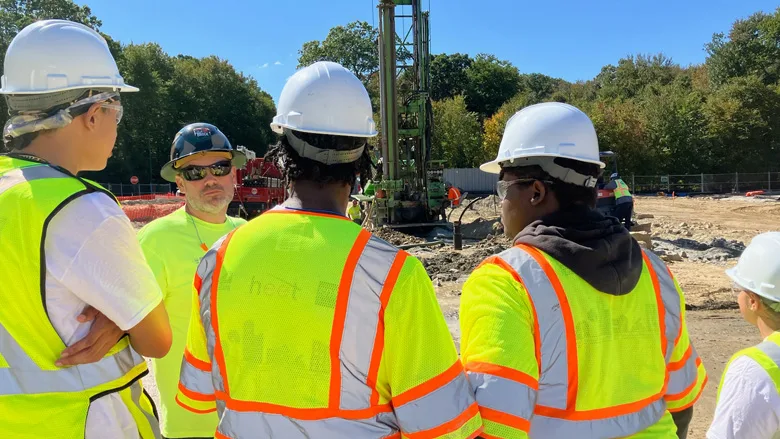
This momentum has led to the establishment of the first Geothermal Drilling Center of Excellence in Framingham, led by the Geothermal Drillers Association and supported by the City of Framingham Economic Development Authority, Mass Clean Energy Center, and stakeholders of the Geothermal Market Coalition.
Meanwhile, the New York State Energy Research and Development Authority (NYSERDA) has blazed the path for state-level adoption, fueling billions of dollars in infrastructure investment and establishing a permanent, reliable pipeline of work for drilling professionals. In the Midwest, Illinois and Michigan policymakers are aggressively funding and adopting major thermal energy projects.
The Multi-Billion Foot Opportunity: The Road to 2050
To grasp the scale of this market, look at the DoE's Lift Off Report long-term objective: converting 80 million buildings across the United States to geothermal exchange systems by 2050. Hitting this national target requires installing more than 136 million boreholes from coast to coast. If we consider a standardized target depth of 650 feet per borehole, this deployment scales out to an incredible 88.4 billion linear feet of drilling.
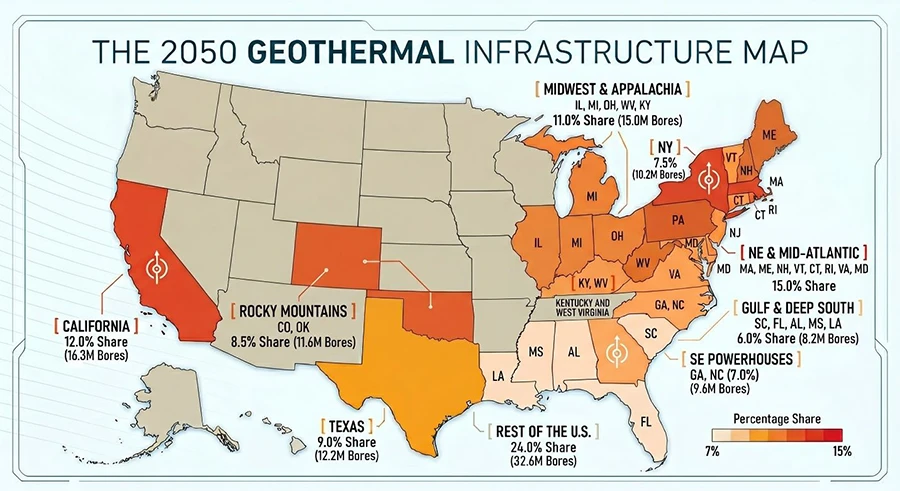
Image: Brock Yordy/ChatGPT
As detailed in The 2050 Geothermal Infrastructure Map, this national target is highly concentrated across strategic regional pipelines. The Southeast Powerhouses of Georgia and North Carolina represent 7.0% (9.6 million bores) of this market, serving as the premier epicenter for geothermal exchange growth where developers deploy master-planned loops to counter severe summer grid strain.
Meanwhile, dominant players like California (12.0%), Texas (9.0%), and New York (7.5%) command massive shares, driven by strict electrification mandates in the West and the Northeast, as well as by critical ERCOT grid resilience needs in Texas. The consolidated Midwest and Appalachian corridors, including the Great Lakes States, along with Appalachia's Kentucky, Ohio, and West Virginia, hold an 11.0% share of 15.0 million bores, blending aggressive clean-heat funding with deep district-energy projects to offer local drillers an ironclad infrastructure backlog.
The Northeast and Mid-Atlantic handles 15.0% or 20.4 million bores as a high-density utility-contracting hub, while the Rocky Mountains 8.5%, and the Gulf & Deep South 6.0% secure massive regional stakes, leaving opportunities for states still working on adoption practices to pick up the remaining 24.0% or 32.6 million bores pipeline-ready for local drilling companies' fleet diversification.
Protecting Legacy: The Future of the Water Well Driller
According to the National Ground Water Association (NGWA), our industry completes roughly 500,000 new water wells annually, requiring about 5,760 active water well rigs. However, urban sprawl and legacy pollution are allowing municipal water line expansions to continue to shrink that traditional market.
Diversifying into geo-exchange is the ultimate strategy to protect legacy water well drilling companies. By dedicating new or used rigs to geothermal production exchange, a traditional drilling firm secures a steady backlog, where supply and demand will increase per-foot margins.
However, production geothermal drilling can be punishing on equipment, logging an average of 1,540 hours annually. After a rig hits its maximum production hour, the frontline geothermal lifecycle generally lasts under five years; it can be rotated out of the fast-paced GeoX fleet and returned to the legacy side of the company for water well drilling.
Geothermal production creates two value-adds to a legacy business of growth: a reliable internal supply of fully depreciated iron and a development path for new drillers to become seasoned veterans able to keep a family-owned business highly profitable.
The Economic Engine: Legislative Proof and Growth of TENs
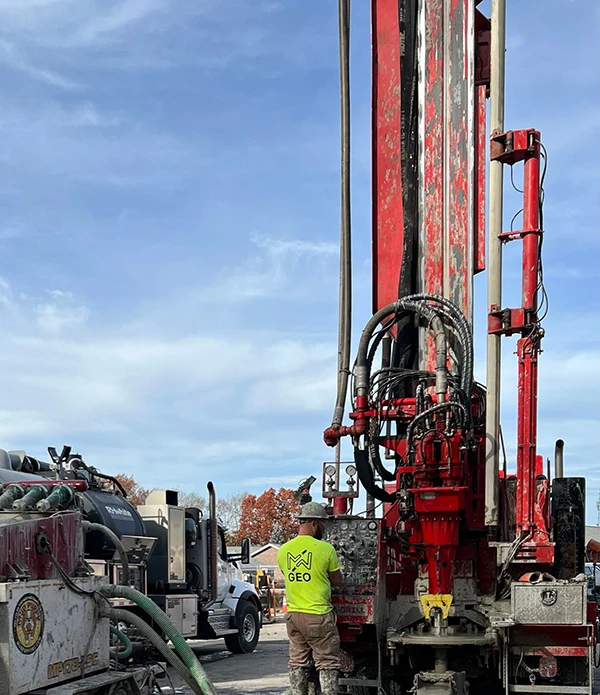
As the nation works to get up to speed on how to utilize geothermal energy on a mass scale, the boom could usher in a golden era for today's driller.
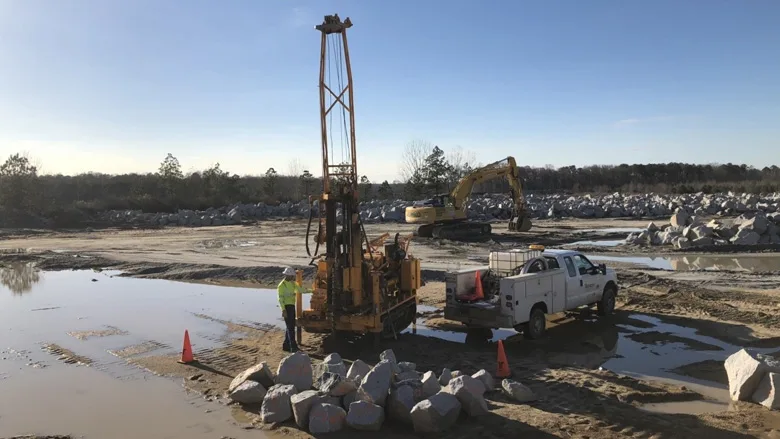
Photo: Brock Yordy
The market momentum has shifted, backed by rock-solid federal certainty. The landmark Investment Tax Credit (ITC) is locked in until 2033, giving drilling companies a long, guaranteed runway to scale up operations, secure fleet purchases, and build durable business models. Further proving that the federal government sees this as a permanent pillar of energy infrastructure, the DOE has formalized its commitment by naming its new office the Office of Hydrocarbons and Geothermal.
The game-changing evolution for drilling contractors is the rise of Thermal Energy Networks (TENs). In this new paradigm, drillers are no longer chasing individual residential homeowners or small business sales of a few boreholes at a time. Instead, in the near future, drilling companies are securing multi-project institutional contracts directly with utilities and progressive municipalities.
These partnerships are both strategic and critical. Utilities are legally mandated to decarbonize their infrastructure, and they possess the ratepayer capital to fund massive neighborhood-scale grid installations.
For drilling companies, contracting with a utility or city municipality transforms the business model from a volatile, weather-dependent subcontractor role into a primary, long-term infrastructure partner. It guarantees massive, multi-year backlogs, eliminates localized sales overhead, and provides the financial predictability required to invest confidently in new equipment and multi-year employee apprenticeships.
The Bottom Line
The geothermal exchange industry is an expanding, self-sustaining industrial empire. True closed-loop geo-exchange systems reduce peak grid demand by up to 40% and serve as massive thermal batteries for the built environment.
When you combine the opportunity for drilling company growth with demand for an expanded workforce that is not only drillers and field personnel but also manufacturing and the local support network, the road to 2050 will create over 180,000 family-sustaining careers within our trade, with a potential revenue from geothermal exchange, from drilling to full project completion, of at least $1.5 trillion dollars.
By diversifying into this space, legacy drilling companies can stabilize their backlogs, secure their financial futures, and train the next generation of subsurface professionals. The demand is here, the legislation is locked in, and the path forward for at least 88.4 billion feet of opportunity is clear. It is time to drill geothermal exchange boreholes.
Looking for a reprint of this article?
From high-res PDFs to custom plaques, order your copy today!

Brock Yordy, Director of Industry Engagement for The Driller, is a third-generation driller and globally recognized subject matter expert who has written for The Driller since 2013. Driven by a passion for industry education and digital media, he anchors The Driller Newscast and hosts weekly podcasts for the trade. His technical authority is backed by decades of extreme fieldwork worldwide for organizations like Halliburton, SUEZ, and the U.S. Government. Dedicated to ensuring clean water for all and advancing equitable geothermal heating and cooling, Brock actively collaborates with states nationwide through The Developed Well Group and the Geothermal Drillers Association to shape policy, safety, and workforce training.
email: brock@thedriller.com | office: (269) 348-5156