From Trade Wars to the Rig Floor: What the Global Potash Scramble Means for U.S. Drillers and Groundwater
Domestic potash could reduce U.S. reliance on foreign fertilizer supplies, but expanding production will require specialized drilling, solution mining and rigorous groundwater protection.
Key Takeaways
- U.S. potash import dependence is renewing interest in developing deep domestic reserves, including deposits beneath Michigan.
- Domestic potash production could increase demand for extraction, injection, freshwater and groundwater-monitoring wells.
- Drillers must balance mineral development with aquifer protection through careful water management, casing, cementing and injection controls.
A recent diplomatic standoff over agricultural fertilizer has put a harsh spotlight on how vulnerable the United States is to foreign mineral supply chains—and why the solution ultimately runs through the domestic drilling industry and strict groundwater management.
In late September, President Donald Trump abruptly halted an effort to end U.S. imports of Canadian-produced potash in favor of cheaper supplies from Belarus. Potash—a potassium-rich mineral critical to agricultural fertilizer, chemical manufacturing, and food processing—is a massive trade lever. The U.S. currently imports up to 90 percent of its annual potash from Canada, totaling billions of dollars each year.
On Sept. 21, 2026, Trump announced on Truth Social that the U.S. was working on a "massive deal" to buy potash from Belarus—the world's fourth-largest producer behind Canada, Russia, and China—at substantially lower prices to gain leverage in ongoing trade disputes with Ottawa. By Sept. 22, however, the administration reversed course, reaffirming Canada as the nation's leading and most reliable supplier while leaving the door open to lower-priced Belarusian shipments, including a 30,000-ton load arriving at the Port of New Orleans on Oct. 14.
From Geopolitics to the Michigan Subsurface
While trade negotiators look overseas, the back-and-forth between Canadian tariffs and Belarusian cargo ships underscores a glaring reality: you cannot build national food and resource security on 90 percent import reliance. Closing that gap requires unlocking domestic reserves, most notably the rich potash beds sitting deep beneath the Michigan Basin.
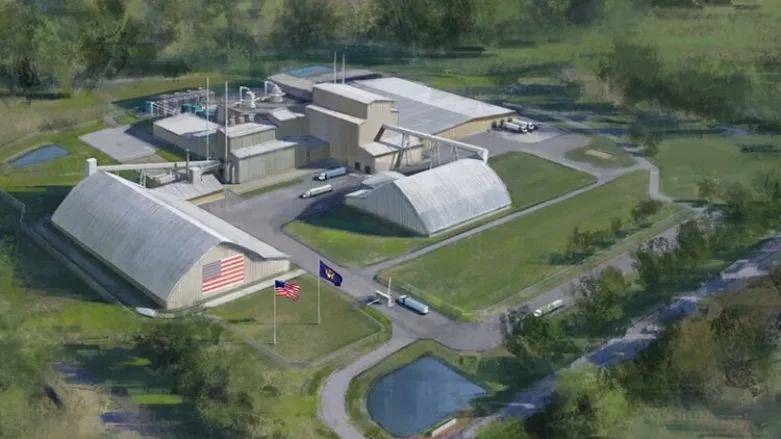
As we examined in our recent look at the EPA’s review of Class I injection well permits for Michigan Potash Operating LLC in Osceola and Mecosta counties, bringing domestic potash to market isn't just a trade policy question. It is a complex drilling and hydrogeology challenge.
How Trade Policy Translates to Rig Demand
Unlike traditional hard-rock shaft mining, extracting deep domestic potash deposits relies on solution mining—a process that is entirely dependent on technical drilling contractors.
To harvest the potash, drillers must construct deep production wells to pump heated water down into the salt formations, dissolving the potassium ore into a mineral-rich brine. That brine is pumped back to the surface, where the potash is separated through evaporation. The leftover non-hazardous salt water then has to go back underground—which is why Michigan Potash is seeking EPA approval for Class I disposal wells to inject that brine roughly 4,000 feet deep.
For the drilling industry, any serious federal push toward domestic mineral independence translates directly into rig demand across three fronts:
- Deep Extraction & Injection Wells: Drilling 4,000-foot boreholes requiring heavy rotary rigs, complex multi-string casing programs, and specialized salt- and corrosion-resistant cementing.
- Freshwater Supply Wells: Constructing high-capacity water wells to supply the initial fluid needed for the solution-mining loop.
- Perimeter Monitoring Networks: Installing dedicated sentinel and monitoring wells at varying depths to track pressure gradients and water quality over the life of the mine.
The Dual Groundwater Challenge: Drawdown and Isolation
Connecting national mineral goals to local execution means confronting the core concern raised by central Michigan residents during the EPA’s late-September public hearing in Evart: how does large-scale solution mining impact local groundwater?
For drillers and hydrogeologists, the groundwater impact works from both the top down and the bottom up:
- Shallow Aquifer Drawdown (Top-Down): Solution mining and processing require millions of gallons of water. In rural agricultural communities where farms and residences rely on shallow glacial aquifers—often sitting around 600 feet or less—high-volume industrial withdrawals must be carefully modeled and monitored to prevent localized cone-of-depression drawdown that could leave shallow residential wells high and dry.
- Deep Zonal Isolation (Bottom-Up): On the disposal side, pumping leftover brine 4,000 feet underground requires absolute mechanical integrity. As highlighted in the EPA permit proposals, lowering maximum allowable injection pressures is critical to ensuring injected fluids don't fracture the confining rock layers. Multi-barrier steel casing and top-to-bottom cement jobs are the only things standing between high-salinity industrial brine at 4,000 feet and the freshwater drinking supplies at 600 feet.
Trade deals and port shipments may grab national headlines, but true resource independence happens on the rig floor. If the United States wants to insulate its agricultural supply chain from foreign trade disputes, it will have to rely on the drilling industry to extract those minerals responsibly, proving that we can unlock deep domestic resources at 4,000 feet without compromising the freshwater aquifers at 600 feet that our communities and farms depend on every day.
Looking for a reprint of this article?
From high-res PDFs to custom plaques, order your copy today!

John Oldani is an editor, journalist, and reporter with over a decade of experience producing clear, engaging, and well-researched content. He holds a Bachelor of Arts in Journalism from Oakland University, with a focus on financial reporting, editing, and long-form writing. Over the past year, John has specialized in covering the drilling industry, reporting on key developments, policy shifts, and impactful stories shaping the field.
email: johnnyoldaniwords@gmail.com | office: (248) 838-8535