Stories From the Site: Some of the Wildest Things Hit While Drilling
We got the dirt on some of the weirdest finds in the field.
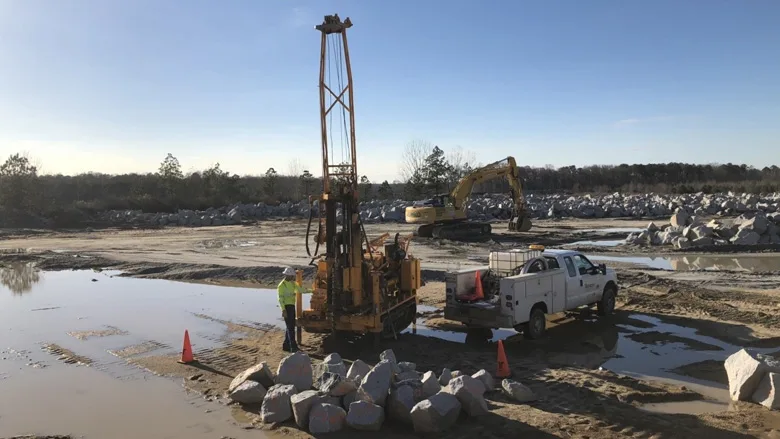
I remember when I was first getting into drilling we would always do environmental work. Gas stations, landfills, recycling plants, all the nasty places that nobody ever really wanted to drill but they would because it paid good, and I would show up every day because it was my idea of fun at 18.
I have a very vivid memory of one landfill in particular in Central North Carolina that was listed as an undocumented landfill from the 1900s, meaning it just had no official records of it being a landfill. We were doing the extent of contamination just popping borings down to rock which was about 25 feet and then taking quick water samples and sniffing the soils to try to get an idea for the contamination plume.
Paper trails
For one of these borings, it was towards the middle of the site, and when you’re running 4¼ augers, you bring up a fair amount of cuttings. While I was running my drill rig (aka shovel to clear cuttings) I hit a foot size clump of something partially solid. The environmental scientist on site pulled it up and laid it out on a table, took off some plastic coverings and washed it off.
After an extensive cleaning, we discovered that it was a city paper from the town of Hickory, N.C., dated July 12, 1938. While we couldn't find out the specifics of the date, and honestly, the name slips my mind now, there you could roughly make out a section talking about a recently married couple in the town.
Truthfully when I came into drilling at the time with my young career, they told me doing environmental work we would bring up trash, metal, bricks etc. but never in my career would I expect that I would be in a back country of North Carolina looking at news articles older than me, and my parents even.
We did 12 more borings in the middle of that location, and brought up a small collection of papers, metals, broken down plastics, and enough tires to start our own used tire company.
18 holes anyone?
Another one is a bit more recent, it would have been four years ago when I was really cutting my own trail as a driller. Taking on every challenge I could and never saying no regardless of expectations or conditions. This particular site was for a sewer line replacement, we were drilling right beside the existing one that they had to blast to install.
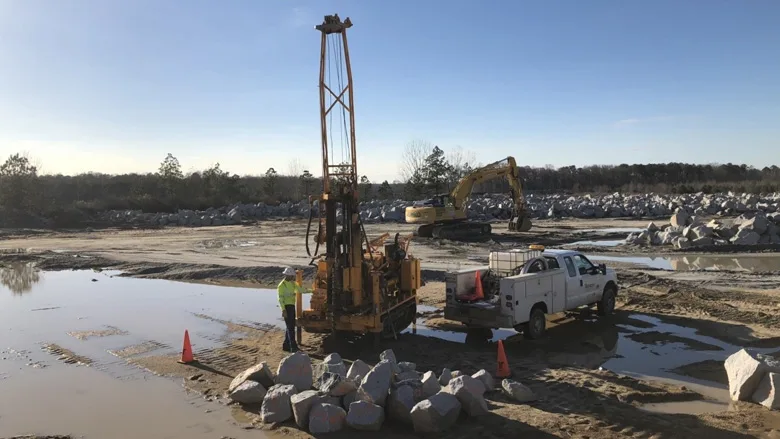
The scope was simple. Go over existing rock, and then core until we hit quality rock. Well the trail was one and a half miles down a sewer line that held water on a good summer day, and on a bad one would be 10 inches to about 1 ½ feet deep. One side for access, with swamp and wetlands surrounding it.
It was just enough water to make it miserable but not enough to use it to core the rock when we hit it, go figure.
The other side was more manageable, but it had a creek crossing that the city helped us build a rock bridge over which was great, down side was every 2-3 days, a good South Carolina summer storm washed away everything but the snakes. It was on this creek that I found something that gave the entire crew a laugh.
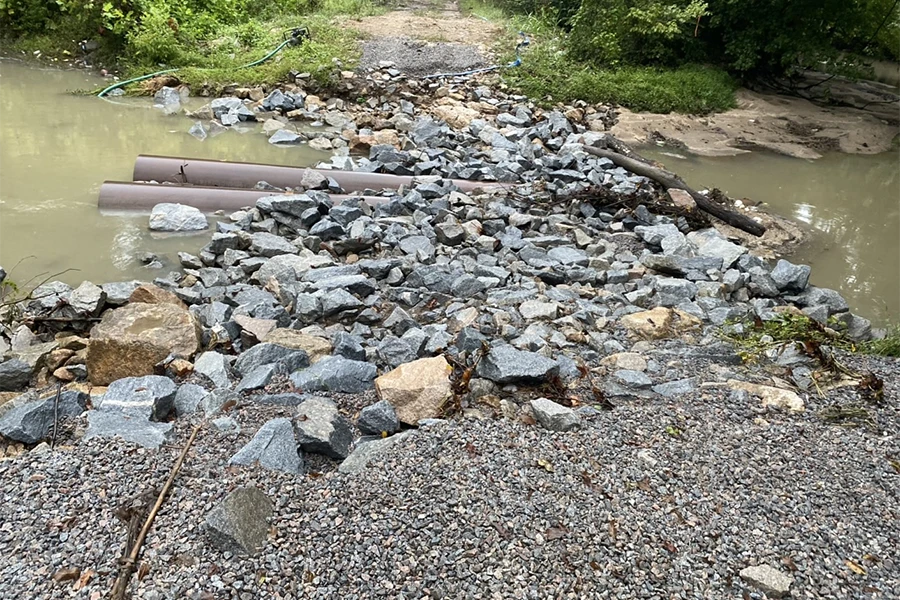
The makeshift rock bridge that routinely washed away while Truesdale and his colleagues used it for that job in South Carolina.
Photo: John Truesdale
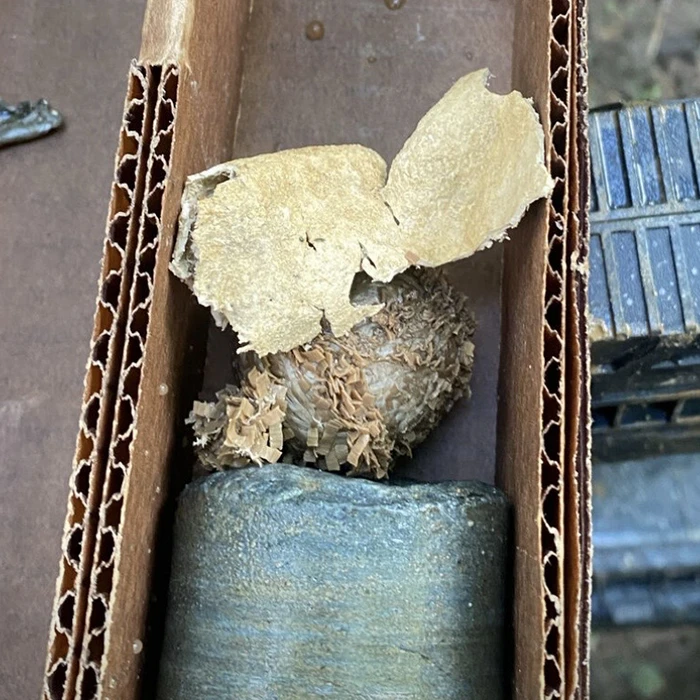
A completely intact golf ball brought up from 17 feet below the surface.
Photo: John Truesdale
We had finished sampling down, found good rock at about 17 feet, and did our first run of about one-and-a-half feet into some fairly broken up rock from blasting. We snatched up the inner barrel and dropped the rock out and then sat around scratching our heads when we pulled a golf ball out from the middle of the cored run.
Now we knew that the rock had been blasted, some excavated after and put over the old pile, but who would have thought that through blasting, digging, pipe install, backfill and coring that the golf ball would still be intact but in good enough shape to know what it was!
Completely off the rails
We were doing a few shallow boreholes for a local quarry. They wanted to run a new conveyor system so nothing major, so we were just there to make sure everything was stable. Our first borings were planned to be at the edge of an old pit that had been back filled and later abandoned when they had made the new one.
At about 20 feet we hit refusal which was no big deal, they wanted a 5-foot core run so we set up and started coring. About 3 feet into it we get this God awful screeching like we’re hitting metal, or the barrels cocked off crooked and are rubbing the casing. We slow rotation, ease up set back down and it seems to settle off.
We’re trudging along (but honestly having horrible progression time) until we finally break through, dropping about 5 feet into loose, all water. We pull up, break the head off and pull up our inner barrel to find a 2 inch metal disk under 18 inches of rock we cored. We connect with the site contact, who brings out their down hole camera.
A day later we get a call saying we cored through an abandoned rail car that had been pushed into the old quarry pit and buried for trash.
It was at that moment that I personally learned two things that day:
First, that a Series 10 hole product bit will core 2 inches of metal in about 15 minutes and still be usable. Second? Well, I’m still determining if it’s entirely true or not, but an employee at the site who has been there before the mine claimed we were working only about 30 feet off from the edge of the pit.
He might not be as reliable a source as the physical maps of the quarry, but it did give me a bit of pause.
Looking for a reprint of this article?
From high-res PDFs to custom plaques, order your copy today!