Geothermal
The Geothermal Bottleneck
How bureaucracy is losing in the war to increase the number of qualified drilling talent
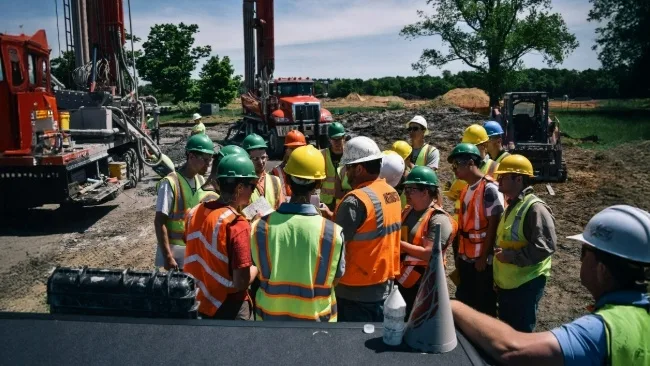
If you checked the commodities ticker this morning, you'll see a familar story playing out: oil prices are surging again.
For those of us who have spent decades around iron, mud—the specialized drilling fluid systems—and the unpredictable subterranean world, we know exactly what that means: the boom cycle is back. The oil patch is firing up, daily contractor rates are climbing, and the great vacuum of the hydrocarbon industry is sucking up every available roughneck, rig hand, and heavy equipment operator from Texas to North Dakota.
For the oil and gas (O&G) industry, this is business as usual. Still, for the ground source geothermal industry—the sector tasked with rebuilding our nation's thermal infrastructure and securing grid independence—this current surge in oil prices presents an existential threat. We are staring down the barrel of massive, unprecedented demand for ground source heat pump (GSHP) installations and Thermal Energy Networks (TENs); the capital and legislative mandates are there, but the people who actually know how to turn a bit to the right and put pipe in the ground are getting lucrative offers to go back to the oil fields.
The geothermal industry is at a critical crossroads. We have a golden opportunity to recruit transitioning workers not just from oil and gas, but from mining and steel production—industries filled with men and women who understand heavy machinery, rigorous safety protocols, and the grueling reality of industrial labor. Yet, as we try to build this bridge to a new workforce, we run headfirst into a bureaucratic wall.
Despite billions of dollars allocated for "green jobs," ground source geothermal contractors are finding it nearly impossible to secure the state and federal funding necessary to offset the massive costs of training this transitioning workforce. We are trapped in a paradox: policymakers fail to understand the massive economic multiplier our trade provides, deeming our workforce too "niche" to warrant big workforce development dollars.
The lure of the patch vs. The ground source long game
To understand this transition opportunity, we must look at who we are trying to recruit. The skills required to operate a geothermal drill rig, manage a mud system, or properly fuse high-density polyethylene (HDPE) pipe aren't learned in a classroom; they are field taught, with allowance for mistakes and for true learning to occur. Workers coming out of the O&G sector, alongside surface and underground miners and transitioning steelworkers, are the ideal candidates. They understand drilling mechanics, pressure control for given geologies, and heavy equipment operation, and they possess a strong culture of industrial safety.
However, the surging price of oil makes competing on hourly wages alone a tough battle. An O&G company can throw massive sign-on bonuses and high day rates at a driller because its product yields immediate, high-margin liquid returns. Ground Source Geothermal drilling, conversely, is a construction service with margins dictated by tightly bid contracts.
"Because our margins are so tight, independent contractors must rely on government workforce grants to offer competitive training wages to these transitioning workers."
What the ground source industry can offer, however, is something the boom-and-bust commodity markets never will: absolute stability. You aren't at the mercy of OPEC or global supply chain shocks; you are installing century-long infrastructure. Furthermore, the lifestyle is fundamentally different. Instead of spending weeks in a remote man-camp in the Permian Basin or the Bakken shale, a geothermal driller is often working on local institutional or commercial projects, meaning they get to sleep in their own beds and see their families every night.
The desire to transition is there, and the workforce is capable. So why aren't we seeing a massive influx of heavy-industry veterans flocking to geothermal rigs? Because making the switch requires retraining, and retraining costs money—money the government is currently handing out to everyone except the drillers.
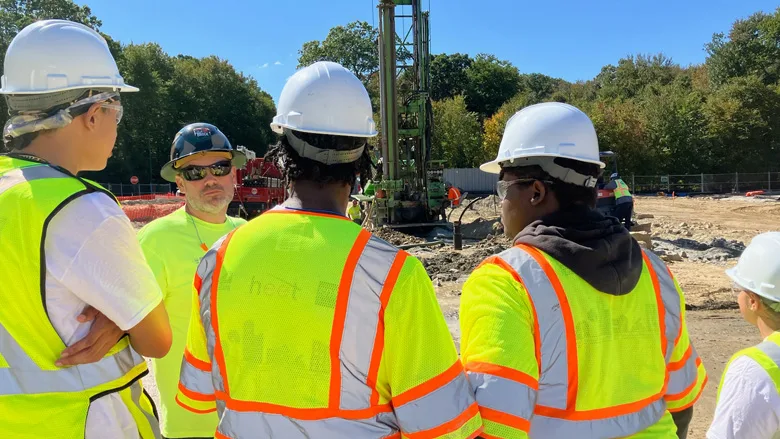
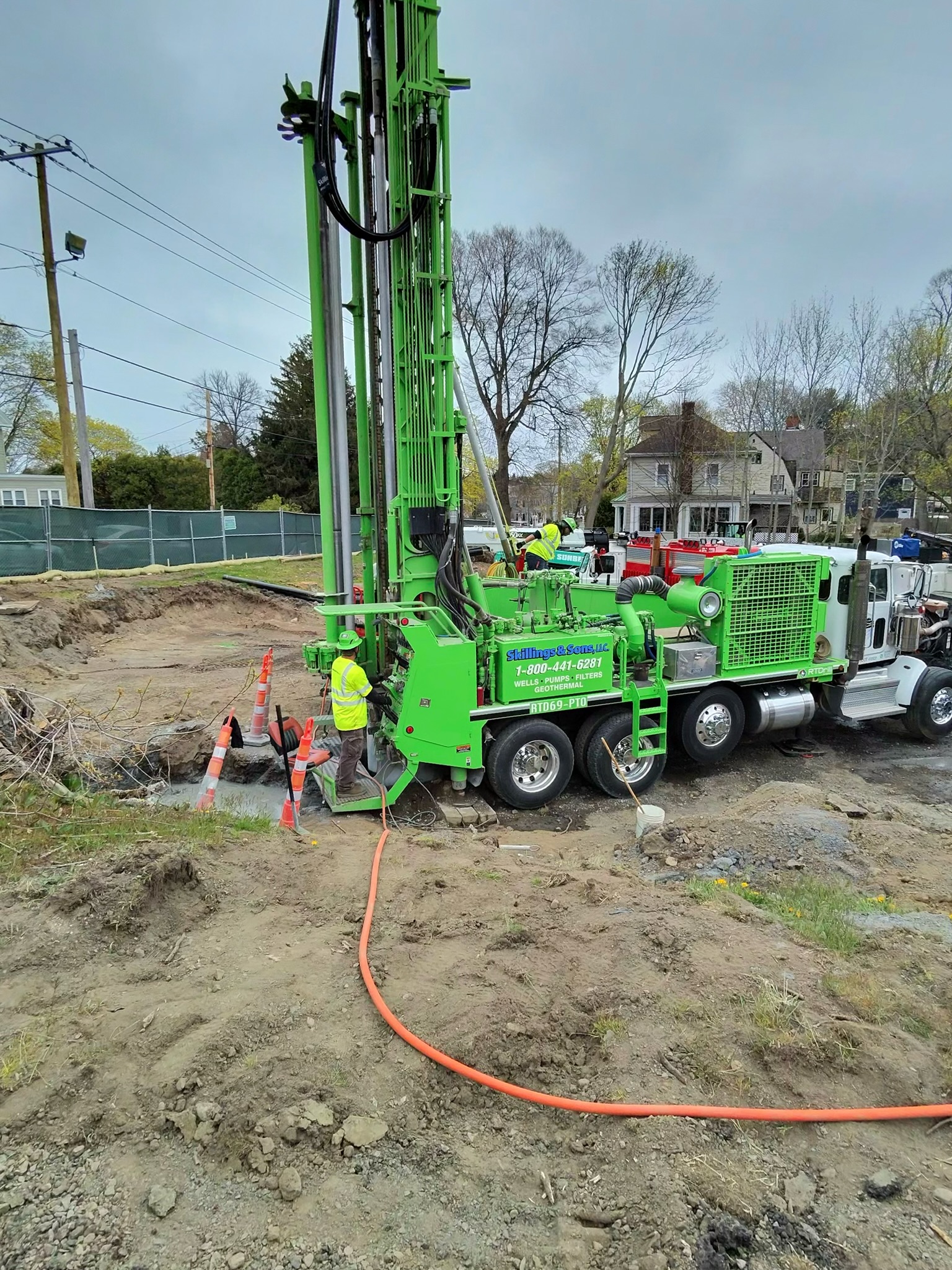 Photo: Brock Yordy | The Driller
The bureaucratic bottleneck and the economic multiplier
If you want to understand the frustration of a ground source geothermal contractor in 2026, try applying for a state or federal workforce development grant. When workforce boards distribute training funds, they use a metric called "dollar impact per capita," favoring high-headcount industries with low barriers to entry, such as solar panel installations, where unskilled workers can bolt panels to a roof after a three-week certification course.
Geothermal drilling does not fit this model. Operating a dual-rotary rig or mastering butt-fusion welding—the critical process that ensures leak-proof, century-long infrastructure—takes years of apprenticeship and thousands of hours of seat time. When a geothermal association approaches a workforce development board to fund an apprenticeship program for a transitioning coal miner or steelworker, the board looks at the numbers and balks. They see the $20,000 to $30,000 required in lost productivity, equipment time, and wages to properly train a single geothermal driller and conclude the "dollar impact" is too low compared to high-headcount sectors.
This is a profound failure of bureaucratic vision. It fundamentally misunderstands the economic multiplier our trade provides.
You do not need 5,000 drillers to change a city's energy profile; you need 50 highly trained masters of the craft. One skilled driller operating a rig over the course of a year can install thousands of tons of ground-source heating and cooling capacity. More importantly, that single driller is the tip of the economic spear. Without that one specialized worker turning a bit to the right and putting pipe in the ground, the downstream jobs completely vanished. The HVAC technicians, pipefitters, electricians, and engineers literally have no project. By starving drillers of training funds because of a low initial headcount, policymakers are inadvertently bottlenecking the entire thermal energy workforce.
The military's silent geothermal revolution
If policymakers need a wake-up call regarding the urgency of our workforce dilemma, they need only look at the Department of Defense (DoD). Some of the most aggressive and critical ground-source deployments currently underway are taking place behind the gates of our nation's military installations.
For decades, these sprawling installations have relied on highly inefficient, legacy steam-powered district energy systems—a massive single point of failure and a glaring vulnerability in an era where energy resilience and grid independence are matters of national security. The military's solution is to rip out the steam pipes and replace them with highly efficient, decentralized, and secure ground-source heat pumps integrated into modern Thermal Energy Networks. The DoD isn't transitioning to geothermal simply because it's "green," they are doing it because the earth is the ultimate secure battery that cannot be taken offline by cyberattacks on the regional power grid or by surface weather events.
These are massive, multi-year, multi-million-dollar contracts that require fleets of drill rigs, complex loop-field engineering, and strict adherence to federal contracting standards. The contractors winning these DoD bids are scrambling for the very same talent the oil patch is currently trying to hire away. We are actively trying to pull veteran heavy equipment operators, former steelworkers, and roughnecks for these DoD projects because they require a workforce that understands discipline, safety, and high-stakes industrial operations.
Here is where the funding paradox becomes critical: when state and federal agencies deny training grants to the geothermal sector because we are a "niche" trade, they aren't just hurting independent contractors or slowing down the greening of suburban America; they are actively delaying federal national security infrastructure. The disconnect between the strategic importance of our work and the financial support available to train our workers is staggering.
Bridging the gap
The ground source geothermal industry is facing a perfect storm. The demand for our services is higher than ever, driven by commercial TENs, residential retrofits, and massive military infrastructure upgrades. Yet we are fighting a two-front war for talent: battling the deep pockets of a surging oil and gas industry on one side, and the red tape of short-sighted government workforce programs on the other.
Transitioning the rugged, highly skilled workforce out of O&G, mining, and steel production into geothermal drilling is the most logical step forward for our industry. We offer them the chance to trade the boom-and-bust instability of commodities for a lifelong career building the permanent energy infrastructure of the future.
But the contractors cannot finance this transition on their own.
State and federal workforce development agencies must fundamentally rethink how they evaluate impact. They must look past raw, superficial headcount and recognize the immense leverage of the geothermal driller. Subsidizing the training of a transitioning steelworker or a tired roughneck shouldn't be viewed as a high cost for a single job; it is an infrastructure investment that unlocks millions of dollars in downstream economic and environmental benefits.
Oil prices will eventually cycle back down, as they always do. But the demand for secure, efficient thermal infrastructure will only climb. It's time to fund the transition, build the workforce, and keep the rigs turning to the right.
Looking for a reprint of this article?
From high-res PDFs to custom plaques, order your copy today!