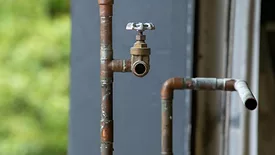
With EPA reshaping its approach to water policies, environmental advocates question if the agency's ideas can offset larger infrastructure and consumption problems.
With EPA reshaping its approach to water policies, environmental advocates question if the agency's ideas can offset larger infrastructure and consumption problems.
The company still prides itself on being the first HDD guidance firm to complete an intersect pilot hole and holds records for drill depths with its system.
The company still prides itself on being the first HDD guidance firm to complete an intersect pilot hole and still holds records for drill depths with its system.
The amendment preserves the ability of states and individuals to hold manufacturers accountable and prevents federal overreach that would override stricter local protections.
Awaiting approval in the Senate, this amendment preserves the ability of states and individuals to hold manufacturers accountable and prevents federal overreach that would override stricter local protections.
The EPA’s latest update is a step toward making information more accessible. As lead exposure continues to affect homes, schools, andcommunities, clearer guidance could help people take action sooner.
Data centers are often backed by large investments and long-term energy
agreements, and in some cases, companies have already secured water and
power rights years in advance.
The company’s first commercial-scale Eavor-Loop is now operating in Geretsried, Germany. This marks a key milestone as it looks to prove the concept at scale.
The updated plan reflects a broader shift in how water is managed across
the country - less as a one-time-use resource, and more as something
that can be treated, reused, and reintegrated into the system.
PFAS contamination isn’t a future problem—it’s already affecting thousands of water systems. The challenge is that fixing it can take years and significant investment.

 RSS
RSS