Colorado Approves Groundwater Wells for Proposed Buc-ee’s Near Monument Hill
Permits allow more than 11 million gallons annually - roughly the equivalent of 60–70 households
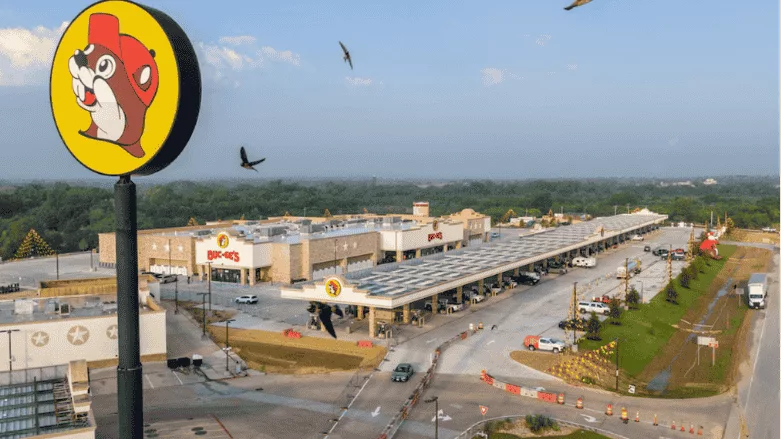
Image via Brandon Bell Getty Images via Fortune
State regulators have signed off on two groundwater well permits tied to the site of a proposed Buc-ee’s Travel Center in northern El Paso County, adding momentum to a project that’s already stirred debate among nearby residents.
The permits, issued March 19, would allow more than 11 million gallons of water per year to be pumped from underground aquifers near Monument Hill along Interstate 25. One of the wells could reach as deep as 2,250 feet into the Arapahoe aquifer within the Denver Basin, while a second would draw from the shallower Denver aquifer.
To put that scale into perspective, Denver uses roughly 67 billion gallons of water annually, and a typical household consumes a little over 100,000 gallons per year. That means the proposed wells would use an amount of water roughly equivalent to about 60 to 70 homes. It’s not an argument for or against the project—but it does help frame what “11 million gallons” looks like in more familiar terms.
Each well would be limited to pumping up to 150 gallons per minute and must be located at least 600 feet from existing wells. Combined, they represent a significant draw on groundwater that is considered effectively nonrenewable under Colorado law.
That legal framework is central to the state’s approval process. Regulators calculate allowable water use based on land size and estimates of aquifer reserves, dividing the total by 100 to stretch supply over a century. El Paso County applies an even stricter planning benchmark of 300 years.
Still, some residents argue those calculations don’t reflect current realities like climate change and continued population growth. Concerns have centered on long-term groundwater depletion and whether high-capacity wells could impact neighboring water supplies.
State officials maintain they are bound by existing statutes and cannot impose additional restrictions without legislative changes. However, there is a mechanism for challenge: residents can request a formal hearing if they believe the permits were issued incorrectly or could cause harm. At least one such request is expected, and the review process could take months to a year.
The permits don’t guarantee the Buc-ee’s project will move forward, but they mark a key step—and ensure that, in a water-conscious region, the conversation around it is likely to continue.
Looking for a reprint of this article?
From high-res PDFs to custom plaques, order your copy today!

John Oldani is an editor, journalist, and reporter with over a decade of experience producing clear, engaging, and well-researched content. He holds a Bachelor of Arts in Journalism from Oakland University, with a focus on financial reporting, editing, and long-form writing. Over the past year, John has specialized in covering the drilling industry, reporting on key developments, policy shifts, and impactful stories shaping the field.
email: johnnyoldaniwords@gmail.com | office: (248) 838-8535