Featured speaker
Recognizing Uncertainty: Grant Piraine, Founder of NAPUA Talks the Imperfect Science of Remote Monitoring
Using intuition first could mean the difference between a stress-free job site and potential catastrophe
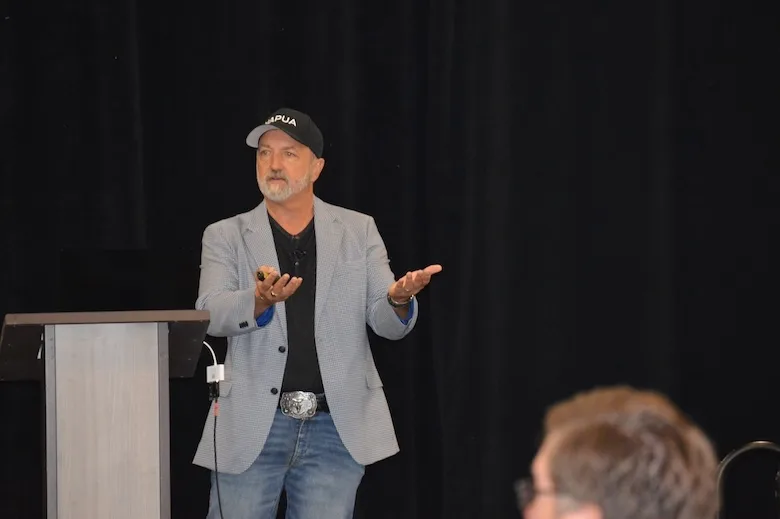
For Grant Piraine, the notion of thinking before you drill isn’t just a passive thought. It’s a lifestyle and a mindset that is a big part of everything he’s preached in over three decades in the industry.
His title is damage prevention specialist, but he’s also the founder of the North American Private Utility Association, or NAPUA, which reminds companies that remote monitoring is not always a perfect science. Last month, he was a speaker at the National Drilling Association’s Drill Expo and gave some interesting scenarios and suggestions for the nearly 500 drilling professionals to consider.
But first a scenario…
A drilling crew arrives at a new site, confident that they have everything they need to begin work. The location has already been identified and approved. The crew receives the information they have been given about the site and prepares to drill. Everything appears routine—until one of the drillers notices that something important is missing.
What lies beneath where they’re preparing to drill?
Recognizing that uncertainty is the first step before any ground is broken, but isn’t that where remote monitoring is supposed to come in? It is, but Piraine noted that even that is not a perfect science. It’s that realization that sparked his desire to launch NAPUA.
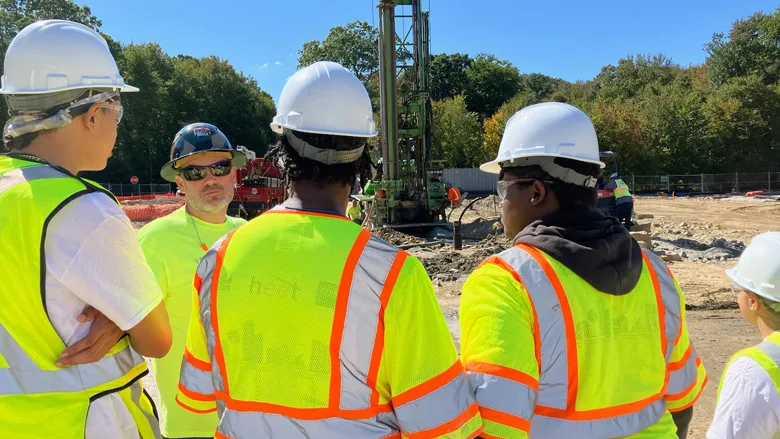
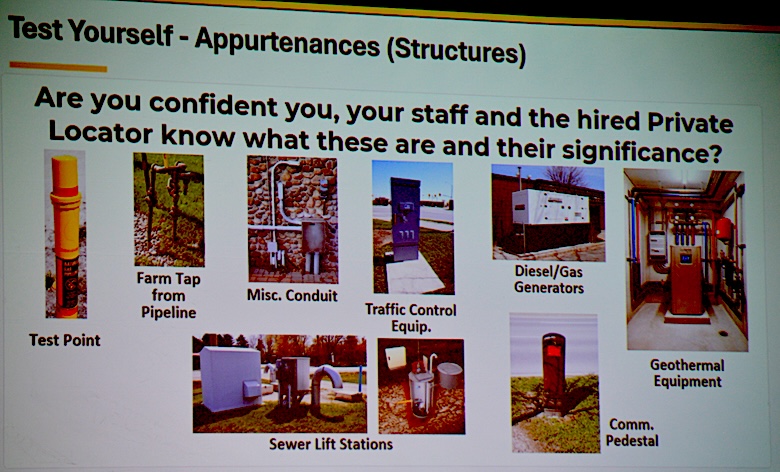 Some common items Piriane says site managers need to be aware of. / Image: Kerith Gabriel
“We know the system is flawed,” Piriane said. “Anyone can be a private locator, no one is saying you can’t, but what are that particular person’s specifications? How do you as a drilling firm or as a client know that person is legit?”
Everyone knows 811, the national number to call before drilling or excavation takes place on a site, but drillers aren’t always concerned, especially if the location has been cleared. But just knowing the location, Piriane says, isn't the same thing as proof that the risk has been investigated. Knowing from a drilling companies perspective is about developing enough evident to understand actual risk.
“There’s no shame in adding in additional precautions,” Piriane said. “Sure it might delay work, but you know what else delays a job? Hitting a pipe or underground cables. So why not take the time to be sure?”
Added Piraine: It’s a really important question: Are we confident because the risk has actually been investigated — or simply because someone told us the location was okay?
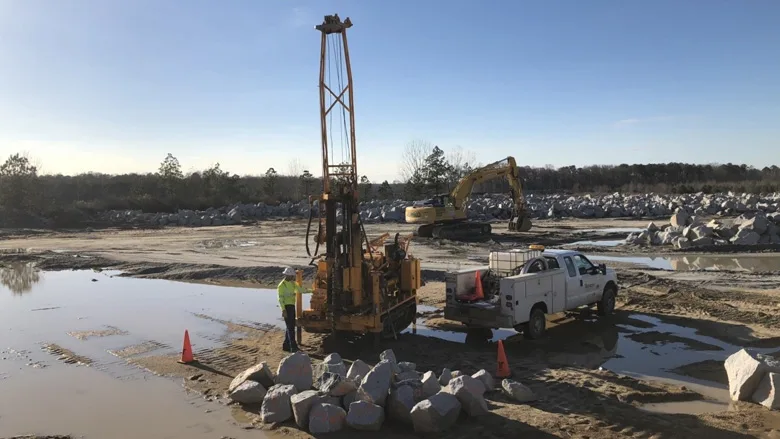
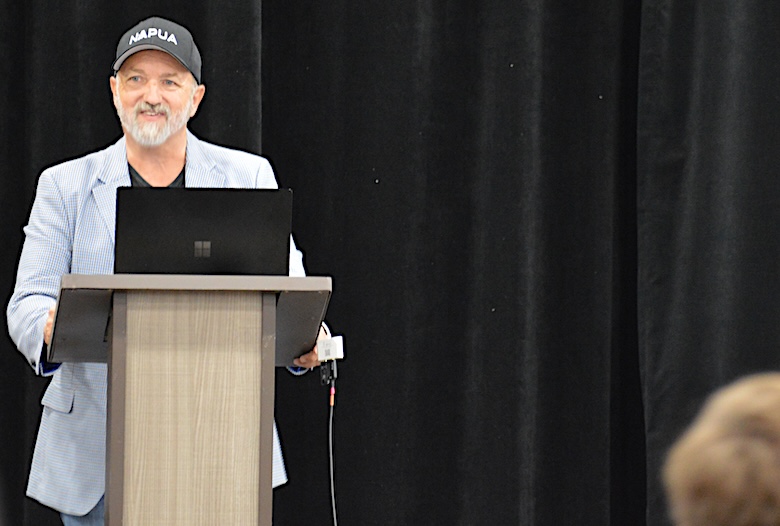 Grant Piraine says the onus is on drillers first to know what's underground. / Image: Kerith Gabriel
Recognize. Verify. Decide.
Essentially, it comes down to using intuition. Looking around for electrical boxes, exposed pipes, and more close to the proposed jobsite give great insight into what could be lurking. Don't simply trust a location.Make sure the risk has been reasonably investigated before drilling begins.
“The thing is, not enough drillers are learning this stuff,” Piriane said. “Plus did you know that there’s no [official] public-private certification to know how long a locator's training was for? The onus is on you as the drilling professional to get it right.”
In February, Piriane published a white paper called the Ground Disturbance Cycle located on NAPUA’s website. In it, he discussed subsurface utility risk management in detail and also noting that private locators should work as the final risk control checkpoint, and not serve as the first call.
In all, Piriane’s main takeaway is the more drillers know what to expect about where they’re going to bore, the more efficient they can and will always be.
“It’s important for us to not only educate ourselves but educate our clients,” he said. “The potential dangers are real and some of them are bigger than what insurance will cover. When everyone is on the same page, it’s easier to figure our the real risk of potential damage.”
Looking for a reprint of this article?
From high-res PDFs to custom plaques, order your copy today!