Water rights
‘One Well Creates Many’: The wild story of how the South Carolina Groundwater Association got S.C. House Bill 51111 passed
The SCGWA "set precedent" when it comes to other association fighting for a right to own a private water well. Here's how they did it.
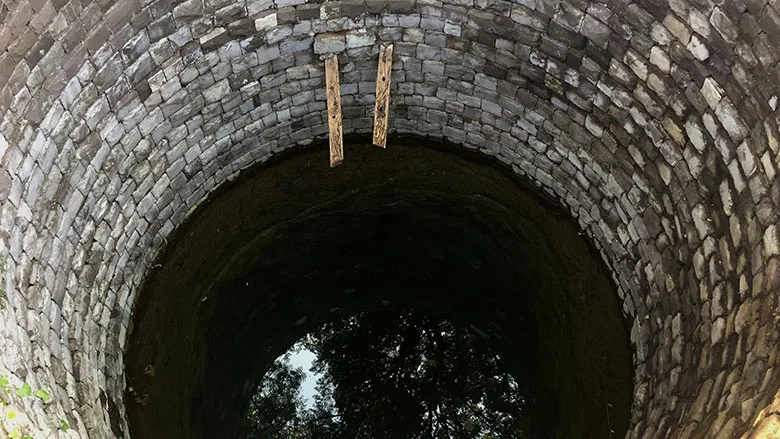
It was supposed to be just a simple irrigation well.
Already connected to the municipal water lines in the town of Clover, South Carolina, a homeowner contracted a drilling company to install an irrigation well that would service about two acres of land. It seemed simple enough, and the owner was still committed to keeping their municipal lines, and continuing to pay the town’s tap fee to do so.
But officials in Clover sent the homeowner a stop work order, saying that a water well could not be drilled within town limits, it not only ruffled the feathers of one homeowner, but it kickstarted a fight for legislation, setting a course on challenging not just local restrictions in Clover, but in the entire Palmetto State.
No time for ‘little lawsuits’
Jay Swearingen, who at the time was head of the South Carolina Groundwater Association, looked at the problem from two facets: Take the town of Clover to court and fight for the rights in a town of roughly 8,000 people or go big and consider taking a bill to the State House, knowing that a win in Clover could easily make other towns create their own loopholes by way of adopting carefully-worded ordinances.
“The news of what happened on that property certainly got us mobilized,” Swearingen told The Driller in a recent interview. “We went back and forth as far as [whether] we should take them to court or should we pursue it legislatively. We decided to go the legislative route because, even if we were successful against the town of Clover, we couldn’t afford to fight little lawsuits all over the state.”
So in 2024, the organization got to hiring a lobby firm in hopes of submitting a bill that would catch the legislative cycle, which in South Carolina runs on a two-year cycle. It was their first go-run at trying to formalize a bill for consideration, and as Swearingen recalled it read like it.
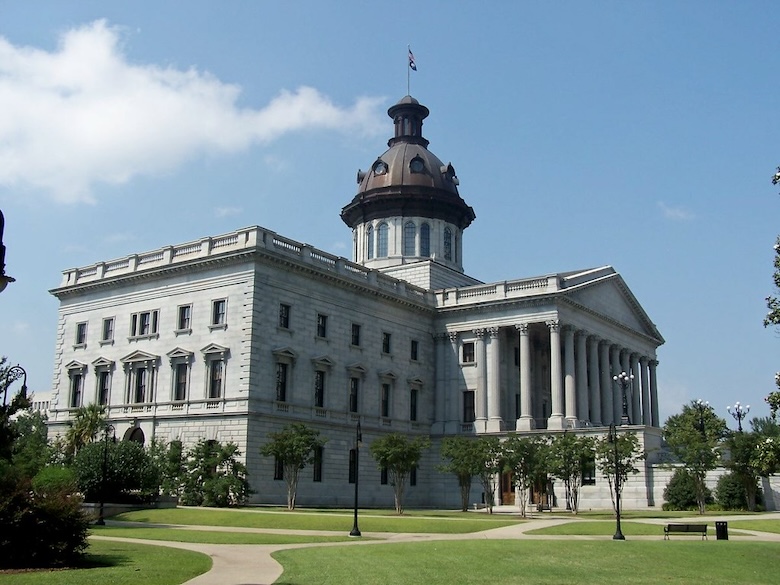
The State House in South Carolina
Image / J. Stephen Conn via Flickr
Opportunity out of disappointment
After submitting the initial bill in January 2025, it didn’t even make it out of committee, as the speaker acknowledged that it was “poorly worded” according to Swearingen. However, the SCGWA saw it as an opportunity, not disappointment as the process offered an insightful look at how the legislation works and how to acutely build on relationships that would only help going forward.
“I knew from the rip, that it probably didn’t have a chance of getting out of committee, and it didn’t,” recalled Swearingen, but it’s hard to tell these legislations that you wrote a crappy bill. So yeah, we were basically at square one, but we had made a couple of relationships, so we took all of that and went back to work [on proposing a new one].”
The process of starting over with a new and better bill began almost immediately as in the fall of that same year, both the SCGWA and their lobbying firm began talks with legislators. The revamped and as Swearingen called it “straightforward bill” made it into committee.
And then bureaucracy entered the room.
The proposal would stall in the committee. It made the group quickly realized that it’s not enough to have a really good bill. Part of passing anything was going to be more than just what you know, but who you know. Creating relationships and building on those quickly became the way that the notion of this getting passed was going to happen.
“At our February meeting, I pretty much made an appeal to our members,” Swearingen said. “I just said, ‘Do any of you guys know anyone that we can leverage a relationship with to hopefully get this bill moving forward. And then it was almost like a thing that was meant to be.”
SCGWA's saving grace
During those winter meetings, the SCGWA typically holds their annual defense auction, a way to raise funds for various initiatives, like legislative undertakings. The groups customary auctioneer, Mike Gill, was unable to speak due to an illness, recalled Swearingen, making the association bring in another auctioneer, Jerry Bruce.
Bruce overheard Swearingen’s ask for help and it just so happened he had a relationship with a high-ranking member inside South Carolina’s House of Representatives. It was a connection that would lead to an internal meeting between the group, its lobbyist, advocates and the official, which came at the perfect time.
“That’s what it took, that one meeting and we started getting movement on the bill,” said Swearingen. It went to a subcommittee, full committee and then the House floor [were] unanimously voted to move forward.”
“Unanimous” was an understatement.
House Bill 5111 passed and moved into the state Senate after a 109-0 vote.
But while that success was cause for celebration, roadblocks appeared again once the bill made it into the Senate. It was assigned for review by the Senate Judiciary Committee, not its Agricultural Committee.
As a result, once again, the SCGWA had a stalled bill.
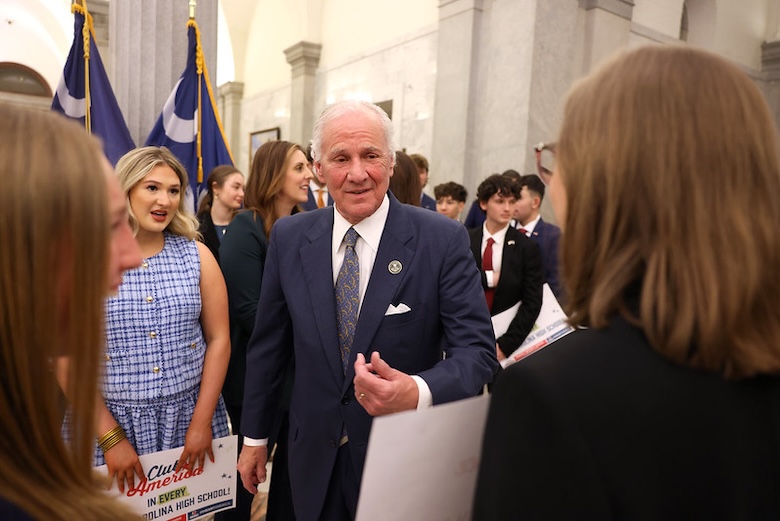
South Carolina Governor Henry McMaster
Courtesy / Gage Skidmore via Flickr
Time not on their side
With just three weeks remaining before the session closed, Swearingen said that there were concerns that the HB5111 would get held up in committee. Winter had turned to spring and once again at the SCGWA’s quarterly meeting, Swearingen says he called on his membership again to see if there was anyone who could help.
“Of course, you know, we're panicking a little bit,” Swearingen recalled. And, so at our April meeting, which is our spring meeting. I again made a plea to the membership ... [to see if there was] somebody we could leverage a relationship with.”
In yet another stroke of luck, mixed with great timing, there was someone to lean on. However, the process wasn’t as seamless after making contact as it was with the attempts of passing it in the House. Despite the family connection, the Senator was not returning calls. It wasn’t until the lobbyist went to the Senator’s office and waited outside did a conversation and an urgent solution take place.
There was a special maneuver that could be done to bypass the committee process and send HB5111 directly to the floor. It was a maneuver that proved successful, but was stalled by a senator who, as Swearingen recalled, put his name on the bill, which would stall the process.
As it was explained, the Senator, who was a farmer and had concerns over property rights, wasn’t opposed to the notion of the bill, but didn’t understand what it would fully entail. After a meeting with the association, he removed his name. Upon completion, of two readings, it would pass and end up on the desk of South Carolina Gov. Henry McMaster, who would sign it into law 10 days later, which capped a monumental push on various fronts, nearly two years in the making.
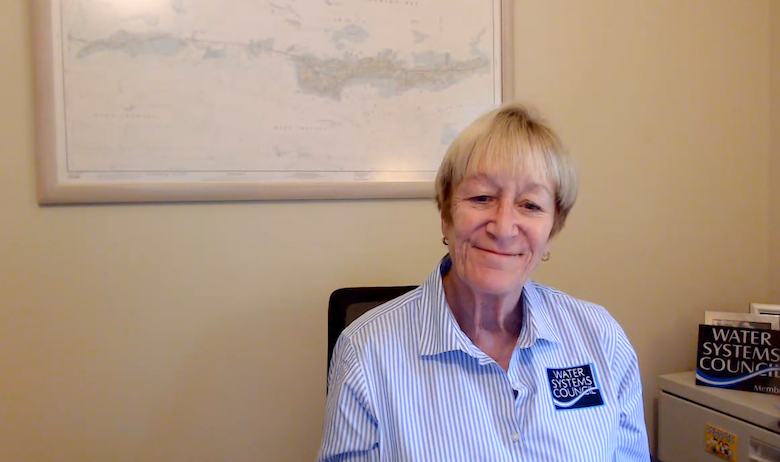
Margaret Martens of the Water Systems Council
Photo: Kerith Gabriel / Staff
"We don’t all want to drink chlorinated water or treated water." Margaret Martens
Executive Director, Water Systems Council
Margaret Martens, executive director of the Water Systems Council, the advocacy group that fights for the right to own water wells throughout the United States, described the move as one that “sets precedent” for more state associations to begin doing the same. It was the WSC’s lawyer Jesse Richardson, who helped the SCGWA find a lobbyist to kickstart the process.
“I’m humbled by the process,” said Swearingen. “I'm grateful that we were able to get it passed. And, uh, so it's, it's a great deal for South Carolinians. This bill gives them an option. Drilling a well is expensive up front, but it’s a good bit of payback versus paying a $40 to $50 dollar monthly water bill. Also, we don’t all want to drink chlorinated water or treated water. You can drink water straight from a well and to be a part of that as a right, I mean, I personally and our association are truly humbled by it.”
Looking for a reprint of this article?
From high-res PDFs to custom plaques, order your copy today!