Water news
Insight, information and innovation was at the forefront during the first day of the South Atlantic Jubilee
The annual meeting of the minds when it comes to water, and the workforce that powers it didn't disappoint on Saturday's day one of event.
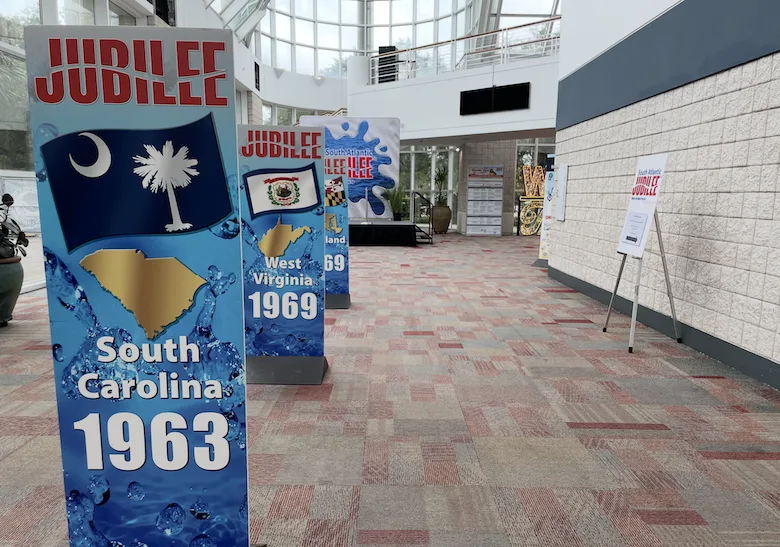
Water in all its forms was once again at the forefront of the annual South Atlantic Jubilee in Myrtle Beach, South Carolina. Saturday’s first day brought hundreds of drilling experts and their families out for a series of classes, lectures and demonstrations.
The family-friendly event, which wraps up on Monday, offered a great deal of both hands-on and instructional information that offered a good deal of insight.
Here are four top highlights of some of the events that happened on day one.
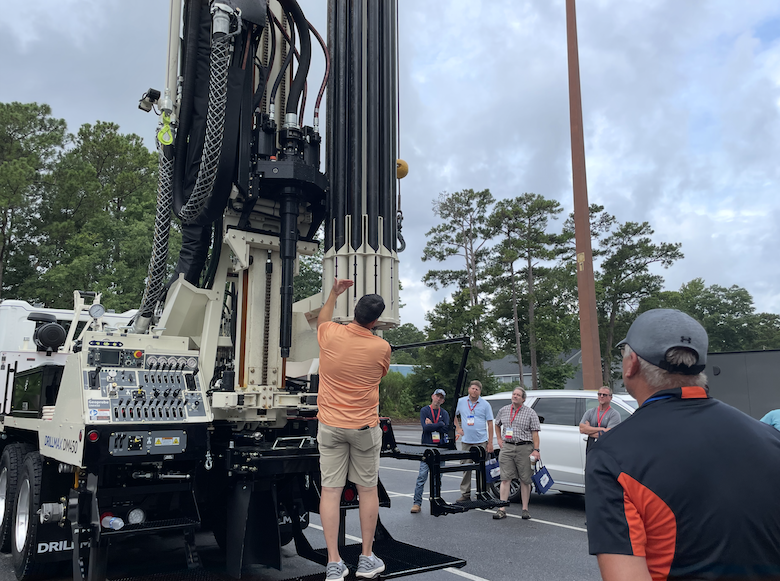 An early morning look at Geoprobe's new Drillmax DM450 drilling rig. / Image: Kerith Gabriel
Waking up with Geoprobe
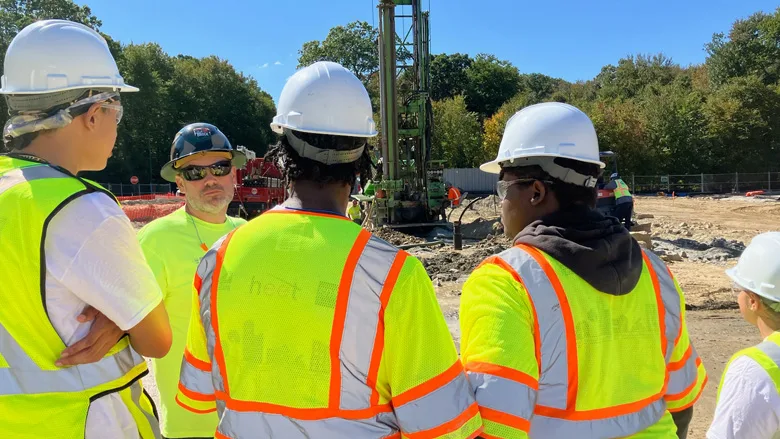
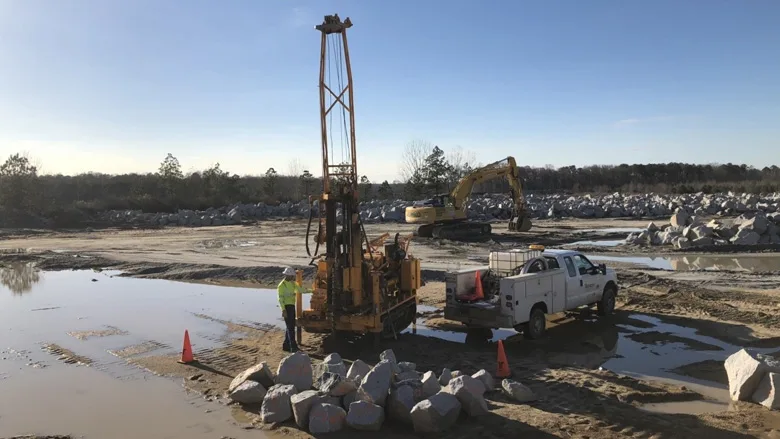
The morning began with Geoprobe Systems showcasing one of its latest rigs, the Drillmax DM450 version three, lauded as a versatile piece of machinery optimized for water well, geothermal and cathodic protection drilling. The rig, equipped to handle four to 12 inch wells up to 1,000 feet, simplifies the process for drillers used to working in a variety of conditions, according to Donnie Wood, a chief representative at Geoprobe.
“Everything is a mechanical control and the control panel is very user-friendly,” Wood told The Driller. “When we go to job sites to train drillers, usually within that first day they’re pretty comfortable with running the machine, and honestly, I find it to be a lot safer than some of the older technology.”
Quick biology lesson
One of the most insightful presentations in the morning was a talk by Michael Schnieders of Water Systems Engineering, Inc., based out of Ottawa, Kan. Schnieders dived into all of the bacteria that can find itself in wells, what to look for and even what different color growth can tell drillers about what’s affecting everything from the pump to the well itself. For example, did you know that orange-colored bacteria signifies that it’s an iron-related problem which could even affect the integrity of a number of different pump metals over time from galvanized steel to even stainless steel in the right environment.
In fact, 47% of bacteria related issues in water wells are iron-related issues, and of that, gallionella is most prevalent nearly 75% of the time. Followed by slime forming bacterias, like bacillus or pseudomonas and algae, which is a distinct green.
“You have two different divisions of microbial organisms,” Schnieders said. “You have those that like oxygen, and they will repopulate quickly and then you have those that hate oxygen, those anaerobic populations. All of these growths happen over time, where depending on the environment you may only need to service a pump routinely, or several times in a calendar year because of how rapid this growth can be if not treated correctly."
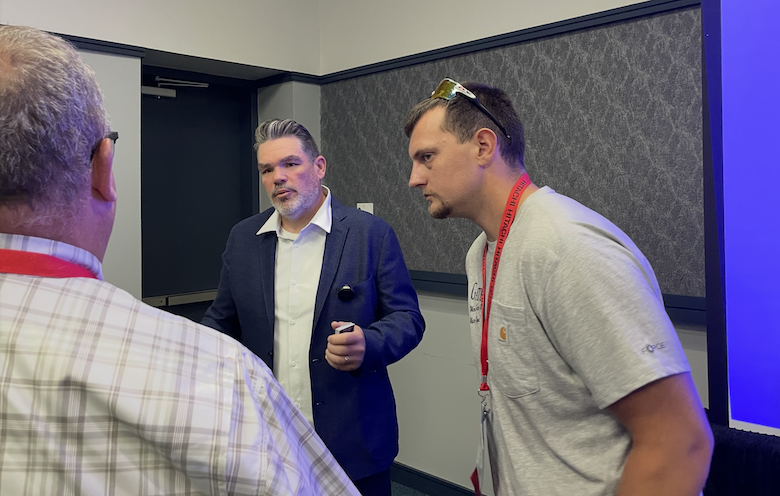 Drilling industry expert Brock Yordy talks with attendees of his presentation at the South Atlantic Jubilee. / Image: Kerith Gabriel
Workforce growth fuels geothermal goals
As geothermal continues to be a topic of not just being a viable alternative energy source, but one that could bring long lasting sustainability at a more affordable rate to consumers, a big question arrives. Who’s going to harvest it over the next 20, 30, 50 years is the prevailing question.
Industry professionals Brock Yordy and Rob Meyer, founders of the Geothermal Drillers Association, laid down some eye-opening numbers in their discussion entitled, 2026 Geothermal Industry for Water Well Drillers and the importance of being involved. According to statistics from the Bureau of Labor, of every 50 professionals that enter construction fields, only one of them are drillers.
On top of that the rough estimate is that a little over 80 drilling rigs are manufactured in a year. This prompted Yordy to note that if the goal is to drill 88.4 million feet of geothermal boreholes by 2050, growing the workforce to accomplish this feat has to start now, highlighting the surge of training programs and intensives both the GDA and other entities have created in an effort to make that 50-1 ratio more equitable when it comes to the drilling community.
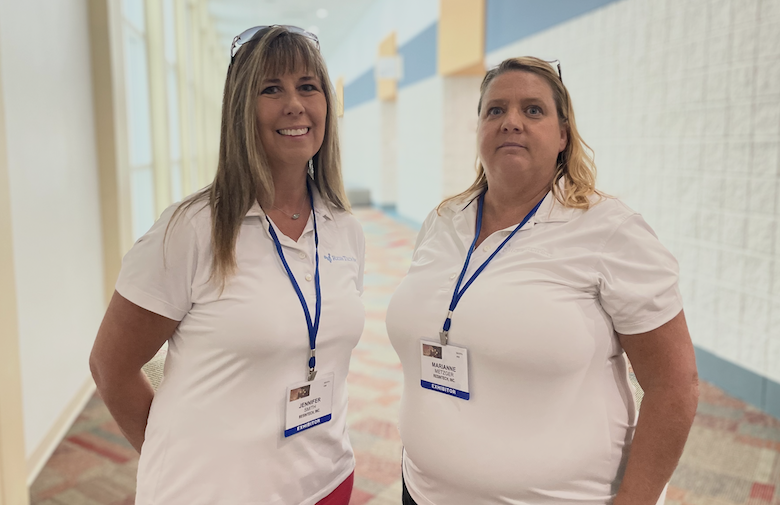 Jennifer Smith (left) and Marianne Metzger of ResinTech Inc. / Image: Kerith Gabriel
PFAS, PFAS, PFAS
One of the more insightful class discussions of the day came from Resin Tech, Inc., and the discussion led by certified water specialist Marianne Metzger. Metzger began her discussion with a level set: PFAS is in everything. From the clothes you wear to the sunscreen applied. But her point was to note that remediation specialists when testing rarely think about that when they collect samples testing for levels of PFAS.
Showing up to test a site wearing lotions, sunscreens, even waterproof boots can skew a test and even contaminate the sample. Even putting a post-it note on a sample, you guessed it, the adhesive on the note most likely contains PFAS. Metzger noted that national programs by the EPA, like the Fifth Unregulated Contaminant Monitoring Rule or UCMR 5 is a step being taken to reduce PFAS. But there’s still a lot more education that needs to take place about what’s inside, what’s being made.
“We have seen a reduction in PFAS, in at least the legacy compounds, which is a good thing,” Metzger told The Driller. “The problem is they keep introducing new compounds. And the industry is sort of self-regulated so … I think we need to start taking a real look at things before we introduce them into the environment."
We'll have a daily report from the South Atlantic Jubilee, be sure to head back to thedriller.com for updates
Looking for a reprint of this article?
From high-res PDFs to custom plaques, order your copy today!