Treatment and Remediation
Smarter PFAS Barriers Start with Better Site Data
Better data leads to better barrier performance when designing colloidal activated carbon treatments for PFAS.
Key Takeaways
- PFAS barrier design is shifting toward comprehensive site characterization, beyond regulated compounds alone.
- Precise carbon placement and long-term monitoring improve barrier performance and reduce costly treatment failures.
- Containment remains the practical strategy while the industry advances toward scalable PFAS destruction technologies.
Colloidal activated carbon is emerging as a promising tool for containing PFAS in groundwater, but successful treatment depends on much more than injecting carbon into the subsurface. Careful site characterization, precise placement and long-term monitoring all play a critical role.
The Driller recently tuned into the webinar "Designing Smarter PFAS PRBs with ColloidalChem," where Eliot Cooper, remediation technology expert with Cascade Environmental, shared lessons learned from designing and installing permeable reactive barriers using colloidal activated carbon (CAC).
Cooper explained that treating PFAS in groundwater is rarely as simple as selecting an adsorbent and putting it into the ground. While long-chain PFAS compounds like PFOA and PFOS are generally well suited for activated carbon treatment, the real challenge is designing a barrier that continues meeting increasingly strict cleanup goals as groundwater moves through complex underground conditions.
Throughout the presentation, Cooper emphasized that successful PFAS barriers depend on understanding contaminant mass, groundwater flow and the realities of delivering treatment materials beneath the surface.
PFAS Change the Design Equation
PFAS creates challenges that contractors don't typically face when cleaning up contaminants like petroleum or chlorinated solvents.
Unlike many other pollutants, PFAS doesn't break down easily through natural biological or chemical processes. It's often found as a mixture of different compounds and must be treated at extremely low concentrations measured in parts per trillion.
Some long-chain PFAS compounds can also seep into dense soils like clay and silt, then slowly leak back into groundwater over time. That means contamination can persist long after the main plume has been contained.
Short-chain PFAS compounds and precursor chemicals make cleanup even more complicated. Even if they aren't part of a site's cleanup requirements, they can still fill up treatment media or eventually transform into regulated PFAS compounds, making long-term treatment more difficult.
For now, Cooper says pump-and-treat systems and permeable sorptive barriers remain some of the most practical ways to manage PFAS contamination in groundwater. A sorptive barrier is designed to capture contaminants as groundwater flows through it rather than destroy them.
One common approach involves injecting colloidal activated carbon (CAC) into a groundwater zone to create an underground treatment barrier. As contaminated groundwater passes through, PFAS sticks to the activated carbon, helping reduce the spread of contamination.
Compared with building and operating a traditional pump-and-treat system, this approach can lower risk more quickly. But it isn't a permanent solution. Activated carbon can only hold so much PFAS before it becomes saturated. Once that happens, contaminants can begin passing through the barrier again, making long-term monitoring and maintenance critical.
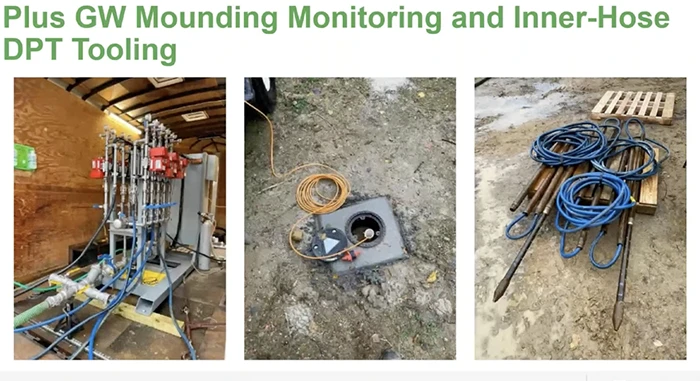
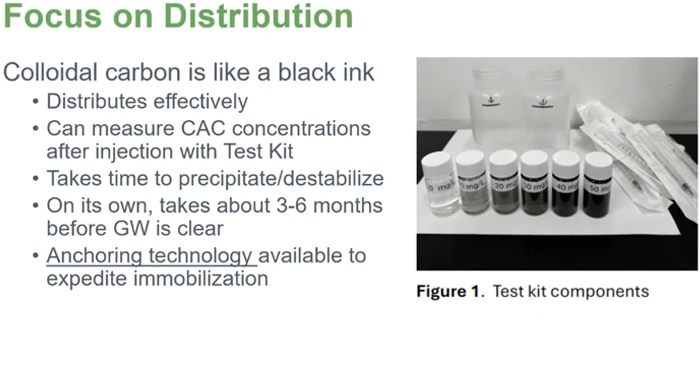
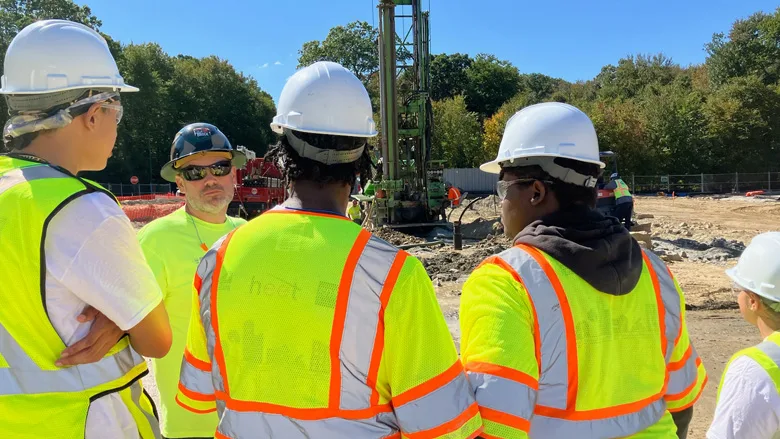
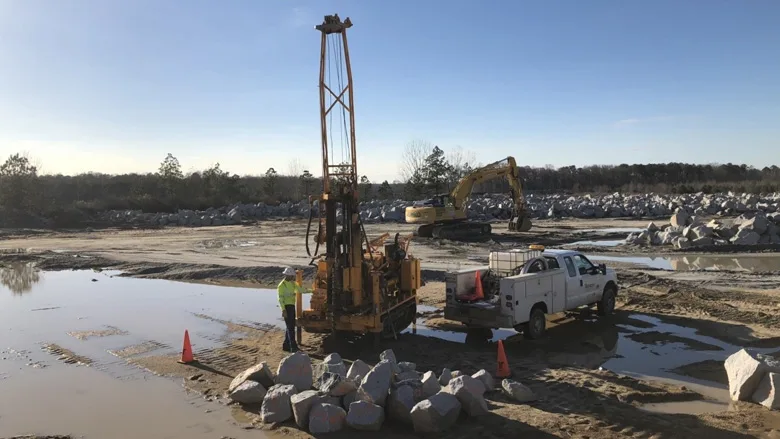
Images from Cascade Environmental's webinar
Credit: Cascade EnvironmentalCharacterization Must Look Beyond Regulated PFAS
Figuring out how much activated carbon a site needs starts with understanding exactly which PFAS compounds are present and how they're moving through the groundwater.
Engineers use adsorption data to estimate how much PFAS the carbon can capture before it becomes saturated. Cooper noted that not all activated carbons perform the same, and it's important to use data that reflects today's extremely low cleanup targets, which are often measured in parts per trillion rather than parts per billion. Data collected at higher concentrations may not accurately predict how a treatment barrier will perform in the field.
It's also important to evaluate the full mix of PFAS compounds at a site, not just regulated chemicals like PFOA and PFOS.
Cooper pointed to a pilot project at a site contaminated by firefighting foam. At one monitoring well, the treatment performed well. PFOA dropped from 29 to 9 parts per trillion after six months, PFOS remained at 2 parts per trillion, and PFNA fell from 7 to 2.
At another monitoring well, however, PFOA fell from 190 to 51 parts per trillion but still exceeded the cleanup target. That area contained much higher levels of other PFAS compounds, including short-chain PFAS and 6:2 fluorotelomer sulfonate, which competed for the activated carbon's adsorption capacity.
The project highlights why thoroughly characterizing all PFAS at a site is so important. Even compounds that aren't regulated can reduce how long a treatment barrier remains effective. Other factors, such as organic carbon naturally present in the groundwater and additional contaminants, can also increase the amount of activated carbon needed.
In some cases, engineers conduct site-specific adsorption testing to better predict long-term performance. Cooper said those studies can cost up to $25,000, so whether they're worthwhile depends on the size, complexity and overall risk of the project.
Bench Testing Is More Complicated Than It Looks
Before installing a full-scale treatment system, Cooper recommends testing the technology using groundwater from the site.
A simple, single-dose test can show whether colloidal activated carbon (CAC) is likely to work. More detailed tests that evaluate several carbon doses can provide a better picture of how the treatment will perform over time, but they also require more water, laboratory work and time.
Testing CAC isn't always straightforward. The carbon is made up of extremely small particles that can be difficult to separate from treated water. In addition, the polymers used to keep the carbon suspended can make filtration more challenging.
If carbon particles remain in a water sample, laboratory testing may mistakenly pull PFAS off the carbon during analysis and count it as dissolved contamination. That can make PFAS concentrations appear higher than they actually are or even trigger quality-control issues.
Cooper said polymer-free carbon formulations can make sample preparation easier. Filtration can also help, although it may not remove every carbon particle. Because of that, it's important to interpret laboratory results with an understanding of how the samples were collected and prepared.
The same issue can occur after the treatment system is installed. Groundwater around the injection area may stay visibly black for three to six months while the activated carbon settles into place. Sampling during that period can produce misleading PFAS results because suspended carbon particles may still be present in the water.
Instead, Cooper recommends using that time to confirm the carbon has been distributed where it needs to be. Once the groundwater clears, PFAS sampling provides a much more accurate picture of how well the treatment barrier is performing.
Placement Matters as Much as Dose
Even the right amount of activated carbon won't be effective if it doesn't end up where it's needed.
Colloidal activated carbon is designed to move easily through groundwater, allowing it to spread through permeable soils. But that mobility can also create challenges. At sites where groundwater moves quickly, the carbon can travel beyond the planned treatment area before it settles into place.
Shallow injection zones present another potential issue. Cooper described one pilot project where carbon surfaced during injection, despite careful monitoring of pressure and flow rates. When carbon reaches the surface instead of staying underground, it isn't available to treat contamination within the target zone.
To avoid those problems, contractors need to carefully control injection pressure and flow rates, stay below the pressure that could fracture the formation, and watch for signs that the ground is no longer accepting material as expected. Proper mixing is also critical. If the carbon is injected in a highly concentrated slug, it can clog pore spaces in the soil. A well-diluted suspension spreads more evenly and occupies only a small portion of the available pore space.
Direct-push equipment is often a good choice because it allows contractors to create closely spaced treatment zones. At deeper sites, injection wells may be more practical, but wells with long screened intervals can distribute carbon unevenly. Groundwater and carbon tend to flow into the most permeable sections, leaving other parts of the treatment zone with little or no carbon.
Cooper said shorter or nested well screens, packer systems that isolate sections of the well, and recirculation systems that move groundwater between injection and extraction wells can provide better control. Connecting multiple injection points through a manifold can also help crews maintain consistent pressure and achieve more even distribution across the treatment barrier.
Flux Provides a Better Target
One of the most important factors in designing a treatment barrier is understanding how quickly groundwater is moving.
Cooper said it's common for designers to confuse seepage velocity with Darcy velocity. Seepage velocity measures how fast water moves through the connected pore spaces in soil or rock, while Darcy velocity measures the overall flow of groundwater through the formation. When estimating how long a treatment barrier will last, Darcy velocity is generally the more useful measurement because it better reflects the amount of contaminated groundwater moving through the barrier.
Measuring contaminant mass flux can also improve barrier design. By identifying the parts of the aquifer carrying the greatest amount of PFAS, contractors can focus activated carbon where it will have the biggest impact instead of injecting areas that contribute little to the overall movement of the plume.
It's also important to remember that colloidal activated carbon doesn't destroy PFAS. It simply captures the compounds and keeps them from moving farther downgradient. That means the carbon itself needs to stay in place. If it migrates away after adsorbing PFAS, it could carry the contamination with it. Cooper said some newer technologies are designed to keep the carbon mobile during injection but allow it to become immobilized once it's in the ground.
Even with a well-designed system, no treatment barrier should be viewed as a permanent, maintenance-free solution. Groundwater conditions change over time, contaminant loading can vary, and other chemicals in the water can compete for adsorption sites on the activated carbon. Long-term monitoring is essential to track carbon distribution, measure PFAS removal and identify when the barrier begins to lose effectiveness.
Even so, sorptive barriers may provide a practical alternative at sites where traditional pump-and-treat systems would be too expensive or difficult to operate for decades. In many cases, Cooper said the best approach may be to contain the contamination now, reduce the risk of further exposure and continue evaluating new PFAS destruction technologies as they become commercially viable.
For drilling and remediation contractors, success depends on much more than simply injecting activated carbon into the ground. It requires a thorough understanding of site conditions, careful barrier design, controlled installation, and a clear picture of how groundwater, along with the PFAS moving through it, travels beneath the surface.
Looking for a reprint of this article?
From high-res PDFs to custom plaques, order your copy today!

John Oldani is an editor, journalist, and reporter with over a decade of experience producing clear, engaging, and well-researched content. He holds a Bachelor of Arts in Journalism from Oakland University, with a focus on financial reporting, editing, and long-form writing. Over the past year, John has specialized in covering the drilling industry, reporting on key developments, policy shifts, and impactful stories shaping the field.
email: johnnyoldaniwords@gmail.com | office: (248) 838-8535