Expert Commentary
Another strain caused by the continued growth of data centers? Wastewater infrastructure.
Recently, The Driller spoke with Kevin Gast, co-founder and CEO of water technology firm, VVater, about the challenges facing municipalities and the industry.
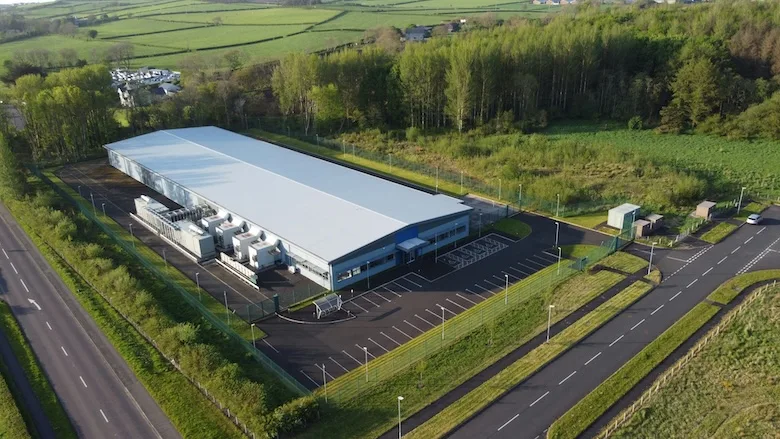
Data centers need a lot of water, but what happens to that water after it's used is becoming just as important. VVater CEO Kevin Gast says communities need to start paying closer attention to exactly that.
A recent wastewater discharge issue involving a contractor on Meta’s data center project in Cheyenne, Wyoming, has raised questions about whether local water systems and regulations are equipped to handle the industry's rapid growth. More data centers are proposed across the country, the water-related work surrounding these developments could extend well beyond drilling production wells and securing sufficient supply.
Groundwater availability, aquifer conditions, monitoring requirements and wastewater disposal options can all influence whether a proposed facility is practical over the long term. In areas where water supplies are already strained, additional industrial demand may also increase the importance of groundwater monitoring, alternative water sources and reuse systems.
For drillers and other water industry professionals, that means the questions surrounding data center development may become increasingly technical. How much water can an aquifer sustainably provide? What monitoring will be needed? Can treated water be reused? And what happens when a facility's water requirements exceed the capacity of the surrounding infrastructure?
Those questions are unlikely to have the same answers in every community. But as data center construction continues, determining where the water comes from, how it is managed and where it ultimately goes will be an increasingly important part of the planning process. For drillers and groundwater professionals, it’s another reminder that supplying enough water is only part of the job.
Recently, The Driller spoke with Kevin Gast, co-founder, CEO and chairman of water technology company VVater, about the challenges facing municipalities, data center operators and the water industry.

What does the recent wastewater issue involving a Meta contractor in Cheyenne, Wyoming tell us about the water challenges tied to data center growth?
Kevin Gast: The recent news regarding wastewater in Cheyenne is a good example of what happens when infrastructure planning lags behind the pace of construction. Many people have been focused on how much water data centers use, but this shows the other half of the equation: what goes back into the system, and whether municipalities have the visibility and safeguards to catch it before it becomes a public health concern. This story as a whole is less about a contractor’s mistake, and more about aging systems that weren’t built with hyperscale industrial discharge in mind. As a result, this story also sheds a light on how communities are being forced into reactive mode instead of taking the proactive planning approach.
We hear a lot about how much water data centers use. Why should we also be paying attention to water quality and wastewater?
KG: Water usage gets the headlines because it’s an easy number to point to. The projects that win will be the ones that bring their own water. However, volume is only a small sliver of the overall picture. The bigger focus, and issue, should be on what happens to water after it’s used and components such as how it’s treated, what it’s discharged with, and whether it’s safe to reclaim and reuse. This is where communities actually feel the impact. While a facility can look efficient on a water-use scorecard, it can still be creating real risk downstream if the wastewater side isn’t managed with the same rigor.
What are the biggest challenges you see between municipalities, data center operators, and water management companies?
KG: The core challenge is that these three groups are often not aligned on key elements. They could be operating on completely different timelines and different definitions of risk, so while municipalities are thinking in decades, long term supply, and aging pipes, operators are thinking in months and trying to hit deployment timelines. Meanwhile, water management companies are stuck between the two, attempting to play both sides equally. Without a shared framework of planning and accountability early in the process, friction is created which leads to incidents like this one.

Test your drilling knowledge with our free quiz, Driller or Digger?
Are current water infrastructure and regulations ready for the rapid growth of AI and data centers?
KG: At this moment in time, most U.S. water infrastructure wasn’t designed for the level of strain it’s currently under due to the growth. Many of these systems are decades old, and they’re now being asked to absorb not just AI growth, but population growth and climate pressure all at once. Regulation is making headway, but it’s happening on a case by case and city by city basis, and in a reactionary fashion. Once infrastructure and policy conversations start to move at the same speed as the technology, that’s when we will start to see change happening.
How can water treatment, reuse, and better planning help communities handle this growth?
KG: Those who treat water the way they already treat energy, as a strategic resource to plan around, not an assumed constant, are going to be in a much stronger position in five years. The keys here will be investing in reuse and closed-loop approaches, being transparent about discharge and treatment proactively in the course of a project rather than after a problem surfaces, and building in local resilience to not assume more water will always be available. As an additional note, those doing this already, or proactively, will likely have fewer hurdles against permitting and public trust.
Are there some places where the water situation simply means a data center shouldn't be built there? Who should make that call?
KG: Particularly in regions like the Southwest where every additional industrial user adds pressure to an already strained system, this is absolutely a necessary conversation. However, this call should not be coming from any single party. Back to my point about working in tandem with one another, this has to be a joint decision involving the municipality, water authorities, local businesses, the community as a whole, and any other impacted parties. The conversation itself also has to be carried out as a long term vision and be based on real data about supply and capacity, not just what looks feasible for the next construction cycle.
Looking for a reprint of this article?
From high-res PDFs to custom plaques, order your copy today!

John Oldani is an editor, journalist, and reporter with over a decade of experience producing clear, engaging, and well-researched content. He holds a Bachelor of Arts in Journalism from Oakland University, with a focus on financial reporting, editing, and long-form writing. Over the past year, John has specialized in covering the drilling industry, reporting on key developments, policy shifts, and impactful stories shaping the field.
email: johnnyoldaniwords@gmail.com | office: (248) 838-8535