Fueling the fight over the future of Michigan's water? A $16 billion AI data center
Can the Great Lakes State afford AI's thirst for water?
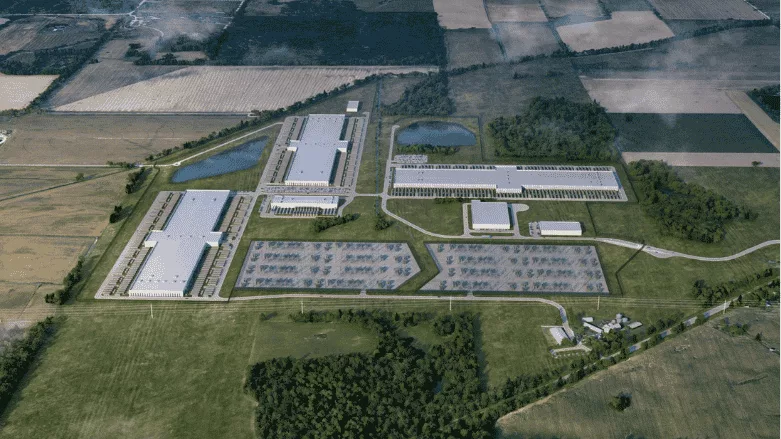
A massive $16 billion data center project in southeastern Michigan is moving forward, marking one of the largest artificial intelligence infrastructure investments in U.S. history. The project, known as Saline Barn, officially celebrated its groundbreaking this week and is already being promoted as a potential model for future AI developments across the country.
Located on a 250-acre site in Saline Township near Ann Arbor, the campus is being developed by Related Digital for Oracle and OpenAI. Once completed, it will feature three large data center buildings designed to handle the growing demand for AI computing power. State officials have called it the largest economic development investment in Michigan's history.
Speaking at the groundbreaking ceremony, OpenAI CEO Sam Altman said he hopes the project will show how data centers can work alongside local communities rather than disrupt them. Developers say the campus will create about 2,500 union construction jobs and 450 permanent positions while generating millions of dollars in annual tax revenue for schools and local governments. The project is also said to support apprenticeship programs and workforce training initiatives aimed at preparing skilled workers for future AI infrastructure projects.
The group’s promises are very ambitious to say the least, and many residents are concerned.
“This could very well turn into the site where cancer gets cured,” Sam Altman said.
Those promises have helped generate support for the development, but not everyone is convinced. As Michigan embraces a wave of new AI and data center projects, some residents are questioning whether the economic benefits will outweigh concerns about water use, energy demand, noise, and the long-term impact on local communities.
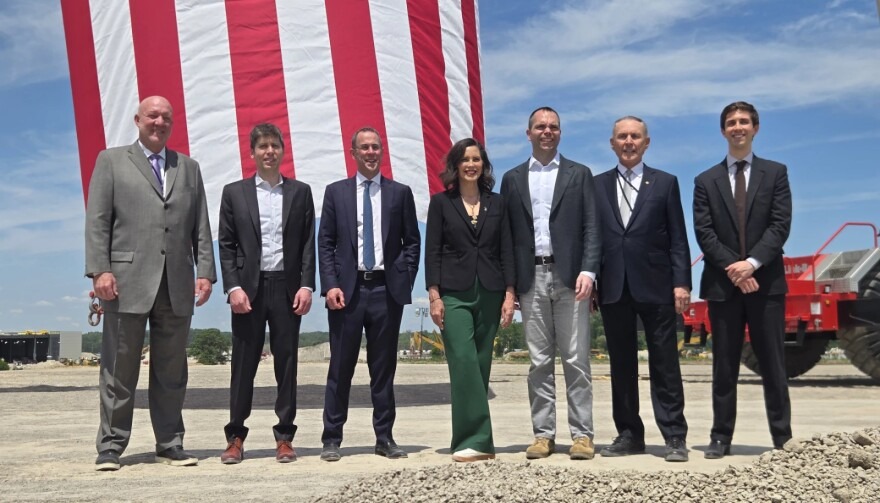
Michigan Governor Gretchen Whitmer poses with OpenAI CEO, Sam Altman and others.
Michigan's growing data center boom
The Saline project is just one example of a much larger trend taking shape across Michigan. More than 20 data center projects are reportedly planned, proposed, or under development as technology companies race to build the infrastructure needed to power AI systems.
Communities across the state are increasingly finding themselves at the center of discussions about what those projects will mean for residents. Supporters point to new jobs, tax revenue, and economic growth. Critics worry about the long-term impact on local resources and quality of life.
One of the biggest concerns is water use. AI data centers require enormous amounts of computing power, which generates heat that must be managed through cooling systems. While developers of the Saline project say it will use a closed-loop cooling system and consume less water than a traditional office building (to be determined), questions remain about how dozens of new facilities could affect water demand as the industry continues to grow.
Energy use is another major issue. Large AI data centers can consume as much electricity as small cities, leading some residents and environmental advocates to question how utilities will meet future demand and whether customers could eventually face higher costs.
Local communities fight back
For many Michigan residents, concerns about data centers are no longer theoretical.
In Dowagiac, residents have filed a class-action lawsuit against the owner of the Hyperscale data center, claiming the facility has created a constant level of noise that has disrupted daily life. According to the lawsuit, cooling fans at the site have produced "unreasonable and excessive noise" that residents say can be heard day and night.
One resident compared the sound to "having a vacuum cleaner running all the time." Others say they were never warned the facility would be this loud when it opened in 2022. Residents claim the noise is even more disruptive than the industrial activity that previously occupied the site.
The lawsuit alleges that the data center's cooling equipment and lack of adequate sound barriers have created a nuisance for nearby homeowners. Some residents have reported sound levels between 60 and 70 decibels near the facility, roughly equivalent to the noise of an air conditioner or dishwasher running continuously.
The controversy has become significant enough that Dowagiac city leaders revised the local noise ordinance earlier this year and have pushed for greater communication from the company regarding future expansion plans.
Dowagiac is not the only Michigan community wrestling with questions about data center growth. Another closely watched project in Lowell has sparked debate over land use, environmental impacts, energy demand, and the rapid expansion of AI infrastructure. As more projects are announced across the state, communities are being forced to weigh the promise of jobs and investment against concerns about noise, water consumption, energy use, and changes to the character of their neighborhoods.
The Saline project has faced its own share of opposition. Some residents have voiced concerns about industrial development replacing farmland and open space. The dispute led to legal action after township officials initially rejected a rezoning request before later reaching a settlement with developers. Many argue that the settlement was forced because the city’s board has a yearly budget of $1 million versus a mutli-billion dollar tech company.
Wait, tax cuts for Google?
To address those concerns, project leaders have pledged millions of dollars in community investments, including funding for recreation facilities, fire departments, farmland preservation efforts, and open-space protections. Developers say the project will also preserve hundreds of acres of farmland, wetlands, and natural areas surrounding the site. How? It wasn’t specified.
Many residents remain skeptical. They argue that promises of jobs and community investment could be nice, but the long-term benefits rarely match the initial sales pitch.
Those concerns have been amplified by recent tax incentives offered to major tech companies elsewhere in Michigan. In Van Buren Township, local officials recently approved a tax incentive package that will cut Google's property taxes in half for 12 years on its planned 1.5 million-square-foot data center project.
Township officials estimate the deal could save Google nearly $125 million in local taxes, even as the project is expected to consume enough electricity to power hundreds of thousands of homes..
Supporters argue those incentives are necessary to attract investment and compete with other states for high-paying jobs and new infrastructure.
Critics counter that taxpayers are being asked to subsidize some of the world's wealthiest corporations while local communities bear the negative effects.
For many residents, the debate is no longer just about technology or economic growth. It is about who ultimately benefits from Michigan's AI boom and whether the promised rewards will outweigh the costs for the communities expected to host these massive facilities.
Can tech solve AI's water problem?
As concerns about AI's growing appetite for electricity and water continue to mount, a new generation of energy companies are working to make data centers more efficient.
One example is Michigan-based startup Volt Harbor, which is developing technology designed to help data centers and utilities manage energy more intelligently. Founded in Ann Arbor by MIT alumni and built around technology licensed from the University of Michigan, the company has created a software-defined energy platform that aims to reduce energy waste, and make it easier to integrate battery storage into large-scale facilities such as AI data centers.
Another future advancement example is potentially reusing the heat generated by data centers to heat neighborhoods.
(The Driller sat down with thermal energy expert Ashley Besic and talked about that tech movement in this article.)
Supporters and creators of these types of technologies argue that smarter energy management could reduce the environmental footprint of AI infrastructure while easing pressure on local power grids, getting rid of some of the debate surrounding these data centers.
While debates over noise, water use, and land development are unlikely to disappear, advances in energy storage, cooling technology, and grid management could help address some of the industry's biggest challenges as AI inevitably continues to expand.
Regardless, Michigan is quickly becoming a key destination for AI infrastructure. The challenge for developers, local leaders, innovators, and residents will be finding a balance between economic opportunity and community/environmental concerns. The outcome could help shape how future AI data centers are built not only in Michigan, but across the country.
“Policymakers can strike the right balance by ensuring that local stakeholders are meaningfully involved in the planning, permitting, and negotiation processes,” said Ashley Besic. “If communities are part of the discussion from the start, you can create pathways for data centers to not only bring economic investment but also contribute to community resilience and decarbonization.”
Looking for a reprint of this article?
From high-res PDFs to custom plaques, order your copy today!

John Oldani is an editor, journalist, and reporter with over a decade of experience producing clear, engaging, and well-researched content. He holds a Bachelor of Arts in Journalism from Oakland University, with a focus on financial reporting, editing, and long-form writing. Over the past year, John has specialized in covering the drilling industry, reporting on key developments, policy shifts, and impactful stories shaping the field.
email: johnnyoldaniwords@gmail.com | office: (248) 838-8535