Jollibee Powers Its Philippine Operations with Geothermal Energy
The major shift is a great sign for geothermal at scale
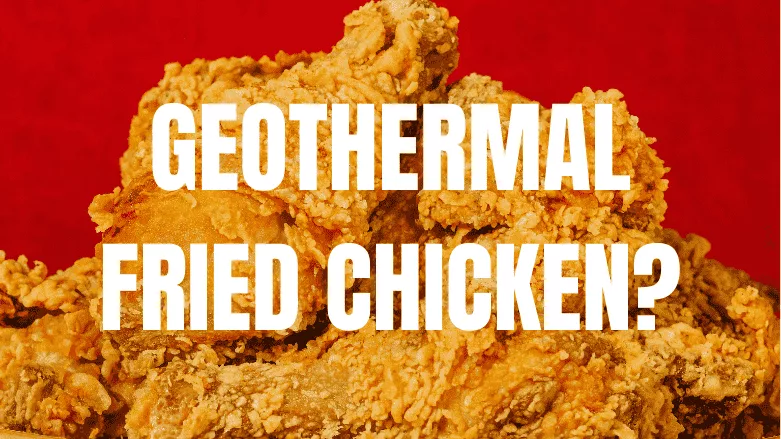
Image via Moumita Panday from Studio India
One of the Philippines’ biggest food companies is quietly making a major energy shift behind the scenes of its kitchens and distribution hubs.
The Jollibee Group, which operates the country’s largest fast-food chain and a growing global restaurant portfolio, has switched its manufacturing and logistics facilities to run on 99% renewable electricity. A significant portion of that power now comes from geothermal plants operated by First Gen Corporation through its geothermal subsidiary.
In practical terms, First Gen is supplying the equivalent of about 11 megawatts of geothermal electricity to Jollibee’s commissaries, the facilities that produce and distribute food across the company’s restaurant network. Combined with earlier solar projects, the move is expected to cut greenhouse gas emissions at covered sites by more than 70%.
For a fast-food business that depends on reliable cold storage, food processing, and nonstop logistics, energy stability is just as important as sustainability goals. Geothermal plays a unique role in the Philippines’ power mix because it provides baseload renewable energy, meaning it runs around the clock, unlike solar or wind that fluctuate with weather conditions.
The partnership between Jollibee and First Gen didn’t start with geothermal. Back in 2023, the two companies worked together to install roughly 17,000 solar panels across commissaries and distribution centers in Paranaque and Laguna, delivering more than 9 megawatts of solar capacity. Those systems were completed in 2024 and paired with remote energy monitoring to better manage electricity use.
Adding geothermal power builds on that foundation, giving Jollibee a renewable energy supply that is both cleaner and more dependable for industrial-scale operations.
From First Gen’s perspective, corporate customers like Jollibee are becoming increasingly important to the economics of geothermal power. The company has been securing long-term renewable electricity contracts with businesses across retail, property development, telecom, healthcare, and agribusiness. These private offtake agreements help stabilize revenue in energy markets where geothermal sometimes struggles to compete with cheap coal and rapidly falling solar costs.
For Jollibee, the shift supports its broader sustainability strategy while also reinforcing operational resilience as the brand continues expanding both in the Philippines and overseas.
Still, renewable transitions at the corporate level come with tradeoffs. Large industrial users often rely on a mix of energy sources, and geothermal capacity in the Philippines, while significant, is not limitless. Scaling similar renewable coverage across the entire commercial sector would require continued investment in geothermal development, grid upgrades, and long-term power planning.
There’s also the reality that geothermal projects carry high upfront costs and long development timelines, even if they deliver reliable power once built. That can slow broader adoption compared to quicker solar installations.
Even so, Jollibee’s move highlights how major consumer brands are increasingly treating clean energy not just as a climate commitment, but as core infrastructure for business continuity.
Behind every burger, fried chicken order, and delivery truck rolling out of its commissaries is now a power system largely fueled by heat from beneath the earth.
And in a country where energy reliability and climate vulnerability are constant concerns, geothermal-backed operations may prove just as valuable as they are green.
Looking for a reprint of this article?
From high-res PDFs to custom plaques, order your copy today!