East Texas Eyes a New Energy Frontier with Geothermal Power and Lithium Extraction
T5 Smackover Partners plans a modular project in the Smackover Formation

Image via Javi_M_Bravo from Getty Images
A new energy developer is looking to turn a once-mined stretch of East Texas into a hybrid hub for geothermal power and critical minerals, blending clean electricity with lithium extraction in a project that reflects where parts of the energy transition are headed.
T5 Smackover Partners, a subsidiary of T5 Holdings LP, has announced plans to advance a geothermal and minerals project across the Smackover Formation in Franklin, Titus, and Hopkins counties. The company’s vision combines geothermal power generation with the extraction of lithium, bromine, and other strategic minerals, along with EV charging infrastructure and mobile grid-scale energy storage.
The Smackover Formation is already well known in energy circles. Stretching across parts of East Texas and southern Arkansas, it has long been studied for oil, gas, and brine resources, and more recently for lithium-rich fluids that can be processed into battery-grade material.
What sets T5 apart is its attempt to pair lithium extraction with geothermal power from the same wells.
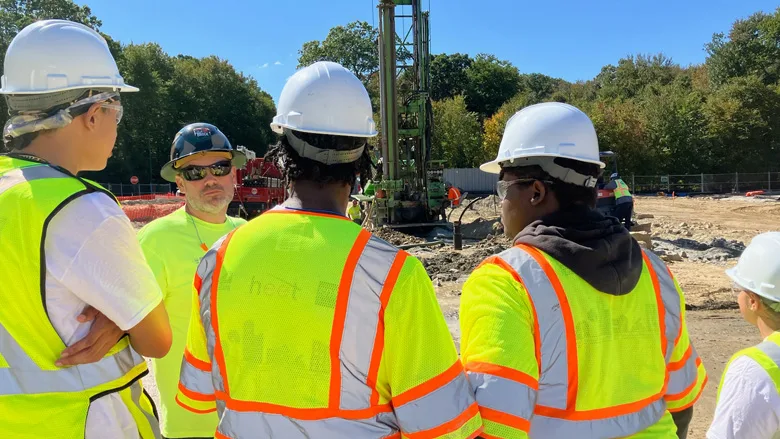
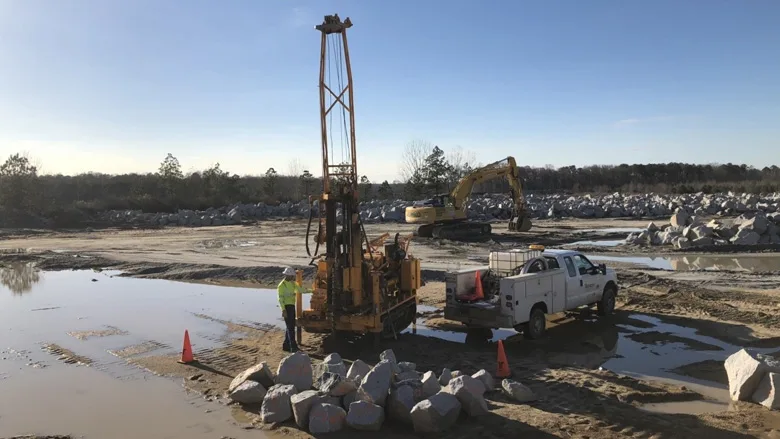
The company’s initial drilling, originally permitted as a geothermal well, reportedly encountered higher-than-expected temperatures, opening the door to electricity generation using modular Organic Rankine Cycle turbines. These systems are designed to convert moderate heat into power and can be deployed faster than traditional geothermal plants.
At the same time, T5 says it has identified brine zones containing lithium concentrations around 800 parts per million, far above the roughly 100 ppm often cited as a global average. The formation also appears to hold commercially meaningful levels of bromine, potassium, and strontium.
If development unfolds as planned, the company projects annual production of roughly 35,000 to 50,000 tons of lithium carbonate equivalent, which would place the project among the larger lithium operations in North America. Rather than building a massive centralized processing facility, T5 plans to use a modular Direct Lithium Extraction approach, allowing capacity to ramp up in phases.
The company expects initial lithium output as early as 2026, with faster scaling into 2027.
Beyond power and minerals, T5 is also proposing ultra-fast EV charging along the I-30 corridor and up to 75 to 100 megawatts of mobile, dispatchable power that could be moved to support grid emergencies or disaster response.
On paper, it’s an ambitious attempt to create a circular energy system where geothermal heat powers mineral extraction, which in turn feeds the battery supply chain.
But projects like this are still largely unproven at commercial scale.
Direct lithium extraction has shown promise in pilot programs, yet many technologies remain early-stage. Costs, long-term reliability, and environmental performance are still being tested across the industry. Geothermal-lithium co-development adds another layer of technical complexity, even if the underlying resources are well documented.
There’s also the question of speed. Modular systems are designed to move faster than traditional mining and geothermal developments, but permitting, infrastructure buildout, and grid interconnections can still stretch timelines.
At the same time, interest in the Smackover Formation is growing rapidly. Several companies are pursuing lithium extraction across East Texas and southwest Arkansas, though fewer are trying to integrate geothermal power into the equation. That overlap could offer a cleaner, lower-emissions pathway for producing critical minerals, especially compared to hard-rock lithium mining.
Supporters of the approach see it as a smart use of existing subsurface resources, turning brine into batteries and underground heat into electricity. Skeptics caution that many lithium-from-brine projects have yet to prove long-term economics at scale.
For East Texas communities, the project represents both opportunity and uncertainty. New energy investment can bring jobs and infrastructure, but large-scale mineral development also raises familiar questions about water handling, land use, and long-term environmental oversight.
What’s clear is that the energy transition is increasingly moving below ground, where geothermal heat, mineral-rich brines, and old industrial lands are being reimagined as part of the next generation of power and materials supply.
Whether T5’s hybrid model becomes a blueprint for future projects, or another ambitious concept that takes longer to materialize, will depend on how quickly the technology can move from promising geology to steady commercial output.
Looking for a reprint of this article?
From high-res PDFs to custom plaques, order your copy today!