A Driller's Life: The Safety Culture
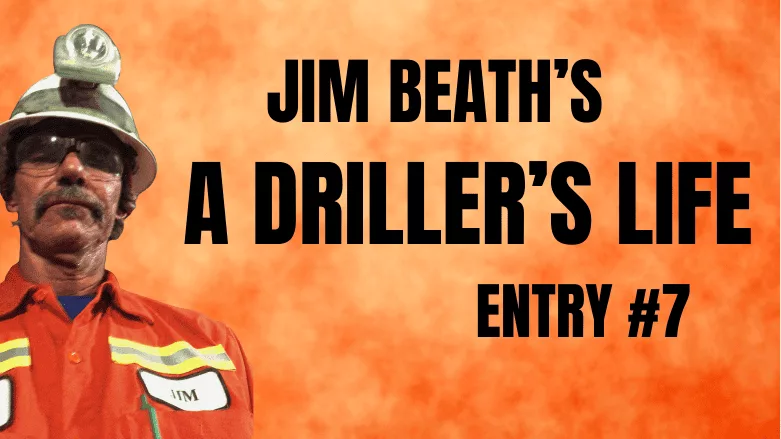
Image created by The Driller Staff, portrait courtesy of Jim Beath
This being my forty-third year in the drilling industry, I’ve seen major changes in on-the-job policies regarding health and safety. Early on in my career, it was okay to climb derricks without a harness with tools in my hands and pockets while men stood on the floor under me without hard hats. I’ve worked the floor in tennis shoes, and went years without owning a hard hat and welded without gloves or a shirt. I was once lowered down ten feet into an uncased forty-three-inch hole with a winchline hooked to the D ring of a leather belly belt by a helper who had less than a month of experience. I’ve used all types of cutting, grinding, and percussion tools without wearing a face shield or even safety glasses. When I was working on an injection well rig in the nineties, we had a water can with one coffee cup that sat on top of it, and everyone shared it without giving a second thought to flu germs or a third one to herpes. I believe that anyone who has been in the industry for as long as I have has done these and or things similar.
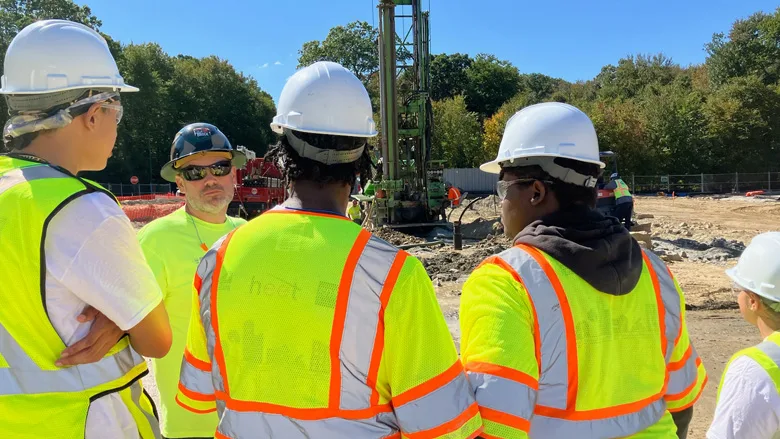
Now I have a safety meeting in the morning before any work starts, and another if the job scope changes. If drilling is finished, I have a J.H.A. ‘job hazard assessment’ meeting for tripping out, then one for setting casing, then one for cementing, a monthly company-wide safety call, and an annual safety refresher. There is C.P.R. training every year, and the OSHA’s HAZWOPER forty, thirty, and tens. Also, MSHA training for surface and underground. Then there are also site-specific safety training courses for certain plants, refineries, and mine sites. I like the idea of having to wear safety-toed work boots, but now I am required to wear safety-toed, metatarsal, steel-shanked, slip-resistant, eight-inch high lace-up boots. Hard hats are a great idea, too. I just hope that I’m able to retire before they change the required headwear to helmets with chin straps. I don’t mind wearing the metatarsal, cut-resistant gloves that I am now required to wear, because I've endured enough hand and finger injuries in my lifetime to make me tough, and enough pain to make me wise. Everything we used to do on the rig floor, from throwing the chain to working the tongs and pulling slips, was done bare-handed.
Yes, I’ve cut, burned, pinched, smashed, frozen, and impaled my hands with steel splitters and wire rope strands. I didn’t complain about it, and neither did the company. If I had a hand injury back then, I would just clean it with starting fluid, and wrap it up with a piece of a rag and some tape. Now there are first-aid kits full of band aids and antiseptic wipes in every vehicle on the location. Employers weren't required to buy gloves; if I wanted them, I had to buy a pair with my own money. The same for safety glasses. When I was a young man on the job there were no safety glasses; we wore plastic goggles with an elastic strap, our own personal sunglasses, or no eye protection at all. I’ve had so many things in my eyes over the years that I now wear safety glasses all day long, whether I’m working or not.
So, when did this change to a safety culture take place? My first memory of a safety meeting was a weekly tailgate meeting. My employer’s liability insurance company wanted us to have one every week, and they were pre-written pages, usually on non-task-related subjects, called toolbox talks. I think that was in two thousand and five or six. It was around that time that employers started to supply limited amounts of cloth gloves, they would give you your first hard hat, and a pair or two of goggles for the whole crew to share. Sit in harnesses replaced belly belts at about that time as well, drive shafts and roller chains needed to have guards. And little by little, the safety culture came to be what it is now.
I don’t have a problem with safety culture; I especially like that I am not supposed to lift more than fifty pounds. My first twenty or so years in the industry were before the safety culture existed like it does today. I kept all my fingers, toes, and both of my eyes for twenty years, and then I began to be trained on how to keep them. I worked another twenty-two years, being trained and training others to be safe. Then came my first-ever somewhat serious, on-the-job injury. It was January 2025, and I was at the shop getting ready to wash a pickup truck. I was wearing a hard hat, a full face shield over safety glasses, cut-resistant gloves, and safety-toed, slip-resistant, metatarsal, steel-shanked, eight-inch high, lace-up boots. I squeezed the trigger handle on the wand that is required to be a minimum of four feet long, and not have a zero tip on it, with my right hand to relieve the pressure from the city water supply, pulled the cord with my left, the engine rolled to the top of the compression stroke, and then pulled back hard in the opposite direction — breaking my left wrist in two places.
I didn't want to wash that truck anyway, so I spent the rest of the afternoon in pain, not complaining about it at the walk-in clinic, and a month on light duty. During that month, I applied for reciprocity for a North Carolina Driller’s License, but they didn't grant it to me — so, I registered to take the exam. I did a lot of driving, and I wrote a J.H.A. on proper body posture while starting a pressure washer.
So you might say that it was luck that kept me safe for those first twenty years, and that the safety culture kept me safe after that. You could also say that me breaking my wrist was just bad luck, and had nothing to do with body posture. The truth is that I’ve always been lucky. If I hadn’t broken my wrist, I wouldn’t have applied for reciprocity for a North Carolina license. I was fully qualified for it, but for some lucky reason, one of the board members wanted me to take the exam. Luckily, I missed my first exam date because I was on a job in Texas that needed a Texas-licensed driller, and had to reschedule it for the next one, which was at the South Atlantic Jubilee. I made it to that one, and that's where I met Brock Yordy. I had an hour to kill, and he looked like he was trying to kill a little time himself. Anyone who knows him knows that is pretty rare for him; the man is very busy. I took advantage of the opportunity and started a conversation with him. The hour died fast, and before it was over, he had convinced me to write my stories.
I guess that what I’m trying to say in this story is that we're lucky to be working in a safety culture. Is it becoming an industry of its own? I'd say yes, and we can’t stop it, nor should we. If we just follow the light that the safety gods shine at our feet, all might be well. Right? Who knows? I do know that if I hadn’t broken my wrist, you wouldn't be reading this.
Thank you for taking the time to read this story. I hope you enjoyed it, and until next time, remember that in well drilling, being safe is a good way to create your own luck.
Want to catch up on the rest of Jim's entries? Here's his first entry.
Looking for a reprint of this article?
From high-res PDFs to custom plaques, order your copy today!