Water conservation
Historic Highway Reappears as Colorado Drought Drains Dillon Reservoir
Dillon Reservoir has fallen to roughly 58% of capacity, exposing a decades-old roadway and raising new concerns about water supplies heading into 2027.
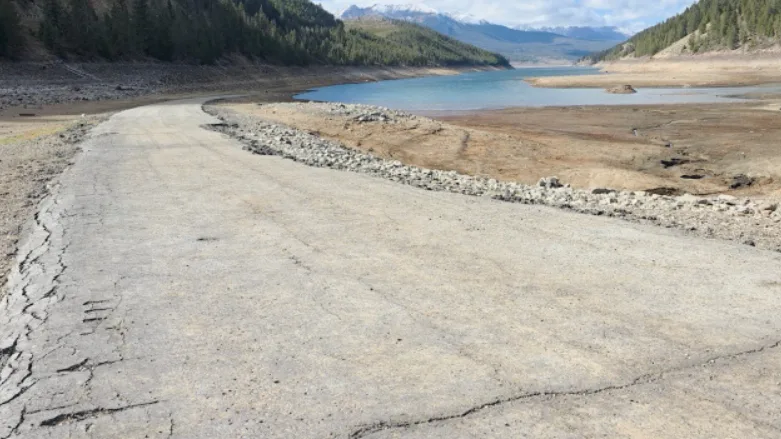
A highway that has spent most of the past 60 years underwater is making an unexpected comeback in Colorado. Unfortunately, the reason behind its return isn't good news.
Portions of old U.S. Highway 6, which once ran through the original town of Dillon, have resurfaced as drought conditions continue to drain Dillon Reservoir in Summit County. The reservoir, Denver Water's largest water storage facility, has dropped to approximately 58% of capacity following an exceptionally hot and dry year.
The highway disappeared beneath the reservoir in the 1960s, when the original town of Dillon was relocated to make room for the water storage project. Construction of the reservoir changed the surrounding landscape, leaving roads and other remnants of the former community underwater.
Now, with water levels falling, sections of the old pavement are visible once again.
While the exposed highway offers an interesting look at Colorado's past, it also shows just how serious the state's water shortage has become.
A Difficult Year for Colorado's Water Supply
According to Denver Water's Oct. 26 update, the utility's reservoirs were collectively just 66% full, compared with an average of 89% for this time of year.
The biggest problem began last winter, when mountain snowpack fell well short of normal levels.
In the Colorado River Basin, snowpack peaked March 18 at just 58% of normal. Conditions were even worse in the South Platte River Basin, where snowpack reached only 42% of normal.
Both basins experienced unusually early melting, leaving rivers and reservoirs with significantly less runoff than they typically receive during the spring and summer.
Streamflow forecasts called for runoff ranging from just 10% to 40% of normal during 2026.
For Denver Water, which supplies drinking water to approximately 1.5 million people in Denver and surrounding communities, those numbers have created a serious challenge.
The utility declared a Stage 1 drought in March, calling for a 20% reduction in water use. By October, conditions had worsened enough that Denver Water prohibited lawn watering and spray irrigation, with fines beginning at $500 for single-family customers who violate the restrictions.
Customers have responded. According to Denver Water, water use between Oct. 1 and Oct. 25 was 31% below the five-year average, saving approximately 1.5 billion gallons.
"Our customers did a great job shutting off their sprinkler systems in response to our Oct. 1 cutoff for lawn watering," said Greg Fisher, Denver Water's manager of demand planning.
Still, conservation alone may not be enough to restore reservoir levels anytime soon.
"We're all hoping for a good winter, but it's extremely unlikely that we'll see enough snow — and more importantly, a robust spring runoff — to fully fill our reservoirs next year," Fisher said.
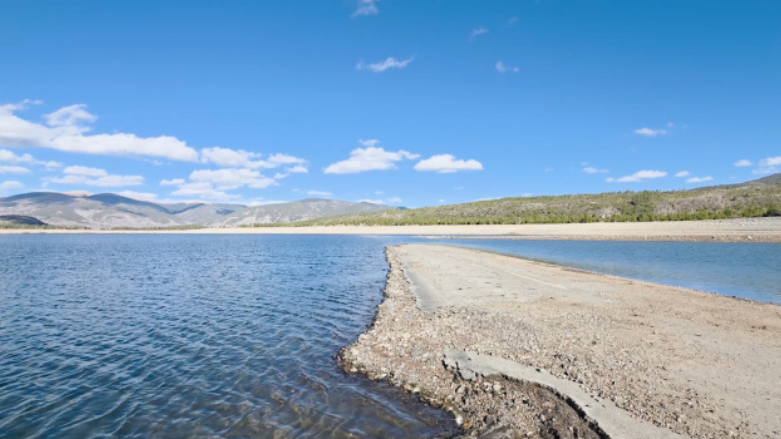 Part of old U.S. Highway 6 exposed at Dillon Reservoir amid drought conditions. Image credit: AccuWeather Tony Laubach
What Happens if the Drought Continues?
With winter approaching, Denver Water is preparing for the possibility that reservoir levels could drop even further before spring snowmelt begins replenishing supplies.
Dillon Reservoir could fall to between 45% and 50% of capacity by April 2027, putting it near levels experienced during Colorado's major drought in 2002 and 2003.
The utility has already started tightening its budget, implementing a hiring freeze, reviewing maintenance projects that could be delayed and exploring agreements that would allow it to capture additional water supplies.
But there is only so much that conservation and careful planning can accomplish without help from Mother Nature.
Colorado's water system depends heavily on mountain snowpack, which acts as a natural reservoir throughout the winter. When that snow melts in the spring, it feeds rivers and fills reservoirs that supply communities through the warmer months. A poor snow season, especially one followed by an early melt, leaves utilities with less water to work with for the rest of the year.
And while groundwater can provide another source of water for some communities, it isn't an unlimited backup. Increased pumping can lower water tables, affect nearby wells and reduce the amount of groundwater flowing into streams and rivers.
That leaves water managers facing a difficult balancing act: preserving what they have today while planning for the possibility of another dry year.
For now, much depends on what happens in the mountains over the next several months. A strong snow season and healthy spring runoff would go a long way toward easing the pressure on Colorado's reservoirs.
Until then, the resurfacing of old Highway 6 offers a reminder of just how much water the state is missing. It's an interesting piece of Colorado history, but one that water managers would probably rather see disappear beneath the reservoir again.
Looking for a reprint of this article?
From high-res PDFs to custom plaques, order your copy today!

John Oldani is an editor, journalist, and reporter with over a decade of experience producing clear, engaging, and well-researched content. He holds a Bachelor of Arts in Journalism from Oakland University, with a focus on financial reporting, editing, and long-form writing. Over the past year, John has specialized in covering the drilling industry, reporting on key developments, policy shifts, and impactful stories shaping the field.
email: johnnyoldaniwords@gmail.com | office: (248) 838-8535