Mining News
Mining for ‘Critical Minerals and Metals’ Driven by AI
Exploration at the Whistler Gold-Copper project in Alaska and CuMo Project in Idaho are progressing as demand surges
The growth of artificial intelligence (AI) and the technologies through which AI will operate is driving the need for “critical minerals and metals,” such as gold and copper, that will be used within those AI centric technologies, according to an environmental official for Alaska where plans to increase mining of those metals are progressing.
Alaska’s Department of Natural Resources (DNR) “recognizes the need for additional domestic sources of critical minerals, and welcomes industry investment in exploration on state-managed lands that improves our understanding of Alaska’s geology and mineral deposits,” Lorraine Henry, DNR’s director of communications, told The Driller. Henry was responding to a question about the recently concluded exploratory drill program at the Whistler Gold-Copper project in Alaska.
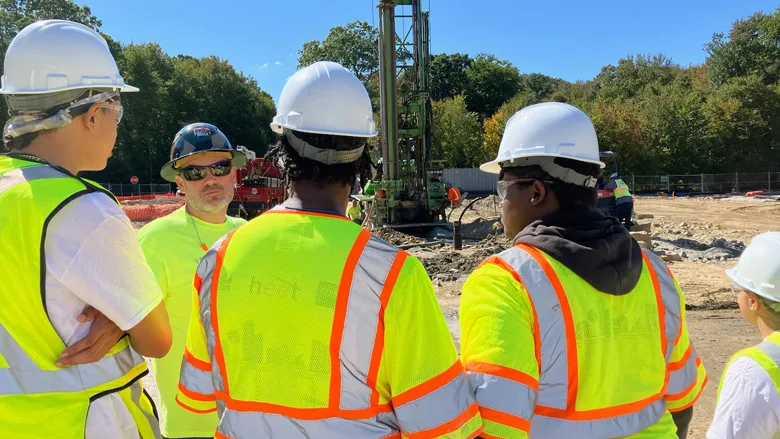
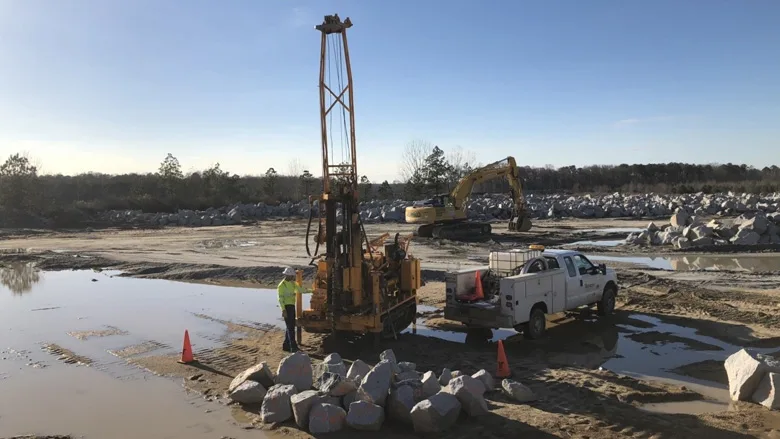
Owned by U.S. GoldMining, an exploration and mine development company, the Whistler Gold-Copper project is an exploration drilling program that completed 17 boreholes over the summer, according to Henry, who described the drilling program as “an incremental expansion of their (Whistler Gold-Copper project’s) historical exploration activity” that “must meet DNR’s stringent borehole reclamation and water protection requirements.”
The Whistler Gold-Copper project “is a resource stage gold-rich copper porphyry exploration project located within the Alaska range 105 miles northwest of Anchorage,” said U.S. GoldMining, which in September announced the completion of a 7,493-meter exploration drill program at the Whistler project.
The Whistler Project has estimated mineral resources at three gold-copper porphyry deposits, according to U.S. GoldMining, which added there are several additional geophysical and geochemical targets anomalies that contain mineralized drill intersections requiring follow-up drilling. However, U.S. GoldMining did not say when such drilling would occur.

Test your drilling knowledge with our free quiz, Driller or Digger?
It is DNR’s “hope these kinds of projects across the state can proceed to responsible development in accordance with the full regulatory process and boost the supply of critical minerals and metals in the future,” said Henry, who added, “As Whistler remains an exploration project at this time, the state has not reviewed or approved a full development plan or the associated authorizations that would be necessary to proceed into development and production.”
The Whistler Gold-Copper project in Alaska is not the only mining project seeking to produce critical minerals and metals for plans are underway to mine such metals in Idaho at the CuMo copper-molybdenum-silver project, which is believed to be one of the largest undeveloped copper deposits in the U.S., according to Idaho Copper Corp., a critical minerals developer that owns the CuMo project.
Furthermore, the CuMo project—which Idaho Copper Corp. considers to be its flagship operation—also contains significant amounts of silver, rhenium, and tungsten. However, while the CuMo project is not specifically tied to the mining of precious and semi-precious metals for AI purposes, the metals mined at the CuMo project are “considered critical or of strategic importance,” says Idaho Copper Corp.
Furthermore, the effort in support of mining at the CuMo project received a boost from the U.S. Forest Service which issued a letter dated Sept. 9, 2026 that approved a multi-year diamond core drilling program at CuMo. In that letter, the Forest Service approved Idaho Copper Corp.’s exploration plan of operations (PoO) and its 2026 annual operating plan for exploration at the CuMo project, thereby clearing the way for commencement of drilling, road building and maintenance activities within the PoO. That approval is effective for six years from the first day of operations, according to Idaho Copper Corp.
The Forest Service’s approval follows a “decision notice and finding of no significant impact” issued by the agency on March 14, 2025 under an environmental assessment that completed the federal environmental review of the CuMo exploration plan.
Andrew Brodkey, CEO of Idaho Copper, said in a written statement, the Forest Service approval of the company’s exploration PoO and its 2026 annual operating plan “is the culmination of a decade of work with the Forest Service,” resulting in the removed of what is believed to be “the single largest obstacle impeding advancement of a critical minerals deposit,” which is “a meaningful achievement.”
Idaho Copper’s “priority for the balance of this season is infill drilling that tightens confidence in the existing deposit, and we plan to carry that work into a substantially larger campaign in 2027 aimed at completing the drilling needed for a prefeasibility study,” Brodkey said. “Every foot we drill from here will be directed at advancing CuMo toward a development decision, and at doing so under the environmental commitments we have made to the Forest Service and to the communities around this project,” he said.
Looking for a reprint of this article?
From high-res PDFs to custom plaques, order your copy today!