Phosphate and Potash Considered ‘Critical Minerals’ Across North America
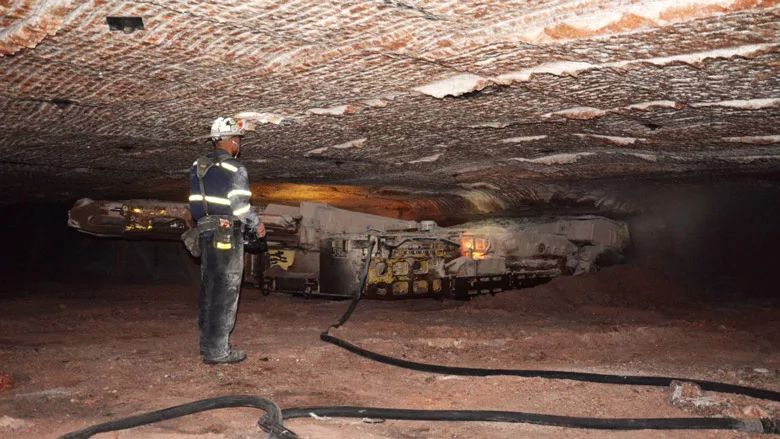
Many of the high-quality, economically accessible underground potash ore reserves in the U.S. have been depleted or are marginal.
Consider this: Canada supplies over 85% of the potash used by American farmers, yet relies on the U.S. for roughly 80% of its own phosphate needs. North America’s fertilizer ecosystem is strikingly interdependent when it comes to macronutrients Phosphorus (P), sourced from phosphate, and Potassium (K) derived from potash. These, along with nitrate, are the three main nutrients crops are deficient in.
Recent moves by U.S. policymakers to designate phosphate and potash as “critical minerals” reflect a new awareness of this mutual dependency, even as tariffs and export controls make supply chains more fragile.
Intrepid Potash operates three solar evaporation mines in Utah and New Mexico, producing potassium chloride, the most widely used form of potash fertilizer. Back in World War II, when Nazi Germany was a major potash exporter to the U.S. and supplies were abruptly cut off, this production method made a meaningful impact on the war effort and boosted food security. But taken together in the current year, these "solution mining" sites are limited in scale compared to Canada’s vast underground potash reserves. This limited production capacity helps explain why the U.S. still imports roughly 90 to 97% of the potash it consumes, relying heavily on Canadian suppliers for agricultural security. But on the inverse, Canada, while rich in potash, is phosphate-poor: about 80% of its supply flows in from the U.S., with most of the rest coming from Morocco and the Middle East.
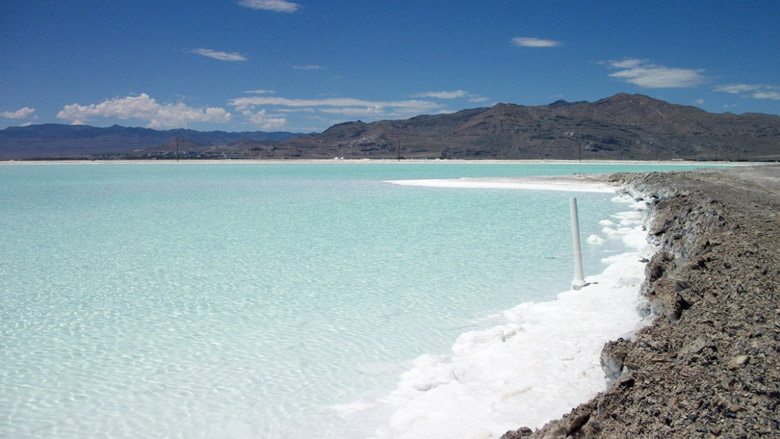
When American potash imports from Germany were cut off, operations like this in the Great Salt Lake helped the country meet food production targets amid wartime rationing. | Credit: Utah Geological Survey
Phosphate and potash’s inclusion alongside other critical minerals such as lithium, cobalt, and graphite, underline their strategic importance not only for food security, but also for broader technological and defense applications. The Final List of Critical Minerals, originally compiled in 2018 and then revised every three years, is published by the United States Geological Survey.
Lawmakers from both parties have actively advocated for this recognition: with Senators Joni Ernst (R-IA) and Elissa Slotkin (D-MI) and Representatives Kat Cammack (R-FL) and Jimmy Panetta (D-CA) headlining a letter sent to DOI Secretary Doug Burgum urging action on listing phosphate and potash as critical minerals.
This political momentum is complemented by tangible policy support from the Canadian government’s 2025 Federal Budget, which included expanded tax credits, infrastructure investments, and funding programs specifically designed to accelerate critical minerals exploration and development.
Corey Rosenbusch, president and CEO of the Fertilizer Institute, put it simply: “Without these two minerals, modern agricultural systems would crumble and feeding our growing population would be nearly impossible.” He called their removal from the 2022 “Final List” misguided. The reasoning was that because the U.S. is a significant phosphate producer and Canada a major potash supplier, neither mineral is truly rare. But with prices for both phosphate and potash ballooning, and with trade tensions intensifying, the calculus has shifted dramatically.
Suddenly, the supply problem for these finite resources is front-of-mind. Phosphorus makes up about 0.1% of the Earth’s crust, while potassium is much more abundant at about 2.1%. Earth has enough economically recoverable potash reserves to last 100-150 years according to the 2025 Mineral Commodity Summary by the U.S. Geological Survey. For phosphate, reserves will last more than 300 years at current usage rates. Yet both could conceivably be depleted, knocking the legs out from under the so-called “Green Revolution” – the sweeping changes in agriculture, fueled by mineral fertilizers and crop science, that enabled the global population to double from about 3 billion in 1960 to more than 7 billion today.
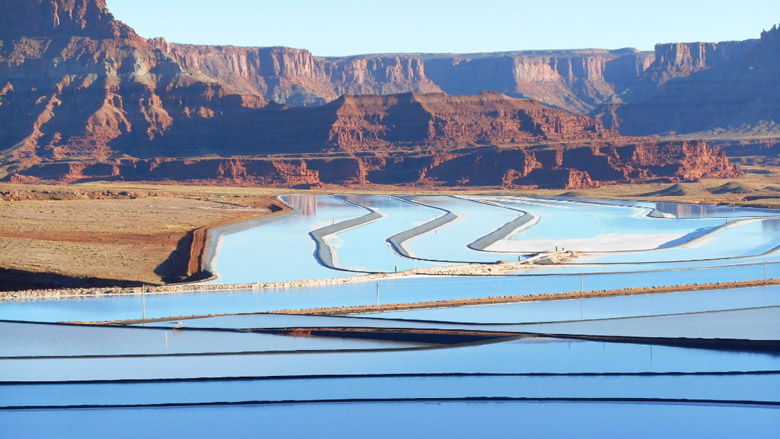
Solution mining, practiced by Intrepid Potash at its three mines in Utah and New Mexico, involves injecting water deep underground to dissolve potash deposits, then pumping the brine to the surface for evaporation and mineral recovery. | Credit: Douglas B Yager, USGS Geochemistry Science Center
Tariffs and Trade Tensions with Fertilizers
Tariffs have sparked price shocks across North America. Sometimes political carve-outs, like U.S. exemptions for Canadian potash, send shares of producers like Nutrien and Mosaic jumping. Other times, the specter of new tariffs injects uncertainty from farm country to Wall Street.
While the USMCA allows zero-tariff movement for most agricultural goods, it specifically permits the U.S. government to impose countervailing duties to offset unfair foreign subsidies, as well as anti-dumping duties when imports are sold below fair market value. These trade measures were notably applied in 2021 and again in 2024 to protect domestic fertilizer producers, effectively creating legal “trade weapons” regulating phosphate imports.
Still, despite robust mining in Florida, U.S. phosphate production can’t keep up with annual demand, forcing America to import between 65–70% of its fertilizer phosphate needs. This dependency heightens risk for U.S. farmers and downstream sectors whenever trade frictions or global price shocks hit.
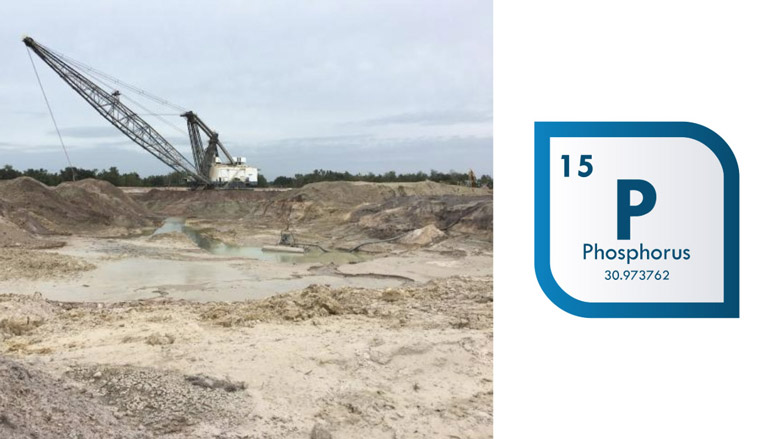
Phosphate mining in Florida supplies essential phosphorus (P) for fertilizer production in the U.S., yet domestic output does not fulfill total demand. | Credit: U.S. Department of the Interior
New Developments and Power Plays
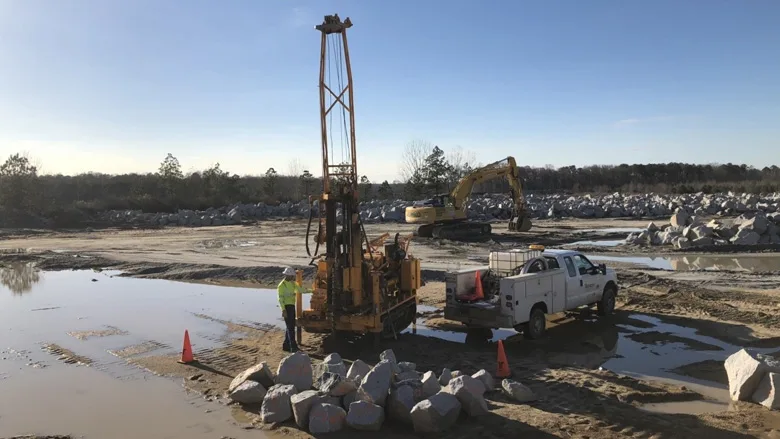
For drilling contractors and exploration teams, the renewed focus on phosphate and potash means a surge in on-the-ground activity across North America’s mining heartlands. Projects like Arianne Phosphate’s Lac à Paul in Quebec require specialized drilling techniques to tackle rare igneous phosphate deposits, while the Saskatchewan potash belt continues to see multi-billion-dollar expansions demanding large-scale underground and surface drilling expertise.
For drilling contractors and exploration teams, the renewed focus on phosphate and potash means a surge in on-the-ground activity across North America’s mining heartlands.
Government funding and tax incentives are unlocking new exploration plays and feasibility studies. Surge Copper Corp.’s Berg copper-molybdenum project in British Columbia exemplifies how Canada’s strengthening critical minerals policies and infrastructure investments – such as those in Canada’s newly implemented Budget 2025 and the G7 Critical Minerals Alliance – are creating a more supportive environment for advanced mineral developments.
As trade tensions and global supply risks mount in North America, reliable drilling capacity is more critical than ever to bring strategic minerals from resource to reality. Food security is now inseparable from fertilizer geopolitics – a high-stakes dance where tariffs, trade rules, and mining investments shape what ends up in the breadbasket.
Looking for a reprint of this article?
From high-res PDFs to custom plaques, order your copy today!