Gold Mining
Drilling Know-How and Geophysics are Guiding Kenorland's 16,000-Foot Plus Exploration Program
A vast corridor has exposed itself as rich in gold ore. The challenge? Determining the site’s geometry and whether even more exploratory drilling needs to happen.
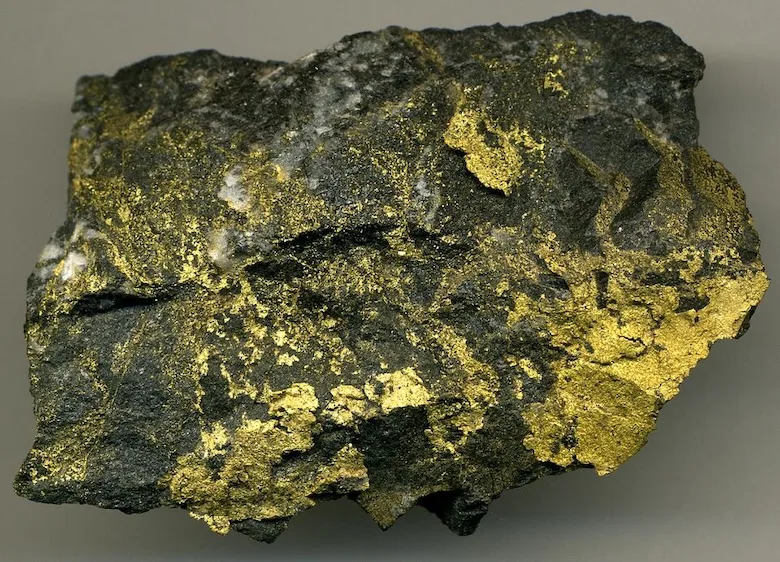
At the Kenorland Minerals drill site in South Uchi nestled within Ontario’s Red Lake Gold Mining District, every borehole has become a major decision. The upside? A vast corridor has exposed itself as rich in gold ore, but the challenge at hand is determining the site’s geometry and whether even more exploratory drilling needs to occur.
Phase 4 diamond drilling began in early October with roughly 16,404 feet of planned depth. During all phases, Kenorland discovered a 650 foot wide corridor rife with minerals. One hole in particular, 26PADD046, intersected several gold-mineralized intervals, which included 215 feet of grading that reaped 0.34 grams per tonne of gold ore.
Previous phases of drilling by Kenorland, the Vancouver-based mineral exploration company, identified an approximately 650-foot-wide mineralized corridor. Previous holes were drilled along widely spaced fences, roughly 500 meters apart.
Hole No. 26PADD046, intersected several broad gold-mineralized intervals, including 1,640 feet of grading, which discovered 0.75 pounds per ton of gold.
Geophysics as a guide
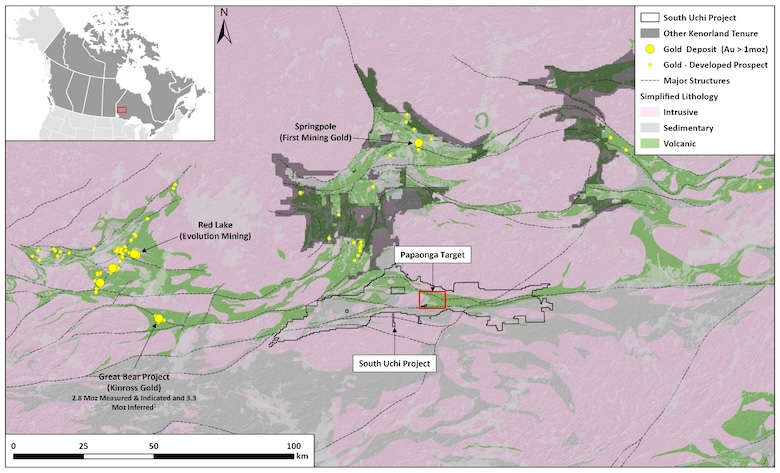
Kenorland commissioned Abitibi Geophysics to conduct 24 total survey lines, in what would be an induced-polarization survey, designed to create images of the minerals below a cover of ice. The goal? Identify chargeability and resistivity patterns associated with alteration and sulfide mineralization, according to officials. The goal now would be to translate the model into an effective drill plan for a team aiming for completion by the end of November.
It’s anticipated that Phase 4 test extensions will refine the geometry of mineralized corridors and investigate possible higher-grade areas. And while the surveys themselves can’t replace the hard evidence that drilling provides, on this site, the two seem to be working in tandem given drilling alone may not provide enough detail to present a reliable model of the subsurface.
It takes two
Kenorland is doing the project in conjunction with Auroranova, a publicly traded exploration firm with a heavy investment in Ontario's Red Lake region. According to a Newswire release, the two firms entered into an agreement for the project with Auroranova that grants the company to receive up to 70% interest in the work.
In exchange, Auroranova stood to earn 51% interest in the project initially, but that would only arrive by making cash payments totalling $500,000 to Kenorland, completing a diamond drilling program with at least $8,000,000 in qualifying expenditures or completing 15,000 metres of drilling within two years of receiving a drill permit.
The release also noted that the deal would find Auroranova issuing Kenorland 19.9% of its common shares, and maintaining Kenorland's 19.9% share position until Auranova raises a minimum of $10,000,000 through share issuances, after which Kenorland's stake will remain at 10% on a pro-rata basis through to the completion of a Preliminary Economic Assessment (the "PEA"), according to the release.
However, as it stands the project is very much in the exploratory phase meaning that the value of what is currently drilled will be assessed via the results of its find.
Looking for a reprint of this article?
From high-res PDFs to custom plaques, order your copy today!