2026 State of the Drilling Industry Report
A latest look at what’s powering water, energy and infrastructure
Key Takeaways
- Infrastructure, renewable energy and water security are driving sustained growth across the drilling industry.
- Labor shortages make training, apprenticeships and transferring veteran knowledge critical to future growth.
- Intelligent drilling technology is making digital proficiency as important as traditional drilling expertise.
The drilling professional is no longer just a single-discipline service provider; we are the builders of all modern infrastructure. As we look at the state of the industrial drilling industry for 2026, we see a sector in the midst of a powerful transformation.
As drillers, we have the opportunity to merge our tribal knowledge of local geologies with the high-tech, high capacity demands of modern construction and energy. The next era of our industry will be defined by precision, stability, and sustainability.
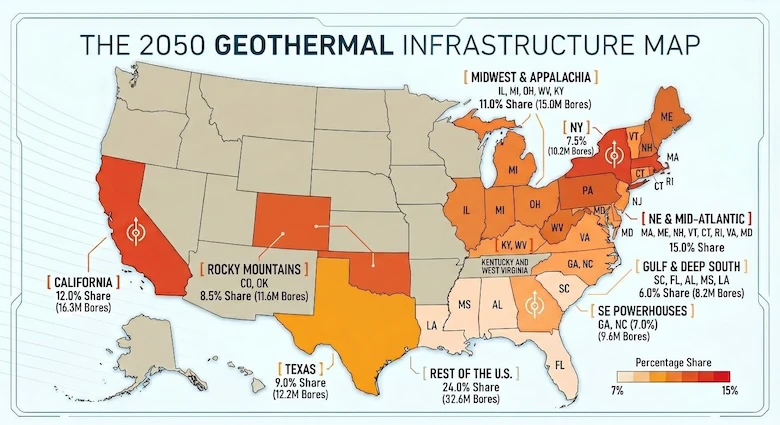
Geothermal Now! Exchange drillers are carving a path to unprecedented growth on a road to 2050
Map appears courtesy of Wikicommons Media
The drilling industry has become the quiet giant of the global economy. Revenue growth is currently being driven by a rare convergence of three major pillars: public infrastructure, renewable energy, and water security.
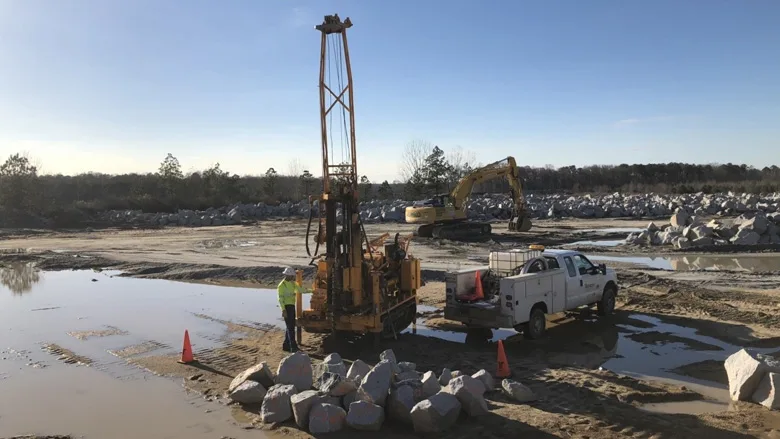
The $1.2 trillion Infrastructure Investment and Jobs Act in North America has created massive, sustained demand for foundation drilling, with $110 billion dedicated to roads and bridges, fueling a surge in work for rotary rigs and hydraulic pile drivers. Simultaneously, the push for carbon-free baseload power has made the modern driller a primary contractor for the energy transition. Over 120 gigawatts of new onshore wind capacity are under construction globally, necessitating deep, engineered drill-shaft foundations.
At the same time, the geothermal energy market has reached valuations of up to $74.4 billion, transforming local drillers into utility-scale geothermal contractors. Meanwhile, the water well sector as detailed in the 2026 State of the U.S. Water Well Industry Report from the Water Systems Council (WSC) remains a vital, multi-billion-dollar foundation for public health and rural security.
Beyond these primary drivers, the industrial drilling sector is increasingly essential to the global supply chain for critical materials. As demand for electric vehicles and high-tech manufacturing skyrockets, the hunt for rare earth minerals intensifies. Mining operators are relying on advanced exploration and sonic drilling to locate and extract these resources from deeper, more complex subsurface environments.
Similarly, the rapid deployment of solar farms requires precision ground-mounting and the installation of helical piles on a massive scale. Drilling contractors ensure these arrays are securely anchored across diverse landscapes, effectively turning the drill rig into a key component of solar energy site development.
The numbers confirm an industry that is scaling up its technological capabilities and market reach. Projections suggest that foundation drilling machine revenue will grow from $8.6 billion in 2025 to $14.9 billion by 2034, representing a 6.3% compound annual growth rate. However, the primary bottleneck to this growth is not a lack of projects, but a tightening labor market.
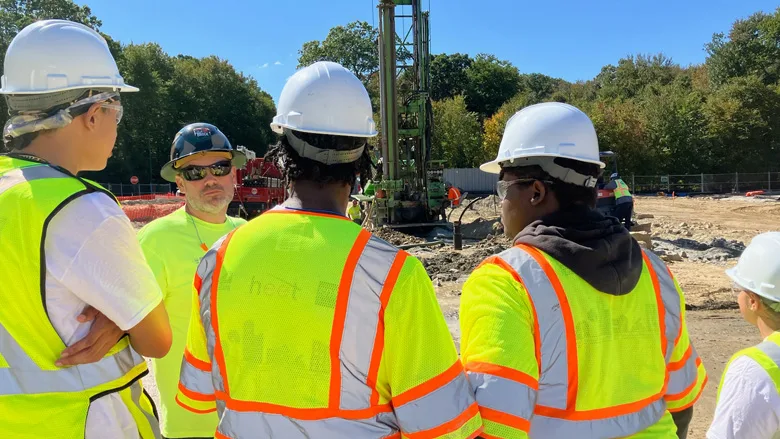
As the 2026 State of the U.S. Water Well Industry Report makes clear, nearly 50% of the industry's workforce is at or near retirement age, more than double the proportion in the general U.S. labor force. As of summer 2026, the drilling industry has shifted its hiring strategies toward stronger onboarding processes and professional training programs.
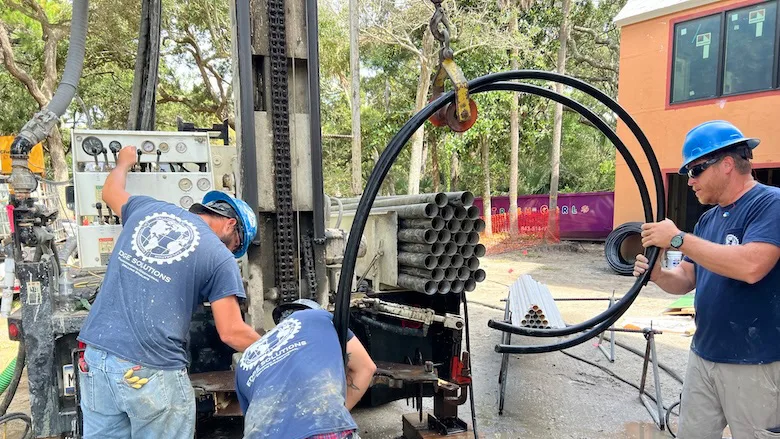
To retain new hires, progressive companies are investing in apprenticeship programs that bridge the gap between veteran knowledge and next-generation skills. Furthermore, to address labor shortages and the high cost of CDL acquisition, companies are investing in equipment and technologies that reduce licensing and qualification burdens.
The next evolution is the adoption of intelligent drilling technology. The use of remote monitoring and artificial intelligence-assisted optimization is no longer optional; it is becoming the standard for maintaining efficiency and profitability. The drilling professional of 2026 is a hybrid expert who must possess "driller's intuition" and hands-on knowledge of the subsurface and resource management, while simultaneously demonstrating digital proficiency with emerging technologies that enable automated rig operations and real-time data interpretation.
Whether we are drilling the foundation for a massive bridge project, stabilizing the base for a wind turbine, installing a closed-loop geothermal network for a city, or securing a community's groundwater, the work is becoming more technically demanding and more essential than ever before.
Ultimately, the takeaway for 2026 is clear: the industry is moving from a posture of protecting and defending to one of proactive engagement. The future lies in embracing technological innovation, investing in training pathways, and leaning into the critical role we play in both infrastructure and energy. The drilling industry is not just keeping pace with global change; we are drilling its very foundation.
Want More Geothermal Insights?
Explore the inaugural Ground2Grid Thermal Energy Summit, launching in 2027, and connect with the ideas shaping the future of geothermal energy. Learn more.
Looking for a reprint of this article?
From high-res PDFs to custom plaques, order your copy today!

Brock Yordy, Director of Industry Engagement for The Driller, is a third-generation driller and globally recognized subject matter expert who has written for The Driller since 2013. Driven by a passion for industry education and digital media, he anchors The Driller Newscast and hosts weekly podcasts for the trade. His technical authority is backed by decades of extreme fieldwork worldwide for organizations like Halliburton, SUEZ, and the U.S. Government. Dedicated to ensuring clean water for all and advancing equitable geothermal heating and cooling, Brock actively collaborates with states nationwide through The Developed Well Group and the Geothermal Drillers Association to shape policy, safety, and workforce training.
email: brock@thedriller.com | office: (269) 348-5156