The Anthropology of Drilling: A Field Guide for Drillers, Engineers, Scientists, and GCs
Part 1: Subterranean Primates: Field Notes on the Toolmaking, Habitat Modification, and Social Dynamics of Drillers
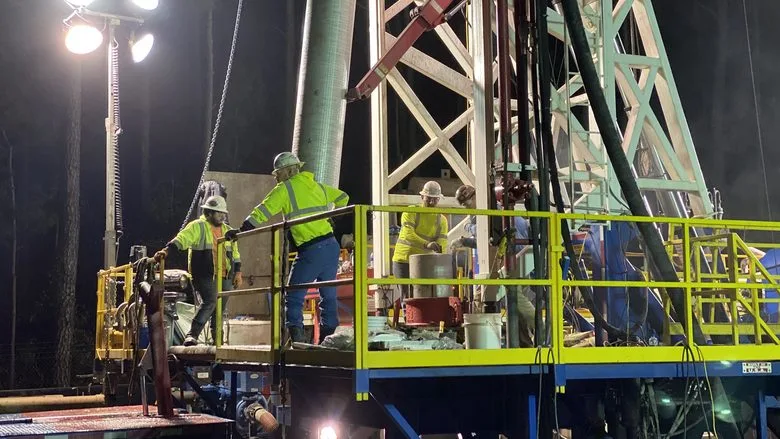
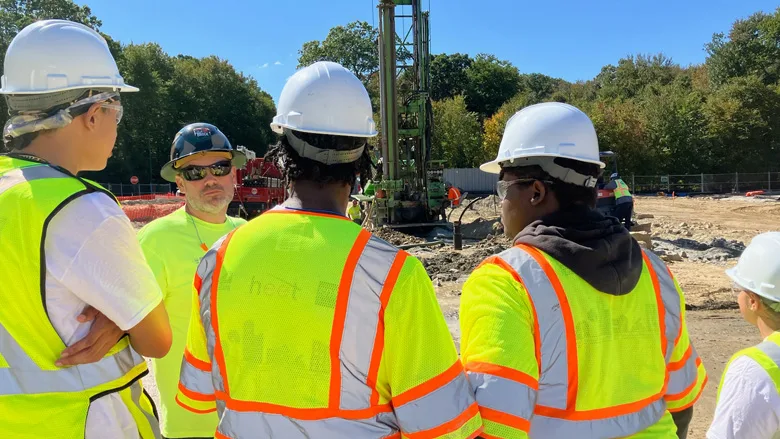
Developers, Engineers, Scientists, and Project Field Supervisor: Imagine you are an anthropologist, or a civil construction documentarian from another planet, crouching behind a chain-link perimeter fence at 6:00 AM.
Through the morning mist and the sharp scent of diesel, you are observing one of the construction industry's most fascinating, misunderstood, and essential species: Homo Sapiens Drillerus, commonly known as the Driller.
To the untrained eye, a drill crew looks like a disorganized group of mud-covered individuals using cryptic hand gestures rather than yelling over the roar of the rig. But look closer, and you're witnessing a team shaped by tribal field experience. They maintain complex social hierarchies, adapt their habitats with brutal efficiency, and craft tools that bridge the gap between pristine engineered specifications and the harsh reality that Mother Nature's cooperation is strictly optional.
As Scientists, Engineers, and General Contractors, you may be the apex predators of the jobsite's administrative trailer. But standing next to a rig in two inches of drilling mud displaced by a grout job from an adjacent borehole, you are merely a tourist in their habitat. If you want your project to stay on schedule, on budget, and in compliance, you need to understand their culture and collaborate.
I bring you this perspective as one Homo Sapiens Drillerus who paid good tuition to embed with academia. Picture John "Bluto" Blutarsky crashing a university earth sciences department—living perpetually on double secret probation, screaming "Ramming speed!" as rock hammers went flying and chips were cracked off, only to watch future geophysicists solemnly lick those fresh specimens under sterile fluorescent lights to determine silt content. Ironically, I fell in love with the balance of muddy boots and lab coats. Being raised on the rig by wolves and tutored in lecture halls by well-pedigreed golden retrievers gave me an uncommon advantage: deep respect for science, but even more appreciation of being there as the crew hits total depth.
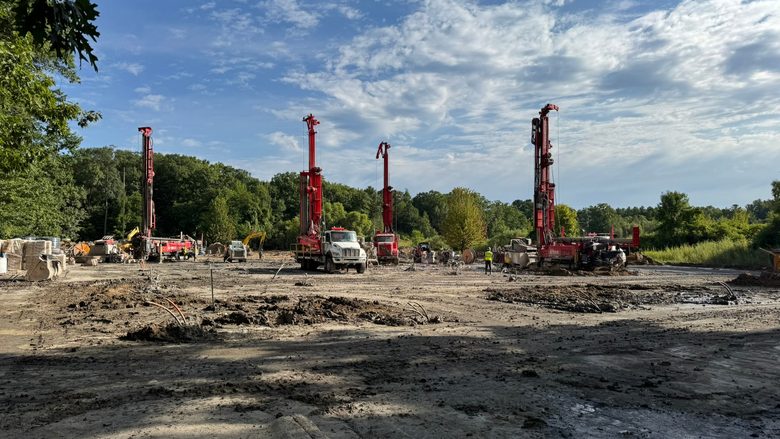
Photo: Brock Yordy
1. Habitat Modification: Drilling is a Disruptive Process
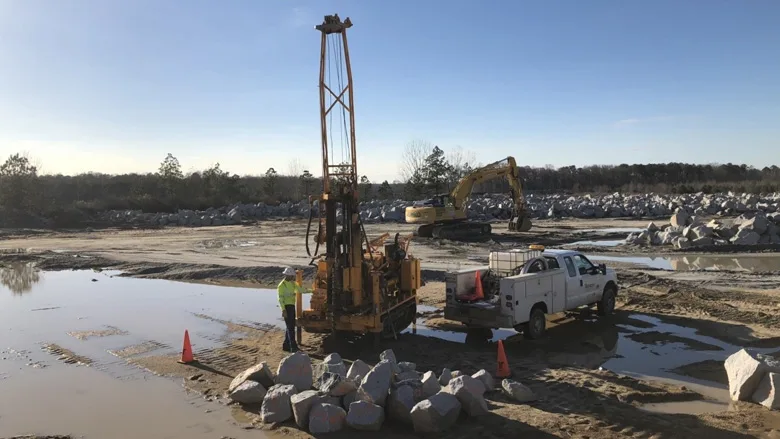
Drillers do not simply occupy a jobsite; they terraform it. Within hours of mobilization, they establish a new surface formation and an entirely localized ecosystem.
- Making Hole: What was once a neatly graded subgrade is rapidly modified into a complex network of high-pressure hoses, cuttings pits, and completed boreholes. This is not chaos; it is a calculated site management system.
- The Platform: The control center. It is fiercely guarded. Only the Lead Driller and "vetted" assistant driller may step up to pull the levers. The assistant vetting process requires the driller to trust them to stop the rig when the head is on bottom, and to know better than to adjust any other functions that would impede rate of penetration. These vetting processes happen only when the Driller is eating or in the porta-john. The console features dozens of hydraulic controls, gauges, and a control access panel modified into a storage compartment holding a half-empty energy drink, grease sticks, and five rolls of electrical tape. The identification tags are almost always highlighted with copper rod grease.
- Environmental Adaptation: Drill crews exhibit a remarkable resistance to the elements, seemingly immune to torrential rain, blistering heat, and subzero cold, provided they are regularly supplied with dry gloves, all-weather gear, cold water, and caffeine.
Field Note for GCs: If you want your project to succeed, plan your site around the beast, not around your parking spots. Staging your frac tanks, spoil piles, and haul routes with intentionality keeps production from choking on its own cuttings. Drilling is disruptive by nature; mud is just part of the birthing process. A great GC doesn't panic at the mess; they balance the muck with timely vacuum trucks and dump runs so the wolves can keep making holes.
2. Toolmaking: The Alchemy of the Borehole
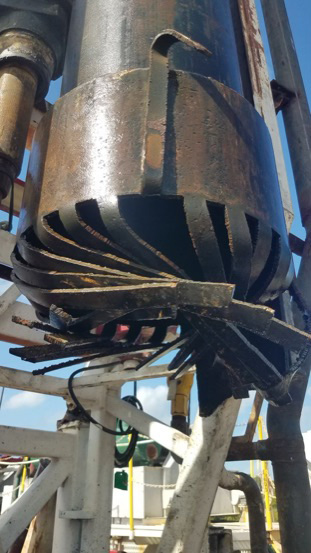
Fishing Tool called Junk Basket was created to retrieve a broken-off 12" Bit.
Photo: Brock Yordy
While major capital equipment arrives with stamped engineering designs, many critical downhole tools are sketched on a napkin and refined at the back of the service truck with a cutting torch and an anvil. Drillers are the ultimate on-the-fly fabricators. They operate in a tactile world where what gets R&D'ed right now prevents total hole destabilization tomorrow. As General George S. Patton put it: "A good plan violently executed now is better than a perfect plan executed next week."
- Fluid Sorcery: Watch how they mix drilling fluids. To a mud engineer, it's a calculated ratio of water, bentonite, and polymers. To the driller, it is culinary art. They adjust polymer addition entirely by feel, stretching polymers between their thumb and forefinger to instantly read how the slurry will combat running sands or tame swelling clays. When challenged, they whip out the Marsh funnel, cup, and mud balance to prove their wizardry is, in fact, science.
- Tactile Feedback: A driller doesn't just monitor gauges; they listen to the steel. They feel the subtle transition from unconsolidated sand into gravelly cobble fifty feet down simply by the altered chatter of the rotary head. A seasoned operator is no different from a test pilot flying by feel through rough turbulence.
- Field Fabrication: When a bit hangs up and a tool is lost downhole, watch the ingenuity unfold. Armed with an oxyacetylene torch, scrap steel, and an intuitive sense of downhole geometry, they fabricate a custom retrieval tool that no engineering manual has ever documented.
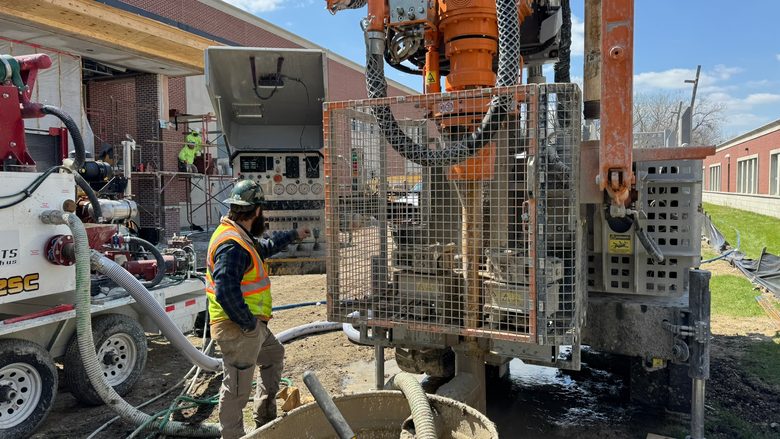
Photo: Brock Yordy
3. Social Dynamics: The Hierarchy of the Rig
The social structure of a drill crew is rigid, highly functional, and vital for survival around high-torque machinery.
- The Alpha Wolf (The Driller): Recognized by their anchored position at the console, absolute focus on downhole conditions, and total command over site rhythm. A master driller makes microsecond adjustments without warning to maintain borehole integrity. They communicate primarily through subtle head nods and microscopic hand gestures. They are the undisputed competent individual on the jobsite.
- The Pack (Assistant Driller – Field Technicians): A blur of motion, tripping pipe, shoveling cuttings, and managing circulation. They are loud, athletic, and communicate over diesel exhaust using an intricate dialect of shouts and hand signals that double as colorful expletives.
- Interaction with Outsiders (You): When a scientist, engineer, or GC walks up with little to no mud or rod grease on them, the pack goes into guard mode. They will wait for you to speak. If you mimic the pack or fire off too many questions at once, you will receive the silent, passive-aggressive nod of a crew that knows that the Alpha will handle the situation with the best answers at that time, or an accidental shot of drilling fluid from a rod connection or discharge hose. The pack understands you wouldn't survive ten minutes tripping pipe or trying to manage the disruption.
The Takeaway: How to Coexist and become one with the Pack.
Scientists, Engineers, and GCs often view drilling crews as brute-force operators. Drillers often view Scientists, Engineers, and GCs as clipboard-wielding theorists disconnected from practical reality.
To bridge this evolutionary divide and ensure your project succeeds, practice effective cross-species communication:
- Respect the Tactile Data: When the Driller tells you the borehole conditions aren't matching the formation logs, believe them. Their hands are feeling what's happening in real time underground while the log pages blow in the wind on a clipboard.
- Bring Offerings: The fastest way into the pack is mutual respect, backed by a fresh box of donuts or a gallon of hot coffee. It softens jobsite friction faster than any technical meeting.
- Ask, Don't Tell: Instead of demanding, "The specs say you should be at 500 feet today," ask, "What is the formation telling you right now?" Acknowledging their sensory expertise immediately bridges the gap between decades of field instincts and engineering credentials.
The best advice is to stop seeing a drill crew as just brute-force equipment operators and start seeing them for what they are: frontline field scientists who interpret the ground long before a lab ever runs a sieve analysis. The trailer might hold digital models and the engineered specs, but the platform holds the ground truth. When the engineers, the geologists, and the pack at the rig finally bridge that divide, you find the fun in discovering the unknown together and the satisfaction of completing projects efficiently and on time.

Want More Geothermal Insights?
Explore the inaugural Ground2Grid Thermal Energy Summit, launching in 2027, and connect with the ideas shaping the future of geothermal energy. Learn more.
Looking for a reprint of this article?
From high-res PDFs to custom plaques, order your copy today!

Brock Yordy, Director of Industry Engagement for The Driller, is a third-generation driller and globally recognized subject matter expert who has written for The Driller since 2013. Driven by a passion for industry education and digital media, he anchors The Driller Newscast and hosts weekly podcasts for the trade. His technical authority is backed by decades of extreme fieldwork worldwide for organizations like Halliburton, SUEZ, and the U.S. Government. Dedicated to ensuring clean water for all and advancing equitable geothermal heating and cooling, Brock actively collaborates with states nationwide through The Developed Well Group and the Geothermal Drillers Association to shape policy, safety, and workforce training.
email: brock@thedriller.com | office: (269) 348-5156