American Agriculture
America’s Largest Aquifer Is Drying Up. Ranchers Are Running Out of Room for Guesswork
As groundwater levels decline across the Ogallala Aquifer, ranchers are turning to real-time monitoring to better understand water use, reduce waste and make more informed management decisions.
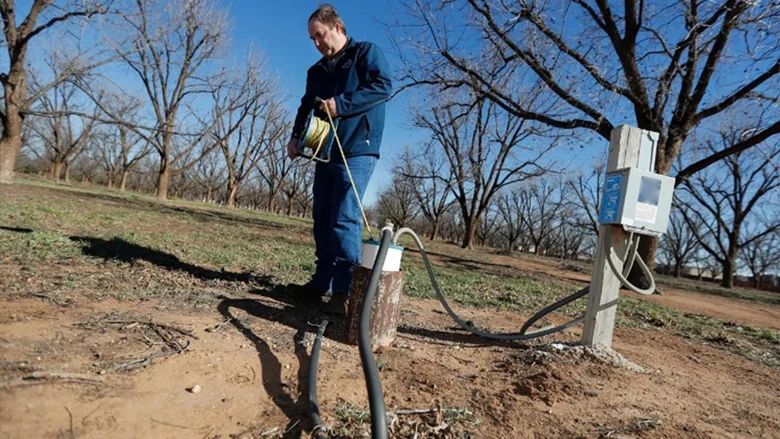
Beneath the Great Plains sits one of the most important water sources in American agriculture.
The Ogallala Aquifer, part of the larger High Plains Aquifer system, stretches beneath roughly 175,000 square miles across Colorado, Kansas, Nebraska, New Mexico, Oklahoma, South Dakota, Texas and Wyoming. It supports farms, ranches and rural communities across one of the country’s most productive agricultural regions. It also provides drinking water for about 2.3 million people.
But the aquifer is under immense pressure. In many areas, especially across the southern High Plains, groundwater is being pumped faster than it can naturally recharge.
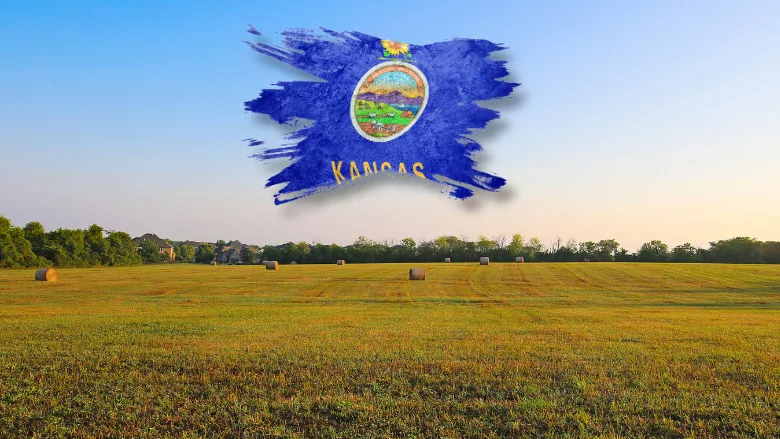
Parts of Texas and Kansas have seen water levels fall by more than 150 feet since large-scale groundwater development began. For ranchers, that makes water more than a resource. It’s also a business risk.
Andrew Coppin, CEO and co-founder of Ranchbot, says one of the biggest problems is that many producers still do not have a clear picture of how much water they have, how quickly they are using it or where they may be losing it.
“We need data,” Coppin said. “You can go ask any rancher how much of anything they’ve got: how many cows, how much feed, and they’ll tell you everything. Ask them how much water they’ve got and they’ll say, ‘enough or not enough.’”
Ranchbot is an Australian company with a U.S. headquarters in Fort Worth. It makes satellite-connected monitoring systems that allow ranchers and farmers to track tank levels, troughs, pumps and other water infrastructure from a phone or computer. The company’s sensors can show whether a trough is running low, overflowing or whether a pump needs attention, even if that equipment is miles away.
A cow can drink around 38 gallons of water a day, and with tens of millions of cattle across the United States, livestock water demand adds up quickly.
“Water is the No. 1 input into the business and no one really knows or can quantify exactly what the number is,” he said.
Remote monitoring will not refill the Ogallala. It will not solve decades of overpumping. But it can help producers catch leaks sooner, reduce unnecessary trips across large properties, prevent dry troughs and make more informed decisions about daily water use.
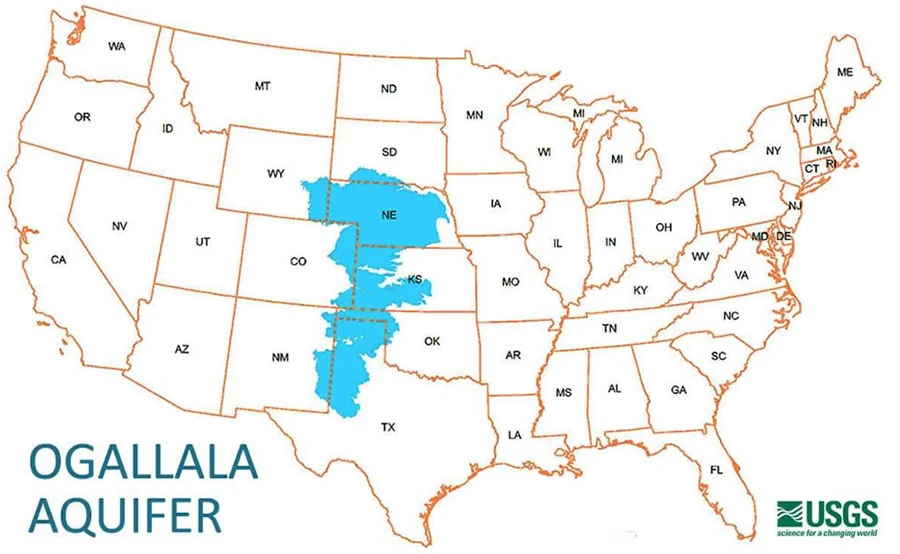
Map: SGS
“Every business on the planet is making better informed decisions based on data,” Coppin said. “Ranching and farming should be no different but if you don’t have the information how can you make better decisions? You can still overlay ranch intuition but you can’t make it with no data.”
Data and monitoring that data is especially important in areas where the aquifer’s decline is already changing what agriculture can look like.
In parts of the High Plains, wells have had to be deepened, pumping costs have increased and some land has become harder to irrigate economically. The Kansas Geological Survey notes that large-volume pumping, mostly for irrigation, has led to substantial water-table declines across much of the Ogallala portion of the High Plains Aquifer.
Ranchbot has also partnered with Texas A&M AgriLife to develop satellite-connected agricultural monitoring systems aimed at improving water, livestock and land management. At Texas A&M’s McGregor Research Station, staff can now check trough levels from their phones rather than physically driving out to each water point. That is the kind of shift Coppin believes ranching needs.
What does the future hold?
The future of the Ogallala Aquifer won't be decided by one new piece of technology or a single conservation effort. Protecting one of the country's most important groundwater resources will take a mix of smarter water management, continued investment in monitoring technology, practical groundwater policy and a shared commitment to stewardship from producers, researchers, regulators and local communities. The aquifer didn't reach this point overnight, and there won't be a quick fix.
Technology can play an important role. Remote monitoring, sensors and better data won't recharge the aquifer or reverse decades of heavy pumping, but they can help producers spot leaks sooner, use water more efficiently and make better day-to-day decisions. When those tools are paired with sound groundwater management and conservation efforts, they can help stretch every gallon a little further.
The Ogallala supports much more than crops and cattle. It provides drinking water for millions of people, keeps rural economies moving and helps sustain one of the most productive agricultural regions in the world. As groundwater levels continue to decline in parts of the High Plains, the conversation is shifting from simply finding more water to managing the water that's left more responsibly. That will require better information, thoughtful policies and a willingness to adapt. For producers, the future isn't just about having enough water today. It's about making sure this critical resource is still there for the next generation.
Looking for a reprint of this article?
From high-res PDFs to custom plaques, order your copy today!

John Oldani is an editor, journalist, and reporter with over a decade of experience producing clear, engaging, and well-researched content. He holds a Bachelor of Arts in Journalism from Oakland University, with a focus on financial reporting, editing, and long-form writing. Over the past year, John has specialized in covering the drilling industry, reporting on key developments, policy shifts, and impactful stories shaping the field.
email: johnnyoldaniwords@gmail.com | office: (248) 838-8535