Geothermal Knows No Border: Navigating Tariffs, Grid Strain, and the Next Era of North American Geothermal
Tariffs, grid strain and supply chain risks are testing North American geothermal as industry leaders push manufacturing, policy and cross-border collaboration forward.
Key Takeaways
- Tariffs are disrupting integrated U.S.-Canadian geothermal supply chains just as the industry enters a critical scaling phase.
- Concentrated heat pump manufacturing and growing grid strain strengthen the case for resilient geothermal supply chains and deployment.
- Watch for expanded Canadian manufacturing, tariff relief and policies that value geothermal’s long-term grid benefits.
In late May, an unseasonal 31°C (93°F) heatwave sent Toronto locals to the beach months early, setting the scene for the largest conference in the Ontario Geothermal Association's (OGA) history. The momentum in that room was electric. We heard from Toronto Mayor Olivia Chow on monumental geothermal exchange systems and Shakokwenios Joseph Martin, Knowledge Keeper from the Six Nations of the Grand River Peoples of North America, on the deep interconnection between our thermal resources and communities.
Five months later, when I sat down with my friend and colleague Paul Frith, OGA President, and a leading consultant bridging the gap from the borehole to the building loop, we had to weigh May's record-breaking momentum against the cold reality of an autumn trade war. By October 2026, fuel prices sit 50 percent higher than historical norms, power generation is pushed to the brink by twenty-first-century data centers and building electrification, and late-summer tariffs and counter-tariffs have disrupted the cross-border flow of critical equipment.
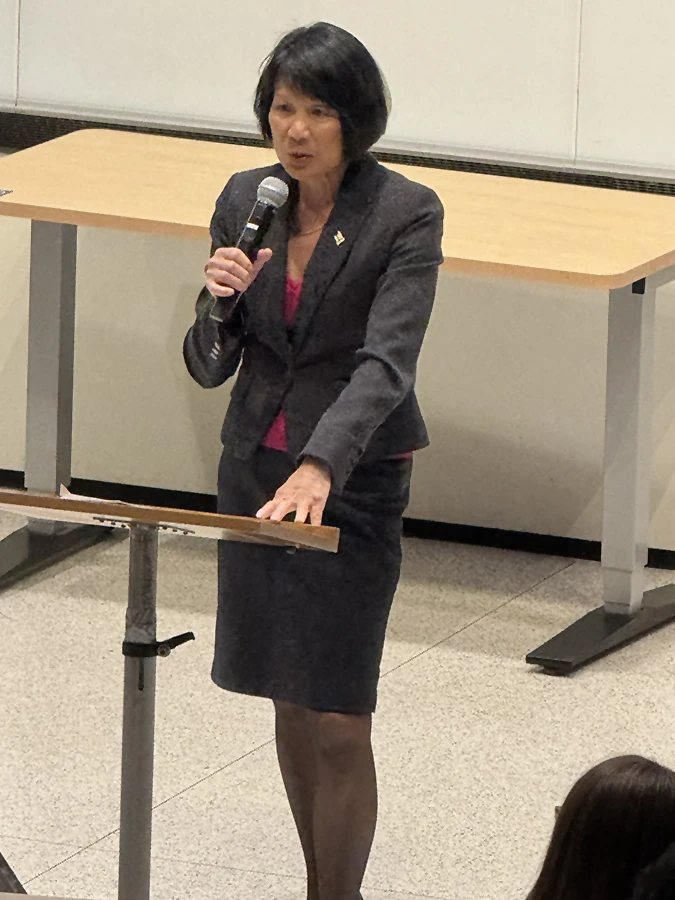
Toronto Mayor Olivia Chow
Photo: Brock Yordy
From drill rods and steel casings to high-density polyethylene (HDPE) loops and heat pump assemblies, professionals north and south of the 49th parallel have always operated as integrated partners. Yet, as our technology enters a critical scaling phase, trade friction threatens to stall our progress. Here is how we protect our supply chains and buckle down across the border.
The Counter-Tariff Reality and Supply Chain Vulnerability
While political opinions swirl on both sides of the border, geothermal contractors, drillers, and manufacturers have a practical task: keeping projects viable and parts moving. In Canada, the primary threat has been counter-tariffs on American-made goods.
"When you look at the situation, especially with ground source heat pumps, 90 percent of that product is made in the United States," Frith explained. "So it was a big potential hit. We were looking at a 15 percent tariff on that."
Roughly 13 industry-critical items landed on the counter-tariff list, including heat pumps, internal components, metal parts, drill rods, and steel casings. Plastics and resins took a smaller hit because loop manufacturers had anticipated trade friction over the past year and pivoted sourcing away from the U.S.
Fortunately, the OGA wasn't caught flat-footed. With trade chatter percolating since last April, the association drafted position letters in advance. When counter-tariffs dropped in late summer, Frith initiated an "all hands-on-deck, full-court press" with the OGA's government relations firm, rallying allied Canadian associations and raising stakeholder funds to offset lobbying costs.
The industry took a unified message to the federal ministries of Finance and Trade, requesting either a complete exemption for geothermal equipment or a rebate mechanism funneling tariff revenues back to association members to offset price hikes.
"We are relatively confident that we're going to see something from the government, because at the end of the day, the federal government is all about climate change, climate mitigation, and electrification," Frith noted. "Why would you penalize one of those top industries that can help you with that? We know what they did for the natural gas industry was very favorable to them, so we're hoping that we can see something similar."
Reshoring and Diversifying North American Manufacturing
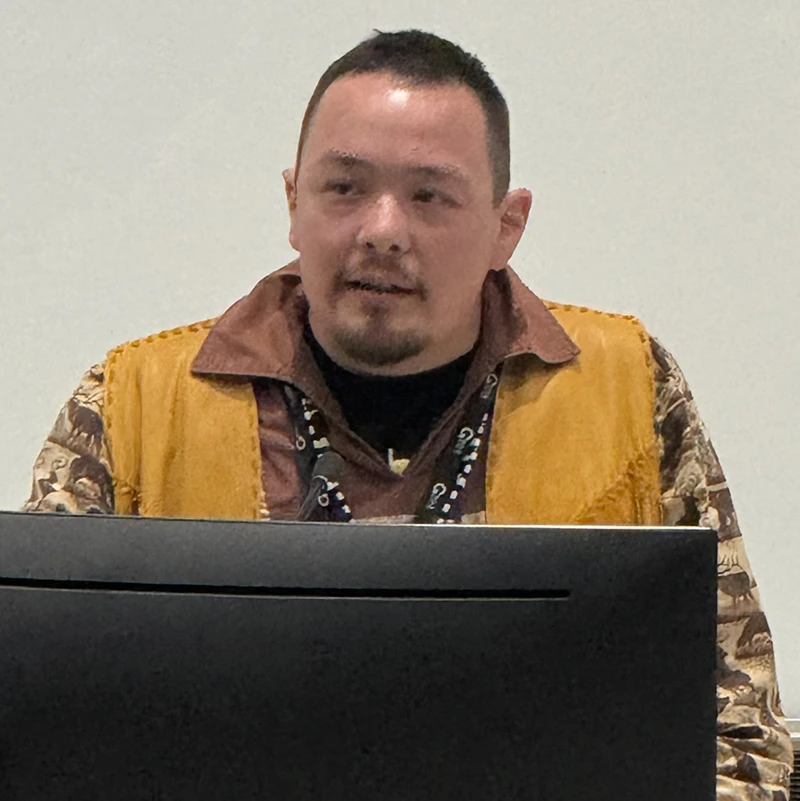
Shakokwenios Joseph Martin, Knowledge Keeper from the Six Nations of the Grand River Peoples of North America
Photo: Brock Yordy
Lobbying for exemptions is a necessary defense, but long-term stability requires structural adjustments. Having 90 percent of heat pump manufacturing on one side of the border leaves the North American market vulnerable whenever geopolitical tensions flare.
To rebalance that mix, the OGA is engaging domestic Canadian manufacturers to scale production. Frith is in active dialogue with New Brunswick-based Maritime Geothermal—makers of the Nordic brand—and emerging multi-residential players.
"From an industry perspective, there is keen interest to grow the manufacturing base in Canada," Frith said, crediting leaders like Jared at Maritime Geothermal for stepping up. "When it comes to significant growth as a manufacturer, that's a decision they obviously have to make; it's a lot of their capital being spent to grow their company. But the OGA and the broader industry can support them by talking to the government and strengthening distribution networks."
Growing manufacturing on both sides of the border isn't protectionism; it builds supply chain resilience so the North American heat pump transition never stalls over a border dispute.
The Policy Disconnect: Affordable Housing vs. Grid Stability
Cross-border levies are especially damaging when our sector is already fighting entrenched fossil fuel utilities and short-sighted electrification policies.
In rural areas, replacing oil, propane, or electric resistance heating with ground source heat pumps delivers a payback under 10 years. However, competing against natural gas in provinces like Ontario often stretches paybacks to 20 years because gas utilities use massive rate bases to offset infrastructure costs artificially.
That policy blind spot became obvious in mid-October when Canada announced a National Heat Pump Program for affordable housing, offering up to $10,000 per household with no explicit mention of ground source systems—prompting immediate OGA intervention.
This omission highlights a classic North American disconnect. When developers and policymakers fund affordable housing in hubs like Toronto, Detroit, or Chicago—which sit on rich thermal resources—they focus almost exclusively on upfront cost per square foot, defaulting to air-source heat pumps or forced-air systems to stretch construction budgets.
That math completely ignores the long-term infrastructure cost of grid stability.
In the Upper Midwest and Ontario, air-source heat pumps perform well around 15°C (60°F). However, when temperatures plummet into a deep freeze or spike above 30°C (90°F), air-source efficiency drops and electrical peak demand skyrockets. Ground source heat pumps bypass that volatility entirely, exchanging heat with a stable subterranean temperature of 12°C to 15°C (55°F) year-round.
"There's room for everybody, and I believe there are times where ground source doesn't make sense, like complex retrofits in tightly packed urban row houses where getting a drill rig in is challenging," Frith said. "However, in rural Ontario, where households rely on oil, propane, or electric resistance heat, ground source checks every box for an affordable housing incentive. And when you look at cities with electrical capacity issues or aging distribution infrastructure, the conversation has to shift. It shouldn't just be 'this product is cheaper upfront,' but 'what are the long-term infrastructure costs if we have to upgrade our entire electricity grid and transformers to handle the peak demand spikes?'"
What's Next: How the Industry Buckles Down for 2027
Despite trade hurdles, policy blind spots, and shifting political landscapes across North America, the geothermal sector isn't waiting for policymakers to hand us a victory. Heading into 2027, we are buckling down by innovating, collaborating, and expanding our footprint.
To build rock-solid public trust, the OGA recently launched a public sector program offering municipalities anonymous reporting and standardized, transparent pricing to diagnose, repair, and maintain legacy geo-fields. Rather than guarding this initiative, Paul Frith is actively inviting U.S. and Canadian associations to replicate the model across the continent. Technically, we're expanding beyond individual heat pumps into integrated low-carbon district energy, sewage and wastewater heat recovery, and massive utility-scale deployments, including a soon-to-be-announced project slated to become the largest geothermal borefield in Canadian history.
Now, every driller, engineer, and manufacturer must champion our value.
"I encourage anybody from the space, or anybody using the technology, to yell from the rooftops," Frith concluded. "We have moved the needle, and the growth we are seeing is great. Do we hit hurdles? Sure we do. Welcome to life. But there is a time of positive change coming for our industry."
Whether drilling in the Upper Midwest or Ontario, our mission remains unchanged. By strengthening domestic manufacturing, sharing best practices across borders, and prioritizing total grid stability over upfront costs, North American geothermal won't just survive the tariff era; we will build the twenty-first-century energy grid.
Want More Geothermal Insights?
Explore the inaugural Ground2Grid Thermal Energy Summit, launching in 2027, and connect with the ideas shaping the future of geothermal energy. Learn more.
Looking for a reprint of this article?
From high-res PDFs to custom plaques, order your copy today!

Brock Yordy, Director of Industry Engagement for The Driller, is a third-generation driller and globally recognized subject matter expert who has written for The Driller since 2013. Driven by a passion for industry education and digital media, he anchors The Driller Newscast and hosts weekly podcasts for the trade. His technical authority is backed by decades of extreme fieldwork worldwide for organizations like Halliburton, SUEZ, and the U.S. Government. Dedicated to ensuring clean water for all and advancing equitable geothermal heating and cooling, Brock actively collaborates with states nationwide through The Developed Well Group and the Geothermal Drillers Association to shape policy, safety, and workforce training.
email: brock@thedriller.com | office: (269) 348-5156