The Kid, the Auction Block, or the Buyer: Why Succession Planning Can't Wait
Most well services companies are family-owned, and most owners hope to keep them that way. Fewer have a plan for when the next generation is not ready or says no.
Key Takeaways
- Drilling businesses face a growing succession challenge as aging owners prepare to retire without clear successors.
- Without early planning, owners risk losing business value, customer relationships and decades of community trust.
- Owners should explore family succession, employee ownership or outside buyers before an auction becomes the default exit.
There is an all-too-familiar refrain gathering force throughout the industry: multi-generation owners have poured their lives into building strong businesses that the next generation is not interested in or equipped to carry on.
That was the picture one longtime operator in the Southwest painted of many owners around him. Professionals who have spent decades building something great are preparing to step back, and when they look around the shop, there's nobody in line behind them.
His explanation was blunt: their “iPad kids don't want to have anything to do with it.”
The coming retirement wave
The Water Systems Council's 2026 State of the U.S. Water Well Industry report puts some numbers behind it. Eighty-two percent of contracting operations are family-owned. Fifty-nine percent have already been handed down at least once. And four in ten owners say they expect to pass the business to family again.
Meanwhile, the people running these companies aren't getting any younger. The average contractor is 53. About half the industry's workforce is 55 or older, compared with 23% of the U.S. labor force as a whole.
Put those together and you get thousands of shops coming up on the same decision around the same time: does the business go to the kid, the auctioneer, or the buyer?
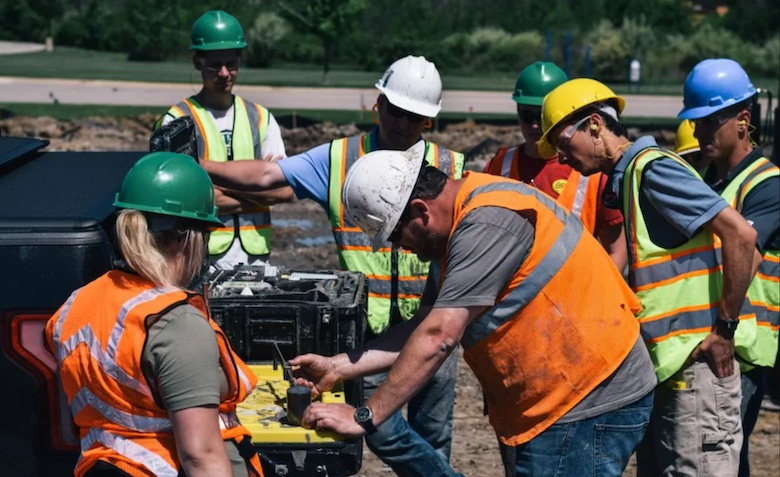
Running a drilling business is complex and stressful. Which is why having strong management both now and in the future is essential.
Photo: Brock Yordy
The kid
This is the version anyone would pick in an ideal situation. The son or daughter who grew up in the passenger seat of the pump truck, who is familiar with the local geology, and who will keep the family name on the door. And per the Water Systems Council report, it is the path that many are already taking.
But a lot of kids nowadays are saying no, and it's worth being honest about why. Plenty of them watched a parent head out before sunrise and get home after dark. They remember the games that were skipped because a lightning storm broke pumps, or the winters when the tension of meeting payroll seemed to hang over the family. Some went off to college and built a life somewhere else. Some just never quite found a lasting interest. While it is hard to blame them, this still leaves many owners in a tough position.
Even when the answer is yes, it may not be the right decision. Running these businesses is complex and stressful, and mismanagement can lead to injury or even death. The last thing a well-intentioned parent would want is to place a child in a situation that they are not ready for. This is why it is important to start asking these questions today, so you can prepare your kid to take over or start creating a team that can help them as you step away.
Now the final question with the kid succession plan is: what if you have more than one who wants a place in the business? This has become a real concern within multi-generational companies and in some ways can pose larger challenges than having no heir at all. However, early planning and clearly defined succession strategies can help ease the pain of transition and maintain something even more valuable than the business: harmony in the family.
The auction block
When there's no kid and no plan, things eventually must come to an end. They just conclude in a way nobody wanted but many are forced into.
One driller on the East Coast spent his entire life building a successful business on which his community depends. However, despite his best efforts, he does not have a successor. In an effort to avoid the block, he has looked inside his own shop but has not been able to find anyone who could buy the business from within. So, unless something changes soon, his equipment is headed for auction.
Anybody who's been in this business for a while has stood in a yard on auction day and watched good equipment go for a fraction of what it's worth. However, the rig and the truck are only part of what makes these businesses valuable. The phone number that's been ringing for decades doesn't go on the block. Nor do the relationships with customers who have never called anybody else. And finally, the company name that signals trust and reliability to a local community is gone forever.
Those customers don't go away, either. Their pumps still break down on a Sunday evening when a storm rolls through the area. When a shop closes in an already underserved market, its customers are left scrambling, and the owner walks away with the value of discounted equipment instead of what the business is truly worth.
The buyer
That brings us to the third character. Outside investors have started paying attention to groundwater over the last few years, and a lot of owners are getting calls they never used to get. Not every one of those calls is the same.
Some of the good ones come from people who don't want to run a drill rig and aren't pretending they could. They want to partner with the people already doing it. Often the owner stays on for a few years, but with a clear finish line: long enough to hand off customer relationships, develop the next leader, and make sure the crew is in good hands, then step back into retirement on a timeline they helped set. In the meantime, the business gets what a 15-person shop struggles to afford alone: capital for equipment, help with the paperwork, and the benefits and career paths that keep good people around.
And the buyer and the kid aren't always an either-or. Some families bring in a partner even when the next generation is ready to take over. The kid gets the business, plus capital to grow it and experienced people to lean on during those first few years in charge. For a son or daughter with big plans, that support can be the difference between keeping the business going and taking it to the next level.
Other outside investors are working toward a payday on a set timeline, and to them the business is a line on a spreadsheet. They may raise prices, cut the crew, change the name on the trucks, or overload the company with debt. What these investors miss, though, is that the trust an owner has built over decades can be lost in a single season.
Any owner who gets one of these calls should ask a few plain questions. How do I know that you will do right by my customers? What assurances do you offer that my people will be taken care of? What will you do to protect the legacy of what we’ve built? Good partners will have clear answers.
An outside buyer also isn't the only buyer. For some companies, the best successor is already on the payroll, whether that's a key employee buying in over time or the whole crew through an employee stock ownership plan, or ESOP.
There's no single right answer. What matters is that the owner chooses it on purpose.
The phone keeps ringing
For all of this, there's a lot to be optimistic about. Demand isn't the problem. Drilling backlogs held near nine weeks for two years and are still above seven. People need water, and somebody has to drill the wells and fix the pumps.
If the kid comes home and does not need any help, that's still a great ending. If not, it doesn't have to be the auctioneer. There are other ways to keep the trucks running and the phone answered for another generation, but almost all of them take some planning ahead of time.
So have the conversation with your family this year. Talk to your accountant. Take a call or two to learn what your options are.
Don't let the auctioneer write your succession plan.
Looking for a reprint of this article?
From high-res PDFs to custom plaques, order your copy today!