Mining News
Nevada King Gold Corp. Adds Fourth Rig as Atlanta Gold Drilling Program Expands
The company has plans to move into new exploration areas, working through a 40,000-meter reverse circulation drilling program.

Nevada King Gold Corp. is adding a fourth drill rig to its Atlanta Gold Mine Project in southeast Nevada as the company moves into new exploration areas and works through a 40,000-meter reverse circulation drilling program.
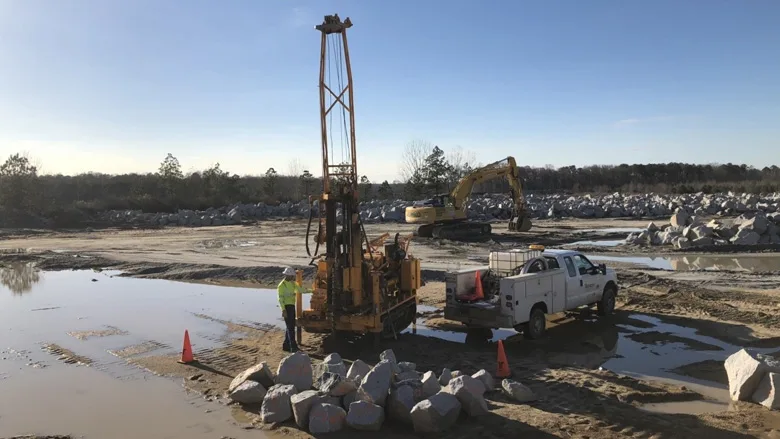
The latest addition is a second rotary air blast, or RAB, rig, expected to arrive on site later this month. It will join another RAB rig and two reverse circulation, or RC, rigs already working on the property. For Nevada King, the additional rig is partly about increasing drilling capacity. But it is also about access.
Some of the company's newer exploration targets sit on elevated or difficult terrain that its larger RC rigs cannot currently reach. The smaller and more mobile RAB equipment allows Nevada King to conduct shallower reconnaissance drilling while roads are constructed for the RC rigs.
That strategy is now being used at the company's East Ridge Target and a newly identified area called the Splay Zone.
The company has completed approximately 20,000 meters of its planned 40,000-meter Phase 4 RC drilling program. RAB drilling is being conducted in addition to that 40,000-meter total.
RAB First, RC Later
Nevada King is essentially using the two drilling methods for different stages of exploration.
The RAB rigs can move into areas where access is limited and drill through shallow cover to a maximum depth of about 30 meters. Those results can then help the exploration team decide where deeper RC drilling is warranted.
That approach could be particularly useful at the Splay Zone, an approximately 500-meter by 300-meter area northeast of the existing Atlanta pit that has never been drilled.
Surface mapping and sampling have identified gold-bearing silicification in the area, according to Nevada King. Several surface samples returned values above 1 gram per metric ton of gold.
Those surface results are encouraging for the company, but they should not be confused with drilling results. Nevada King notes that surface rock samples are selective and may not represent the mineralization across the property.
The upcoming RAB program should provide the first look at what is actually beneath the surface at the Splay Zone.
If those shallow holes identify targets worth pursuing, the RC rigs can follow once road access is available.
Building Roads to Reach the Targets
Before Nevada King can drill deeper at some of its newest targets, it first has to get the rigs there.
The company recently finished access roads at Atlanta South, clearing the way for RC drilling. Its excavator is now moving to East Ridge, where steep terrain has kept larger RC equipment from reaching both East Ridge and the nearby Splay Zone.
That lack of access is one reason the Splay Zone has never been drilled.
Once the new roads are finished, Nevada King plans to move an RC rig onto East Ridge during the fourth quarter. The rig will be able to drill deeper than the roughly 30-meter limit of the more mobile RAB equipment.
The work highlights a basic reality of exploration drilling: finding an interesting target does not mean much if the right rig cannot reach it.
The Splay Zone has attracted more attention as Nevada King has reconsidered the geology around the Atlanta deposit. The company now believes the Splay Zone, East Ridge and Atlanta Resource Zone could be parts of the same mineralizing system that were shifted by faulting.
Earlier operators viewed mineralization east of the main Atlanta fault as less significant and did little drilling there. Nevada King believes some mineralized rock may instead have been preserved by fault movement, but that interpretation still needs to be tested.
Recent drilling at East Ridge has given the company a reason to keep looking. In July, Nevada King reported RAB intercepts of 4.68 grams per metric ton of gold over 7.3 meters and 1 gram per metric ton over 26.8 meters. Both holes ended in mineralization, according to the company.
Those results have increased interest in nearby areas with similar geology, including the Splay Zone.
Putting the Splay Zone to the Test
Surface conditions make the Splay Zone difficult to evaluate without drilling. Altered rock and loose material cover parts of the target, making it hard to determine how thick the potentially mineralized zone may be.
That is where Nevada King's two drilling methods come into play.
RAB rigs will provide the first shallow look beneath the surface and help identify areas worth pursuing. If the results justify further work, the larger RC rigs can follow with deeper holes once road access is complete.
The newly added fourth rig, a second RAB unit, allows Nevada King to test the Splay Zone while its other RAB rig continues reconnaissance work elsewhere. The two RC rigs, meanwhile, can continue the company's 40,000-meter Phase 4 program.
There is still plenty to prove. Surface samples and nearby drilling can point to promising ground, but only drilling can show whether meaningful mineralization continues beneath the Splay Zone.
With about half of the Phase 4 RC program complete and new roads opening previously inaccessible targets, the next round of drilling should provide a much clearer test of Nevada King's geological theory. For drillers, it is also a good example of how access and choosing the right rig can be just as important as deciding where to drill.
Looking for a reprint of this article?
From high-res PDFs to custom plaques, order your copy today!

John Oldani is an editor, journalist, and reporter with over a decade of experience producing clear, engaging, and well-researched content. He holds a Bachelor of Arts in Journalism from Oakland University, with a focus on financial reporting, editing, and long-form writing. Over the past year, John has specialized in covering the drilling industry, reporting on key developments, policy shifts, and impactful stories shaping the field.
email: johnnyoldaniwords@gmail.com | office: (248) 838-8535