Expert commentary
The Energy Blueprint: Why Drillers Must Master the Business of Power
The industry is more than just what’s seen on the job site. Dictating all of the variables that drive your operations are essential.
Key Takeaways
- Drilling contractors are essential to building modern energy infrastructure, connecting water, construction, and geothermal energy projects.
- Energy policy directly affects drilling through regulations, funding, permitting, and project costs.
- Understanding energy economics helps drilling companies improve margins, win better projects, and make smarter business decisions.
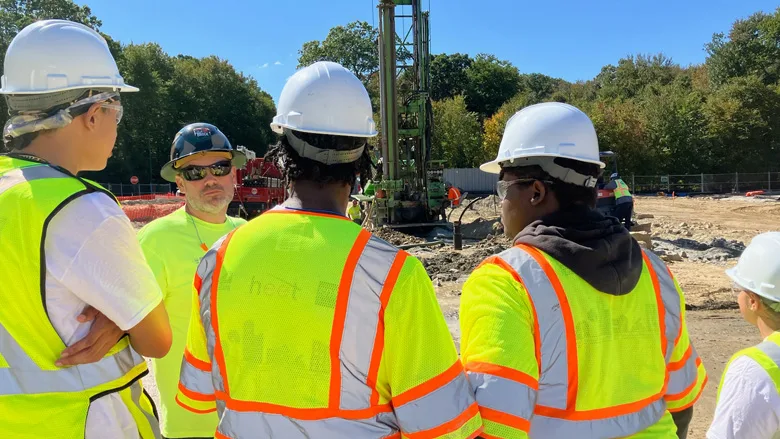
Morning on an active drilling site brings a familiar, grounding reality. The rumble of diesel engines warming up, the sharp smell of grease and earth, and crews prepping the mud system or checking the tooling to set the rhythm for the day’s work.
In those early hours, with steel ready to meet the ground, Washington D.C., Wall Street, and the boardroom debates over global energy policy feel entirely disconnected from the job site.
But they aren’t. In fact, those high-level conversations sit right there on the job site with you, dictating your margins, your timelines, your equipment costs, and the economic forces driving your operations.
For generations, drillers have been the unsung heroes of infrastructure. We provided the water that communities needed to survive, and we laid the geotechnical groundwork for the buildings and bridges that defined modern civilization. The world has fundamentally shifted. We are no longer just putting holes in the ground for water extraction or basic structural support. Today, the drilling contractor is the tip of the spear in the 21st-century energy transition.
That is exactly why I am launching this column. The purpose of this space is to educate the drilling industry on the current state of the energy sector. We are going to break down how and why certain things happen, provide actionable news updates, translate regulatory and policy shifts into practical, field-level realities, and deeply explore the unavoidable intersection of water, energy, and construction. We will not dilute the conversation; instead, we will elevate our understanding to match the critical role we play in the modern economy.
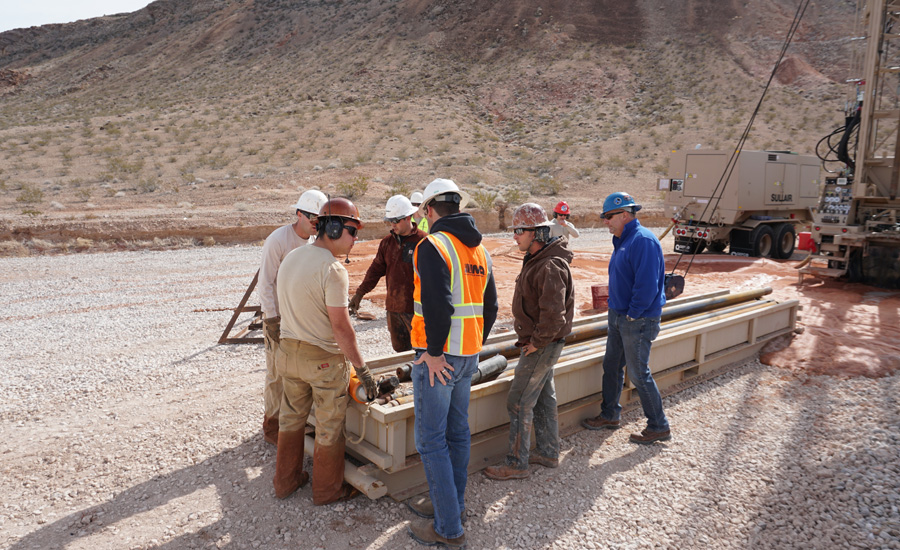
Working on a job site or in the field is one thing, understanding how technology allows us to be more cost-effective and competitive in a ruthless market is another.
Photo: Brock Yordy
The Nexus of Water, Energy, and Construction
You cannot talk about the future of energy without talking about water, and you cannot build the infrastructure for either without heavy construction and advanced drilling. The two are intrinsically linked. It takes significant energy to extract, move, heat, and treat water. Conversely, it takes high volumes of water to generate power and cool the infrastructure that runs our economy.
When a municipality realizes its aging power grid cannot support a new subdivision of electrically heated homes without thermal intervention, or when a commercial developer looks to offset long-term utility costs for a new facility, who do they call? They call us. We are the critical link between the natural resources sitting beneath our boots and the functioning grid above them.
Functioning as that critical link requires us to elevate our understanding of the broader picture. Being highly skilled at putting a hole in the ground is no longer enough to scale a business. The modern drilling professional must understand the intersection of these three pillars.
When you understand the engineering theory and the economic realities driving a project, you stop being a subordinate contractor who merely takes orders, and you become a vital project partner. You begin to see why certain ground-source mechanical systems, like Aquifer Thermal Energy Storage (ATES) or Thermal Energy Networks (TENs), are growing in the private market, and why other large capital expenditure projects stall out amid fluctuating interest rates and supply chain bottlenecks.
Connecting the Dots: From Policy to the Borehole
One of the biggest challenges our industry faces is the fundamental disconnect between the people writing the rules and the people executing the work. We see it every day. I’ve written before about the problem with overly prescriptive requests from engineers—the kind of specifications that look flawless in a CAD drawing but become a logistical nightmare when you actually try to execute them in complex geology.
The exact same thing happens with energy policy and regulatory updates. Legislators and federal agencies frequently draft abstract regulations aimed at modernizing the grid, protecting rural aquifers, or incentivizing renewable energy. These abstract regulations carry highly concrete impacts on our drilling timelines, equipment requirements, and operational costs.
When federal funding mechanisms inject capital into clean energy infrastructure, it changes the bidding landscape. When a new environmental policy shifts the liability of a site, or when a tax credit requires specific compliance tracking and prevailing wage documentation, the administrative and operational burden inevitably rolls downhill to the drilling contractor.
In this column, we are going to humanize and decode that process. When the Department of Energy announces a shakeup, or when new state-level legislation passes regarding groundwater protection and thermal drilling, we won't just regurgitate the press release. We are going to look under the hood and ask the hard questions: What does this mean for the business owner running the rig? Are we adequately insured for this new liability? Does this open up new funding for workforce grants, or does it just add another layer of bureaucratic red tape that will eat into our profit margins?
Understanding the rules of the energy game prevents you from getting played by it. When you know how to navigate the policy landscape, you can position your company to capitalize on infrastructure investments rather than being sidelined by them.
Understanding the "Why" to Protect Your Margins
I have always believed that field decision-making, mechanical aptitude, and a deep knowledge of equipment make drillers ideal candidates for executive leadership. But to make that leap from the field to the boardroom—or simply to run a more profitable contracting business—you have to understand energy economics.
Why do some commercial projects get greenlit while others die in the planning phase? It almost always comes down to risk mitigation and return on investment (ROI). Right now, the energy sector is undergoing a strategic shift from upfront capital expenditure (CapEx) thinking to long-term operational expenditure (OpEx) planning.
A networked geothermal system might cost a developer more upfront than installing traditional rooftop boilers and cooling towers on a commercial building. But when developers begin to factor in long-term emissions compliance, carbon taxes, asset lifespan, and energy efficiency, the financial equation shifts in our favor.
By educating ourselves on these economic drivers, we empower ourselves to make vastly better business decisions. I’ve said it before: sometimes, sanity is worth leaving money on the table. When you understand the energy market, you can easily identify a poorly conceived drilling project. You learn to spot the red flags in a scope of work that has been engineered by someone who doesn't understand the geology, or financed by a developer who is banking on unstable commodity prices. You learn when to say "no" to a job that isn't worth the risk, and when to go all-in and aggressively bid on a project that is built for long-term success.
Navigating the Workforce and Technological Shifts
You can have the most progressive energy policies in the world and all the capital funding you could ever ask for, but none of it matters if we do not have the workforce to actually get the infrastructure in the ground. The energy transition is currently facing a critical bottleneck, and that bottleneck is human capital. The "graying" of the drilling industry is a reality we must confront head-on; decades of collective institutional knowledge are retiring every year.
We are actively competing for talent against the traditional oil and gas sector, heavy civil construction, and the tech industry. In this column, we will explore how we can bridge that gap. We will discuss how to leverage government workforce grants, and more importantly, how to sell the undeniable benefits of our sector to a younger generation. We have to market the absolute stability of installing century-long infrastructure, the opportunity to work with cutting-edge technology, and the appeal of a career that directly contributes to solving the world's energy challenges.
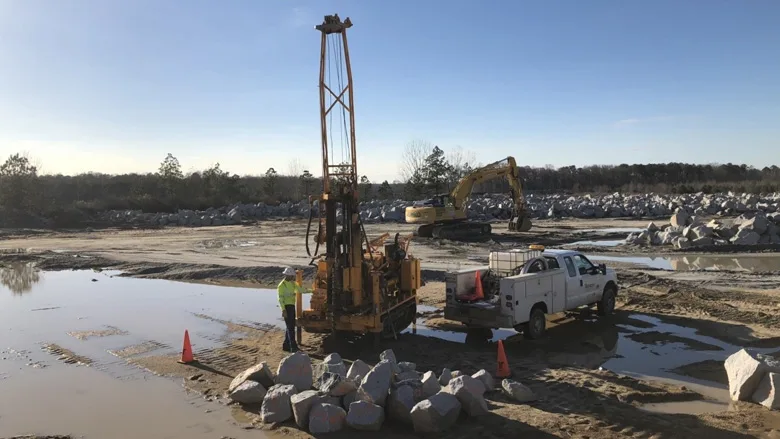
Furthermore, we will look closely at the tools that can help us bridge the gap when manpower is short. Technology and Artificial Intelligence (AI) are not coming to replace our workforce; they are coming to act as our force multipliers. From predictive maintenance sensors on rig hydraulics that prevent catastrophic downtime, to utilizing advanced data mapping for better geological predictions before we ever move onto a site, we will cover how technology allows us to be more cost-effective and competitive in a ruthless market.
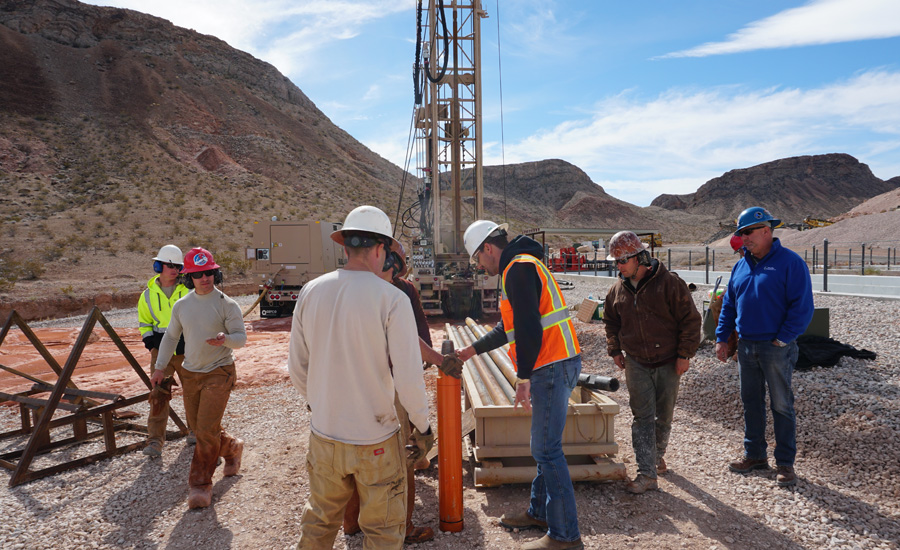
The evolution of the equipment we use is continuing to rapidly expand. But an innovative business sees it as a force multiplier and not a replacement.
Photo: Brock Yordy
What to expect moving forward
Consider this inaugural article your playbook orientation. Moving forward, this space will serve as your intelligence briefing on the energy industry.
You can expect honest, no-nonsense analysis. We aren't going to sugarcoat the challenges, and we aren't going to accept the status quo just because "that's the way it's always been done." If regulators are drafting rules that waste our time and money, we will call it out. If our own industry is dragging its feet on professional development, safety standards, and continuing education, we will call that out too.
The drilling industry is evolving rapidly. We are no longer a fragmented group of local contractors fighting over the same small municipal jobs. We are a unified, professional trade that is building the foundation for the world's sustainable energy future. But to command the respect, the pricing, and the margins we deserve, we have to know the business of power just as well as we know the mechanics of our rigs.
It is time to step up, educate ourselves, and take our rightful seat at the table. The energy industry relies on us to turn their blueprints into reality. Let’s make sure we understand the blueprint better than they do.
Stay safe out there, keep advancing the trade, and I look forward to navigating this evolving landscape with you in the months to come.
Looking for a reprint of this article?
From high-res PDFs to custom plaques, order your copy today!