
$889M Western Water Investment Moves Forward—But Bigger Questions Remain
Infrastructure upgrades promise supply gains as long-term challenges grow,
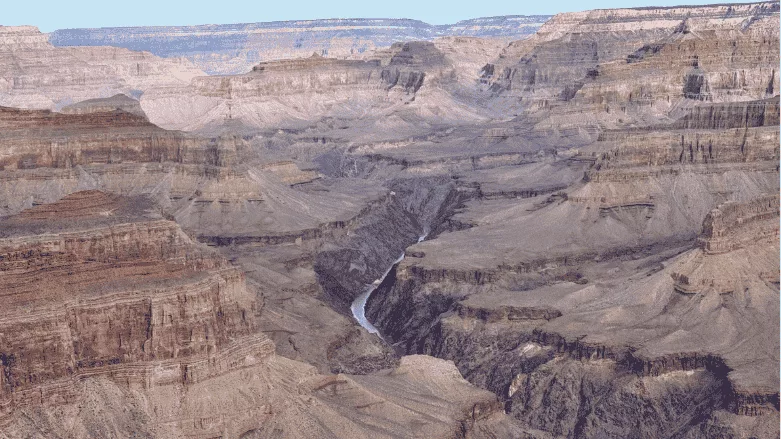
Image via John Oldani
The U.S. Department of the Interior’s $889 million investment in Western water infrastructure is being framed as a major step toward improving reliability across some of the country’s most water-stressed regions.
But while the funding targets aging canals, storage systems, and delivery networks, it also lands in the middle of a much larger, and far more complicated, water story unfolding across the American West. Because even as new money flows into infrastructure, the underlying challenges aren’t going away.
Where the Money Is Going
The bulk of the funding ($540 million) is headed to California’s Central Valley, where a network of canals and reservoirs supports one of the most productive agricultural regions in the world.
Projects include upgrades to the Delta-Mendota, Friant-Kern, and San Luis canals, along with improvements to pumping infrastructure and early-stage work tied to expanding Shasta Dam storage.
Other states, including Idaho, Utah, Wyoming, and the Dakotas, will see funding directed toward irrigation systems, pipeline replacements, and critical repairs.
On the surface, it’s a familiar playbook: fix what’s broken, move water more efficiently, and store more when it’s available.
$235 million for upgrades to the Delta-Mendota Canal
$200 million to address subsidence issues along the Friant-Kern Canal
$50 million for repairs to the San Luis Canal
$15 million to improve pumping capacity in the Tehama-Colusa Canal system
The Case for Fixing What We Have
There’s broad agreement on one point—Western water infrastructure is aging.
Some of the canal systems receiving funding date back decades, even more than a century. Over time, land subsidence, cracks, and general wear have reduced their capacity and efficiency. In some cases, canals physically can’t carry as much water as they were originally designed to deliver.
That creates a real problem in a region where every acre-foot counts.
Supporters of the investment argue that modernizing these systems is one of the fastest ways to improve water reliability without developing entirely new sources. Less leakage, better flow control, and increased capacity can all help stretch limited supplies further.
But infrastructure is only part of the equation.
The Bigger Problem: Less Water, More Demand
Across the West, the fundamental issue is simple—and difficult: there’s less water to go around, and more people competing for it.
The Colorado River Basin, which supplies water to roughly 40 million people across seven states, has been under sustained stress for more than two decades. Reservoirs like Lake Mead and Lake Powell have dropped to historically low levels in recent years, exposing just how thin the margin has become.
At the same time, snowpack—the West’s natural water storage system—is becoming less predictable. Warmer winters mean more precipitation falls as rain instead of snow, and what snow does accumulate often melts earlier in the year. That disrupts the timing of water availability, making it harder to capture and store for peak demand periods.
Meanwhile, demand isn’t slowing down.
Agriculture remains a major water user, particularly in California’s Central Valley. Growing urban populations across the Southwest—from Phoenix to Las Vegas—continue to increase pressure on already strained systems. And energy production, including both traditional and emerging sectors, adds another layer of demand.
As surface water supplies become less reliable, many regions have leaned heavily on groundwater. That has helped bridge short-term gaps, but it comes with consequences. Overpumping has led to declining aquifer levels and widespread land subsidence—issues that, in some cases, directly damage the very infrastructure now being repaired.
California’s Sustainable Groundwater Management Act (SGMA) is an attempt to address that imbalance, but bringing groundwater use into balance is a long-term process that will likely require reduced pumping in some areas.
That, in turn, puts even more pressure on surface water systems—like the ones receiving new federal funding.
While the West often dominates the water conversation, the challenges aren’t confined to one region.
Across the U.S., water infrastructure is aging. The American Society of Civil Engineers has consistently given the nation’s water systems middling grades, citing billions of dollars in needed upgrades. Leaking pipes, outdated treatment plants, and underfunded systems are common issues from coast to coast.
At the same time, water quality concerns—from PFAS contamination to nutrient pollution to major drough—are adding complexity and cost to water management.
And then there’s affordability. As utilities invest more in infrastructure and treatment, rates are rising. For some communities, particularly low-income households, the cost of water is becoming a growing burden.
A Debate Over Direction
That broader context is shaping how investments like the Interior Department’s $889 million package are being received.
Supporters see it as a necessary step—one that addresses real, immediate infrastructure needs and helps stabilize water delivery in critical regions.
Critics, however, argue that focusing heavily on conveyance and storage risks reinforcing an outdated model of water management—one built around moving more water rather than using less.
They point to alternatives like water reuse, conservation, decentralized systems, and groundwater recharge as areas that may deserve more attention and funding.
There are also environmental concerns tied to large-scale projects, particularly when it comes to altering river systems or expanding reservoirs.
In the near term, the funding will translate into construction projects, system upgrades, and incremental improvements in water delivery. But the long-term impact is less certain.
Because the West’s water challenges aren’t just about infrastructure—they’re about balancing supply and demand in a system that’s under increasing stress from climate variability, population growth, and competing priorities.
The $889 million investment may help stabilize parts of that system.
But it won’t solve the bigger problem.
And that’s the reality shaping water policy today—not just in the West, but across the country.
Looking for a reprint of this article?
From high-res PDFs to custom plaques, order your copy today!

John Oldani is an editor, journalist, and reporter with over a decade of experience producing clear, engaging, and well-researched content. He holds a Bachelor of Arts in Journalism from Oakland University, with a focus on financial reporting, editing, and long-form writing. Over the past year, John has specialized in covering the drilling industry, reporting on key developments, policy shifts, and impactful stories shaping the field.
email: johnnyoldaniwords@gmail.com | office: (248) 838-8535

.webp?height=200&t=1779937816&width=200 "Screenshot 2026-05-27 at 11.06.05 PM (2).png")