Breaking Ground on Capitol Hill: A Driller’s Perspective in Washington
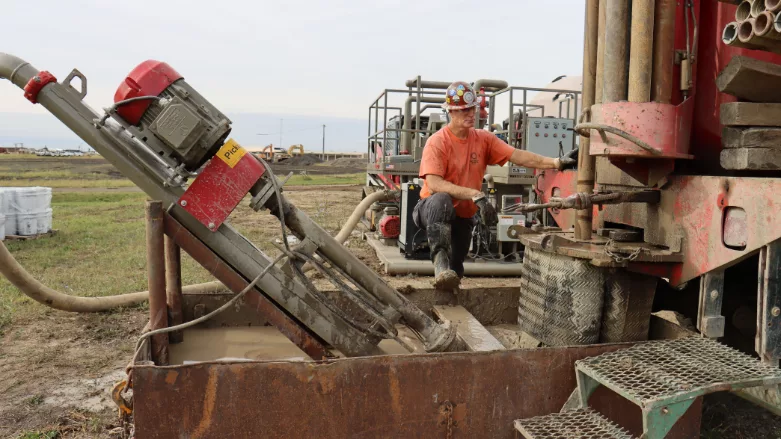
Image courtesy of Dave Bowers
Washington D.C. is a city of marble, polished shoes, and rhetoric. It’s a stark contrast to the world of a geothermal driller - a world defined by mud, heavy machinery, and the daily struggles of coordination with all other crews on a site. Yet, late this summer, these two worlds collided as the Geothermal Drillers’ Association joined the Geothermal Exchange Organization (GEO) for a critical lobbying trip to our nation’s capital.
Our mission was clear: to ensure that the voices of the men and women actually putting loops in the ground were heard as the government moved through the complex OBBBA process of aligning and removing tax credits with the current administration’s policies. While manufacturers and environmentalists often have a loud voice in D.C., the drillers—the linchpin of the entire geothermal industry - can sometimes be overlooked in the fine print of regulation and budgeting. This was underscored as a reality while I was in D.C.
The Mission: Bridging the Gap
Traveling with the GEO team provided an immediate sense of purpose. GEO has long been the spear tip for our industry in Washington, fighting for the tax credits and recognition that have allowed geothermal heating and cooling to gain a foothold in the national energy conversation. But this trip was different; it was about the nuts and bolts of implementation; combined with a lack of understanding of how the businesses engaged in this work actually function.
The process of spending bill (and associated tax credits/incentives) editing and approval is one of those dense, bureaucratic hurdles that can make or break small businesses in our sector. For policymakers, it’s paperwork and budget lines. For us, it translates directly to equipment financing, workforce training availability, and whether a project gets the green light or dies on the drawing board.
Our goal was to humanize that process. We needed legislators to understand that abstract regulations have concrete impacts on drilling timelines and operational costs.
Boots on the Hill
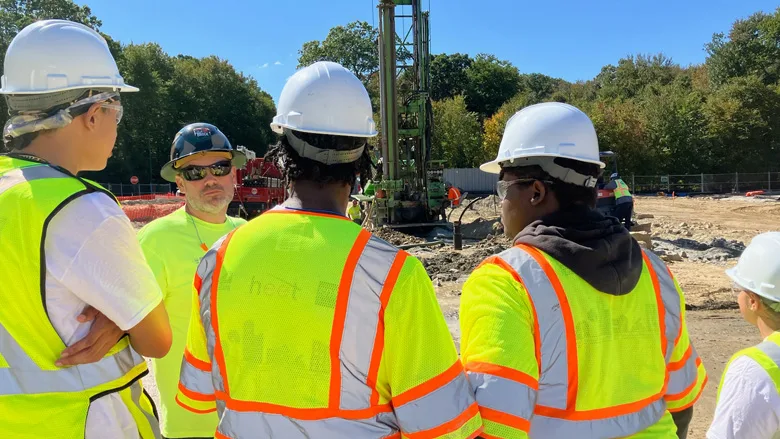
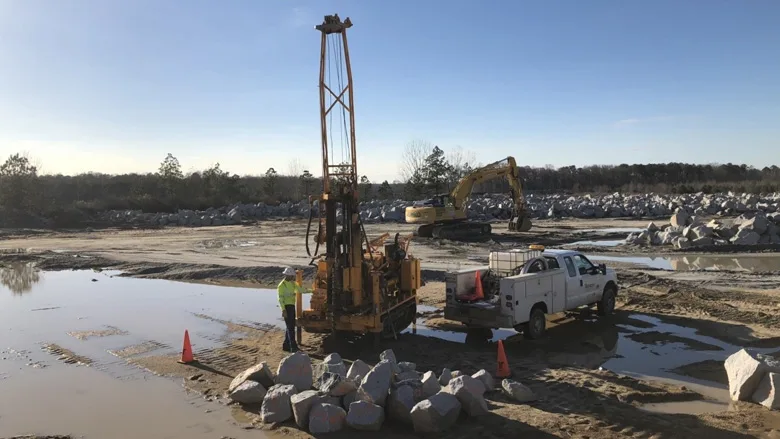
Walking the halls of House and Senate office buildings, you quickly realize that very few people making the rules have ever seen a geothermal drill rig up close. They understand "decarbonization" and "grid resilience" as concepts, but they don't necessarily understand the challenges of borehole grouting or the logistical tightrope of urban drilling. They certainly do not understand how a heat pump actually works, and why ground source heat pumps are so efficient.
This is where we came in.
In meeting after meeting with congressional staffers, our delegation moved past the high-level talking points. We laid out the realities of the business processes related to the given tax credits actually work from the perspective of those who have to execute it. We explained that while tax incentives are vital, they are useless if they cannot be trusted.
I found myself explaining the difference between diverse geological conditions and how a "one-size-fits-all" approach in federal guidelines often fails in the field. We emphasized that geothermal drillers are specialized tradespeople. We aren’t just digging holes; we are engineering complex thermal exchange systems beneath people’s feet. Further, the equipment that we use is extraordinarily capital intensive, and correcting capital outlays does not occur over even a six month period.
The Reception
The reception was encouraging. There was a genuine appetite in D.C. for solutions that work, and geothermal is uniquely positioned to answer the call for both clean energy and reduced grid stress. It was also apparent that there was a general unwillingness to use precision to retain portions of the Section 25 (residential) tax credit that made sense, as there was willingness to use precision to carve out other special interest group benefits on other portions of the IRA.
When we framed the potential loss of the Section 25 and Section 48 tax credits not just as bureaucratic red tape, but as a potential bottleneck to American job creation and energy independence, ears perked up. We weren't just asking for money; we were asking for clarity and a workable pathway that allows drillers to scale up their operations to meet surging demand.
Leaving D.C., I was struck by the necessity of these trips. The gap between the job site and Capitol Hill is vast, but it is bridgeable.
Our work isn't finished. However, we left behind a better understanding of what geothermal drillers need to succeed. We planted a seed that - much like our ground loops - will hopefully transfer energy efficiently from our industry directly into the halls of power.
Looking for a reprint of this article?
From high-res PDFs to custom plaques, order your copy today!