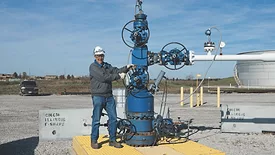
The SDWA directs the EPA to establish requirements that states, territories, and authorized tribes must meet to be granted primary enforcement responsibility or “primacy” for a UIC program.
The U.S. Environmental Protection Agency has approved a permit allowing carbon dioxide to be injected and stored underground at the Cardinal Ethanol facility in Randolph County, Indiana.
With this decision, Texas is expected to see faster permitting, increased investment in CCS technologies, and greater autonomy in environmental oversight.
Marietta City Council’s Water, Sewer and Sanitation Committee has created a seven-member task force to take a closer look at the science, safety, and permitting process surrounding injection wells.
The EPA’s approval of Arizona’s underground injection control (UIC) program primacy application will allow Arizona’s Department of Environmental Quality to authorize underground injection for all underground injection wells.
The $12 million in grants offers important support for state and tribal programs—especially as carbon capture initiatives and industrial expansion ramp up.


.webp?height=168&t=1774923773&width=275 "Mergers (2).png")


.webp?height=168&t=1761177777&width=275 "Carbon Storage story")