EPA OKs Arizona’s Request for Primary Enforcement of Underground Injection Wells
Arizona enforcement of the six classes of injection wells effective Oct. 15, 2025
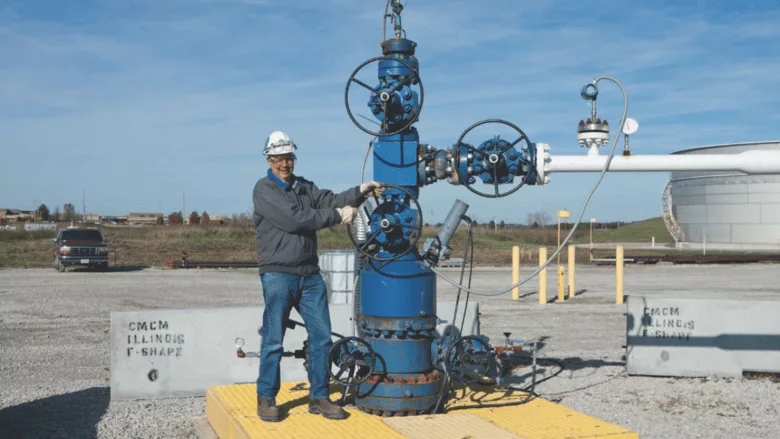
Image via Prairie Research Institute at the University of Illinois Urbana-Champaign
The Environmental Protection Agency (EPA) has issued a final rule approving an application from Arizona requesting primary enforcement responsibility for the six classes of injection wells that are regulated by federal legislation.
Effective on Oct. 15, 2025, the final rule—Arizona Underground Injection Control (UIC) Program; Class I–VI Primacy—approves Arizona’s request for primary enforcement responsibility for injection wells class I–VI that the Safe Drinking Water Act (SDWA) requires be regulated, according to the EPA.
Under the SDWA, the EPA is tasked with protecting U.S. public drinking water, including both surface and groundwater sources by developing minimum requirements for effective state and tribal UIC programs to prevent underground injection of fluids (such as water, wastewater, brines from oil and gas production, and carbon dioxide) from endangering underground sources of drinking water (USDWs).
USDWs are aquifers or parts of aquifers that supply a public water system or contain enough groundwater of sufficient quality to supply a public water system. The EPA’s UIC program regulates various aspects of injection, including technical aspects throughout the lifetime of the project from site characterization, construction, operation, and testing and monitoring through site closure, as well as permitting, site inspections, and reporting to ensure well owners and operators comply with UIC permits and regulations, EPA says.
The UIC program consists of six classes of injection wells, with each well class based on the type and depth of the injection activity and the potential for that injection activity to result in the endangerment of USDWs.
Those classes of wells are:
- Class I wells are used to inject wastes into deep isolated rock formations.
- Class II wells are used to inject fluids related to oil and natural gas production, primarily to enhance recovery of oil and gas or to dispose into rock formations wastewater associated with oil or gas production.
- Class III wells are used to inject fluids to dissolve and extract minerals.
- Class IV wells are used to inject hazardous and radioactive wastes into or above USDWs and are only allowed as part of an EPA- or state-authorized groundwater clean-up action.
- Class V wells are used to inject non-hazardous fluids underground, typically into or above a USDW, and range from simple shallow wells to complex experimental injection technologies. Most Class V wells are “low-tech” to drain fluids directly below the land surface and include dry wells, cesspools, and septic system leach fields.
- Class VI wells are used to inject carbon dioxide into deep rock formations for the purpose of long-term underground storage, also known as geologic sequestration.
The EPA’s approval of Arizona’s UIC program primacy application will allow Arizona’s Department of Environmental Quality (ADEQ) to authorize underground injection for all underground injection wells regulated under the SDWA, as well as to ensure compliance with UIC program requirements, EPA says.
However, the EPA will remain the permitting authority for all well classes on Indian lands within Arizona, except for class II wells on Navajo Indian lands for which the EPA has granted the Navajo Nation primacy for the SDWA Class II UIC program, according to EPA.
The SDWA directs the EPA to establish requirements that states, territories, and authorized tribes must meet to be granted primary enforcement responsibility or “primacy” for a UIC program. The SDWA requires applicants seeking primacy for a UIC program to demonstrate to the EPA that the proposed UIC program meets the applicable requirements promulgated by the EPA for protecting USDWs.
The EPA evaluates each primacy application in accordance with the SDWA and the EPA’s implementing regulations to determine whether the state has demonstrated that, after reasonable notice and public hearings, it has adopted and will implement a UIC program that meets the requirements of the SDWA. However, even after the EPA approves a state for UIC program primacy, the state’s UIC program may be revised with EPA approval, the agency says.
During the EPA’s review of Arizona’s application for primary enforcement responsibility for injection wells, there has been support and opposition from organizations such as the Ground Water Protection Council; the Grand Canyon Chapter of the Sierra Club; the Consumer Energy Alliance; the American Petroleum Institute; the American Mining Association; and the Arizona Chamber of Commerce and Energy.
Those supporting Arizona’s UIC program primacy approval said ADEQ’s UIC rules meet or exceed the EPA’s UIC requirements; that ADEQ has conducted adequate outreach and engagement related to its UIC primacy application; and Arizona’s request is consistent with “cooperative federalism,” a policy being implemented by the Trump administration in which duties that are normally the responsibility of the federal government are delegated to the states, according to EPA officials.
Organizations opposed to EPA’s approval of Arizona’s UIC primacy program expressed concerns about vulnerable communities in low-income and rural areas as well as those on tribal lands that might be overburdened by pollution, and that such permitting actions could impact the groundwater quality on tribal lands as well as impact cultural resources located off tribal lands. Furthermore, those opposing the EPA’s approval of Arizona’s request said the ADEQ has been under-funded and, therefore, lacks the staffing and resources needed to stand up to polluters; to regulate carbon capture and storage projects safely and effectively; and to protect groundwater quality.
Looking for a reprint of this article?
From high-res PDFs to custom plaques, order your copy today!

.webp?height=200&t=1774923773&width=200 "Mergers (2).png")