Dry Wells Raise Questions as Michigan Quarry Plans Expansion
Quarries often pump large volumes of groundwater to keep mining areas dry and operational.
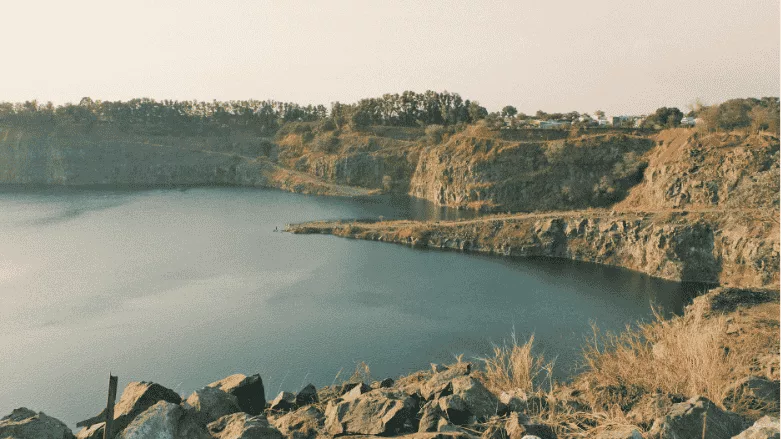
Image via Việt Anh Nguyễn from Pexels
Residents near a quarry in southern Michigan say something has changed underground — and not in a good way. In Whiteford Township, near the Michigan–Ohio border, some homeowners and farm operators report their water wells have recently gone dry. Many believe the nearby Stoneco quarry’s pumping operations may be playing a role.
As the company moves forward with plans to expand activity within its existing property, concerns in the community are growing.
When the Water Stops
Quarries often pump large volumes of groundwater to keep mining areas dry and operational. That process can lower the surrounding water table — sometimes enough to affect nearby wells.
Some residents say that’s exactly what they’re experiencing.
In several cases, wells that had reliably supplied homes and farms for years have suddenly stopped producing water. Others report needing to lower pumps deeper into the ground to reach shrinking water levels.
For agricultural businesses in particular, the stakes are high. Reliable groundwater access is essential for operations, and replacing or deepening a well can cost anywhere from $10,000 to $20,000.
Some residents say the water table on their properties has dropped significantly over the past year, leaving little margin before additional drilling becomes necessary.
Who’s Responsible?
Stoneco operates a program that covers the cost of new wells when its activities are found to impact groundwater levels.
However, some residents say they were told their properties are too far from the quarry to qualify — even as they experience water loss.
A similar situation was reported in nearby Sylvania Township more than a year ago, where residents raised comparable concerns.
Expansion Adds Tension
The groundwater issues are unfolding as Stoneco seeks approval for work tied to its Ottawa Lake Quarry.
According to township officials, the activity would take place within land the company already owns and is permitted to mine, rather than expanding beyond its current footprint.
The proposal involves relocating wetlands and a drainage ditch within existing permit boundaries — a step requiring approval from the Michigan Department of Environment, Great Lakes and Energy (EGLE).
Even without expanding the quarry’s physical limits, some residents worry that additional activity could further affect groundwater conditions.
Monitoring and Modeling
Stoneco says it closely tracks groundwater conditions at the site and uses modeling tools to understand how operations may influence water levels.
In a statement, the company said it has not applied to expand beyond its permitted boundaries and aims to work with the local community to address groundwater concerns when they arise.
Local officials are encouraging residents to stay engaged as the approval process moves forward.
For now, the issue sits at the intersection of resource development and water security — a familiar tension in communities where industrial activity and groundwater-dependent households share the same subsurface.
As discussions continue, residents say the priority is simple: understanding what’s happening beneath their feet before more wells run dry.
Looking for a reprint of this article?
From high-res PDFs to custom plaques, order your copy today!