New Law in Illinois Prevents Carbon Capture and Storage on Mahomet Aquifer
Illinois’ law sets a precedent balancing climate goals with groundwater safety in response to ADM CO2 leak
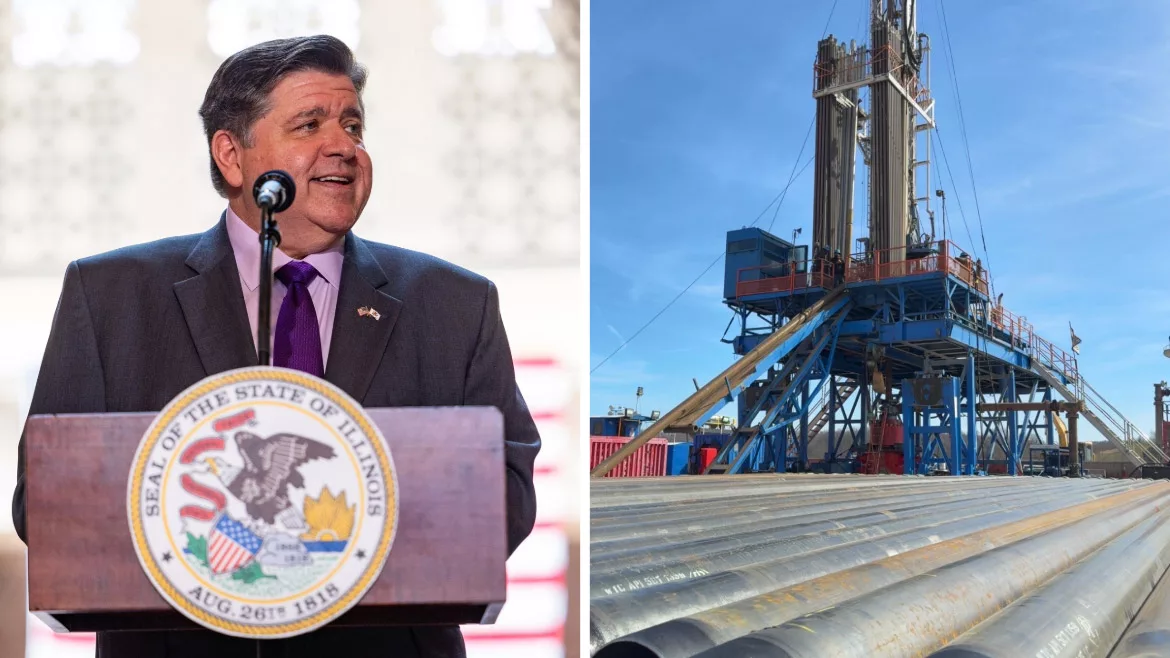
Illinois Gov. J.B. Pritzker has signed a law forbidding carbon capture and storage development on the Mahomet Aquifer.
Illinois has become a national leader in carbon capture and sequestration (CCS), with the Illinois Basin standing out as one of North America’s best venues for long-term CO₂ storage. Stretching across Illinois, Indiana, and western Kentucky, the basin’s thick, porous sandstone formations — especially the Mt. Simon Sandstone — can hold huge volumes of injected CO₂. This geology has attracted big investment and ambitious plans.
But that opportunity now comes with new limits. In August, Governor JB Pritzker signed Senate Bill 1723, banning carbon sequestration over, under, or through the Mahomet Aquifer — the main drinking water source for 800,000 people in central Illinois. The signing followed months of community concern and bipartisan pressure.
The Mahomet Aquifer, a glacial deposit stretching from the Illinois River to the Indiana border, supplies water for homes, farms, and businesses. Industry groups, including the Illinois Manufacturers' Association, say carbon capture is crucial for economic growth and hitting emissions targets. But lawmakers and communities are now pushing back over concerns about water safety.
“Water is not political,” said State Sen. Chapin Rose, whose district sits atop the aquifer. State Rep. Carol Ammons, who led the bill in the House, put it simply: “Every single human being deserves access to clean, safe drinking water.”
Rose’s district also covers rural towns like Mattoon, which relies on above-ground reservoirs: Lake Mattoon and Lake Paradise. This summer, Mattoon’s water supply was hit hard by a toxic blue-green algae bloom. The “Clearwater” aquifer just south of the Mahomet aquifer was tapped to supply Mattoon's Sarah Bush Hospital, while businesses and residents otherwise had to face nine days of “do not use” orders from the Illinois EPA. This is why compared to surface reservoirs that suffer from nutrient runoff, aquifers are often considered the gold standard for water quality.
The push for protections gained urgency after leaks at Archer Daniels Midland’s (ADM) carbon capture facility in Decatur drew state and national attention. Lawmakers pointed to the incident as a clear sign the Mahomet Aquifer needs special safeguards. Although the incident did not occur within the Mahomet Aquifer area, approximately 8,000 metric tons of liquid carbon dioxide and other underground fluids escaped beyond the permitted zone in 2024.
“We applaud Senator Faraci, Representative Ammons, Senator Rose and Representative Schweizer for taking action to protect the Mahomet Aquifer,” said Andrew Rehn, director of climate policy at Prairie Rivers Network. “This incident demonstrates why a ban is the only way we can be certain that the Mahomet Aquifer will be protected. We need clean water forever, and to do that, we must take action now before it’s too late.”
Under a different set of lenses though, the ADM incident is a success story for carbon capture safety protocols. Jessie Stolark, executive director of the Carbon Capture Coalition, emphasized that the episode ultimately showed the system’s strengths: “The key was that the leak was detected quickly — monitoring technology and regulatory oversight worked as intended, allowing ADM and regulators to respond appropriately. It’s a reminder that while no technology is risk-free, the systems in place can mitigate those risks and protect communities.”
How Other States and Localities Address Aquifer Protections Near Carbon Storage
Illinois isn’t the only state wrestling with how to protect critical groundwater while growing carbon capture. Across the country, states and local governments are taking different approaches to balance these needs.
Some, like Louisiana, have set up detailed rules for CO₂ transport and underground storage that include protections for drinking water sources and liability frameworks for operators. Wyoming and North Dakota led the way by gaining state primacy for Class VI injection well permits under the Safe Drinking Water Act, letting them enforce strict standards to keep aquifers safe.
Texas, a major energy hub, has a thorough regulatory system managed by the Railroad Commission. Their rules require careful well design, monitoring, and reporting to prevent groundwater risks.
On the local side, Champaign County in Illinois put a 12-month moratorium on carbon sequestration under the Mahomet Aquifer before the statewide ban passed, giving officials time to study and hear from the public.
Other states, like New York, have rules that exclude some carbon dioxide streams from hazardous waste classification but still tightly regulate underground injection to protect water.
These patchwork policies reflect different geology, water priorities, and politics. Illinois’ law banning CCS over, under, or through the Mahomet Aquifer stands out as one of the clearest statewide bans on carbon capture near a sole-source aquifer — and a precedent other states and communities are watching as CCS expands.
As the Midwest and the nation push for climate goals, the challenge is clear: how to deploy carbon capture while keeping the aquifers that millions depend on safe.
Looking for a reprint of this article?
From high-res PDFs to custom plaques, order your copy today!