Geothermal startup Fervo Energy has reportedly filed confidential paperwork for an initial public offering, signaling its next major move as it scales up development of next-generation geothermal projects.
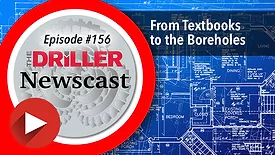
In Episode 156 of The Driller Newscast, host Brock Yordy sits down with Dan Sergison, Geothermal Discipline Manager at Salas O'Brien, to explore how the geothermal industry can better bridge the critical gap between engineering design and field execution.
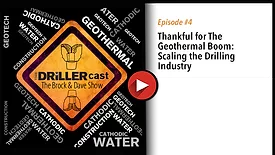
In a pre-Thanksgiving episode of The DRILLERcast, hosts Brock Yordy and Dave Bowers examine the American labor landscape, the drilling industry’s deep reliance on experience, and the realities of a rapidly expanding geothermal market.
Ground2Grid Summit will connect the complete lifecycle of geothermal and carbon-neutral heating and cooling systems - from subsurface exploration to final system integration.
Thanks for taking the time to read this story, I hope you enjoyed it, and until next time, work hard for what you want, and if you don't know what you want just work hard.
As the world looks for reliable and emissions-free energy options, this project in Oregon might just prove that the key to a sustainable future lies deep beneath our feet - in the same fiery forces that once shaped the land.
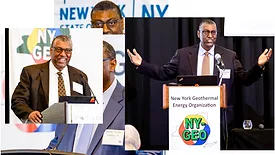
The clean energy community will gather virtually this Wednesday evening, November 19, to honor a man whose leadership has helped reshape New York’s building sector from the ground up.
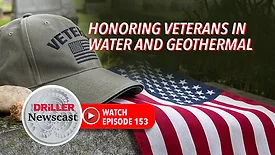
Discover how military veterans are bringing mission-driven leadership and energy security expertise to the forefront of the geothermal industry. Featuring: Nick Fry, U.S. Army veteran and geothermal consultant.
As the world converges on Belém, Brazil for the 30th United Nations Climate Change Conference (COP30), host nation ambitions for urban climate resilience are coming into sharp relief.
 RSS
RSS
.webp?height=168&t=1762750161&width=275 "COP30")


