Can You Hear Me Now?
National Protect Your Hearing Month: Elevating Professionalism Through 21st Century Safety
Modern hearing protection helps drill crews protect their hearing without sacrificing communication or jobsite awareness.
Key Takeaways
- Drilling noise can permanently damage hearing, making NIHL and tinnitus serious occupational risks for crews.
- Outdated hearing protection can hinder communication, creating safety risks when crews need clear, constant coordination.
- Modern earmuffs, communication headsets and filtered plugs can protect hearing without sacrificing situational awareness.
The soundtrack of our industry is a deafening roar: diesel engines under load, the rhythmic thud of the mud pump, squealing air compressors, and the percussion of casing hammers. We learn to tune out the sensory overload while we work, but when you clock out, your life's soundtrack shouldn't be a permanent, high-pitched ringing in your ears.
October is National Protect Your Hearing Month. In the drilling sector, Noise-Induced Hearing Loss (NIHL) and tinnitus are a silent epidemic. It doesn't happen all at once; it is a slow, gradual theft of your senses. By the time you realize you are asking your family to repeat themselves or blasting the television volume, the permanent damage is already done.
For decades, we have accepted this as just "part of the job." But to elevate the drilling industry, attract top talent, and treat our trade with respect, we must rethink how we choose to treat our personal health and protective equipment. Professionalism starts with making healthy choices for ourselves and our crews.
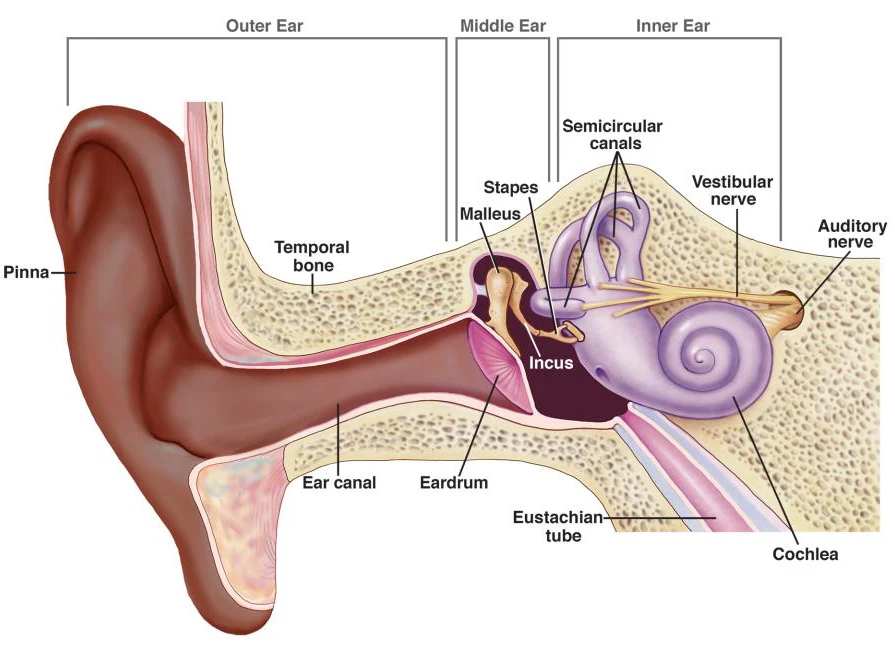
Image: National Institute of Health
The Mechanics of the Damage
To understand the permanence of this damage, you must look at how sound works. Sound travels in invisible waves of kinetic energy. When a casing hammer strikes, it sends a massive shockwave of air pressure directly into your ear canal, colliding violently with your eardrum (the tympanic membrane). The eardrum vibrates, transferring that violent energy through tiny bones into the inner ear (the cochlea). The cochlea is lined with microscopic hair cells that convert these physical vibrations into electrical signals for the brain.
Prolonged exposure to heavy industrial noise acts like running a PDC bit through unconsolidated formation: the relentless force and friction will eventually shear off and destroy the cutters; the kinetic energy flattens, snaps, and permanently destroys those delicate hair cells. Once they are gone, they never grow back. Hearing protection works by creating a dense acoustic barrier. It physically dampens the amplitude of incoming sound waves before they strike the eardrum, absorbing the kinetic energy so your inner ear's fragile anatomy doesn't have to.
The Decibel Danger Zone
To understand the threat, we have to look at the numbers. OSHA requires a hearing conservation program when noise exposure hits 85 decibels (dB) averaged over an eight-hour shift. Here is a simple rule of thumb for the jobsite: if you find that you need to shout to be understood by a co-worker standing just three feet away, the decibels are already beyond 85.
On the rig platform, a heavy diesel engine without noise mitigation can easily push 100 dB. A casing hammer can spike between 115 and 120 dB. At 115 decibels, safe exposure limits are measured in minutes, not hours. Historically, our industry has handed out the cheapest solution available: the disposable foam earplug. But relying exclusively on a 10-cent piece of foam creates an entirely different hazard on the jobsite.
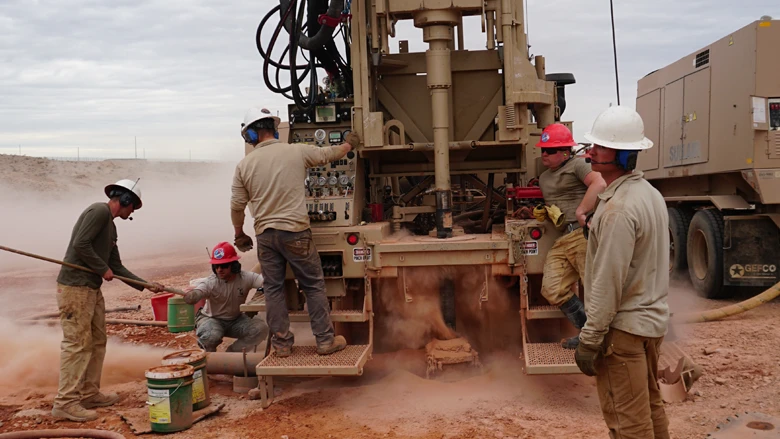
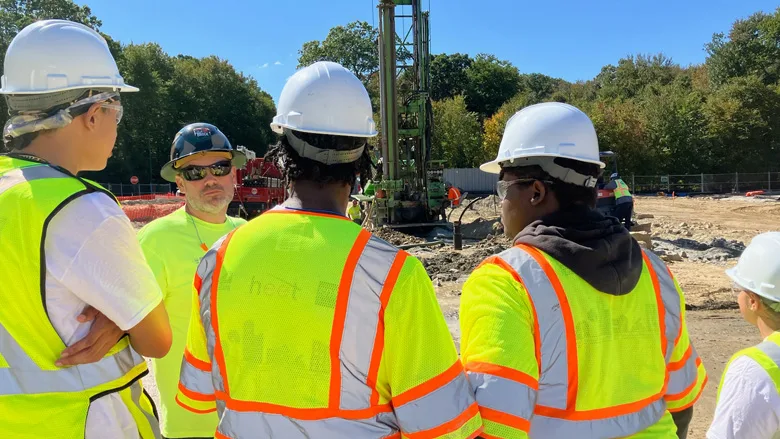
Drillers at the USAF Red Horse site utilizing communication headsetsImage: Brock Yordy
The Communication Paradox
The primary reason why drill crews bypass traditional earplugs is isolation. Drilling requires seamless coordination, split-second timing, and constant communication between the driller and the crew. We believe we need to hear subtle changes in rig RPMs, the stress of hydraulic pumps, and shouts from your crew.
Traditional foam earplugs block harmful decibels well, but they block out everything else. This creates a dangerous paradox. To communicate, a driller will often pull one earplug out halfway or remove it entirely. This isn't a failure of discipline; it is a failure of the equipment to meet professional demands. Operating a rig while straining to hear destroys situational awareness and directly leads to near misses, struck-by, or caught-in-between accidents.
Modernizing the Gear for the Modern Driller
We cannot expect our workforce to choose between their long-term health and their immediate situational awareness.
Technology exists today to protect our ears while enhancing our ability to communicate. A true professional invests in the best tooling for the borehole, and we must apply that same standard to protecting our bodies. It is time to utilize 21st-century PPE that reflects modern project demands:
- Active Noise-Canceling Earmuffs: These units use built-in microphones to instantly compress harmful decibels down to safe levels while actively amplifying low-level sounds like voices.
- Communication Headsets: Integrated headsets with Bluetooth, two-way radio compatibility, and noise-canceling boom mics allow the driller and helper to talk at a normal volume, regardless of engine noise.
- Custom-Molded Filtered Plugs: For those who cannot wear bulky muffs, custom-fitted silicone plugs utilize acoustic filters that block damaging high-frequency noise while allowing human speech to pass through clearly.
Elevating the Industry Standard
Upgrading your crew's hearing protection is a direct investment in their long-term wellness and career longevity. Crews that can communicate clearly without shouting are less fatigued, less stressed, and significantly more efficient.
As a specialized and highly skilled trade, part of being a professional is taking care of the most important tool you bring to the site: yourself. Let's leave the outdated "tough it out" mentality behind. By prioritizing healthy choices and investing in modern solutions, we elevate the standard of the entire drilling industry, ensuring our people enjoy successful careers and a high quality of life, with a soundtrack that doesn't include the permanent ringing of tinnitus.Looking for a reprint of this article?
From high-res PDFs to custom plaques, order your copy today!

Brock Yordy, Director of Industry Engagement for The Driller, is a third-generation driller and globally recognized subject matter expert who has written for The Driller since 2013. Driven by a passion for industry education and digital media, he anchors The Driller Newscast and hosts weekly podcasts for the trade. His technical authority is backed by decades of extreme fieldwork worldwide for organizations like Halliburton, SUEZ, and the U.S. Government. Dedicated to ensuring clean water for all and advancing equitable geothermal heating and cooling, Brock actively collaborates with states nationwide through The Developed Well Group and the Geothermal Drillers Association to shape policy, safety, and workforce training.
email: brock@thedriller.com | office: (269) 348-5156