Berkeley County School District Turns to Geothermal for Heating and Cooling
According to a Department of Energy case study, the completed systems cut energy use by 75% and reduced annual energy and maintenance costs by a reported $772,000.

When Berkeley County School District in West Virginia needed to replace aging heating and cooling equipment at 10 schools, the district was not simply choosing a new HVAC system. It was weighing a $23.4 million capital project against decades of operating costs, maintenance demands and the practical challenge of renovating occupied schools on a summer construction schedule.
The district ultimately chose closed-loop geothermal heat pump systems serving about 396,000 square feet. According to a U.S. Department of Energy case study, the completed systems cut energy use by 75% and reduced annual energy and maintenance costs by a reported $772,000.
Ty Tyson, Executive Director of Maintenance & Facilities, Berkeley County Schools
For Berkeley County, that performance has made the value proposition straightforward. Ty Tyson, executive director of maintenance and facilities for Berkeley County Schools, said the systems have been successful enough that the district plans to use geothermal in three new schools.
Tyson’s endorsement is strong, but for drillers and contractors, the more useful part of the Berkeley County story is how the work was executed and where the district says the return has come from.
What was installed
Berkeley County used vertical, closed-loop geothermal systems. Fluid circulates through underground piping, allowing the buildings to exchange heat with the relatively stable temperature of the ground rather than relying on outside air as the primary heat source or heat sink.
That basic operating principle helps explain the district’s reported 75% reduction in energy use. During heating and cooling seasons, the system is exchanging heat with ground temperatures that are far more stable than outdoor air temperatures, reducing the amount of energy needed to condition the buildings.
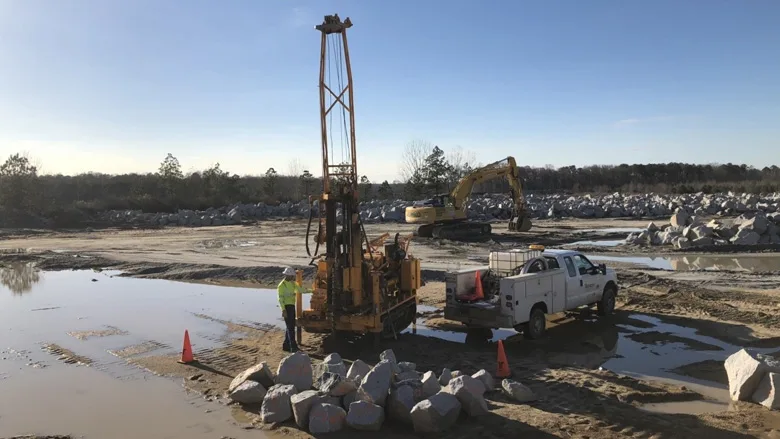
The Department of Energy case study gives two ways of describing the scale of the work. Its detailed figures for the 10 systems list 362 vertical boreholes drilled to depths of 400 feet, along with about 55 miles of geothermal piping. Elsewhere, the case study describes the project more generally as roughly 27 miles of boreholes across about 400 wells. For the purposes of the installed borefield count, the more specific system-by-system total is 362 boreholes.
The schools also use dedicated outdoor air systems with energy recovery, and the district was able to reuse portions of its existing HVAC infrastructure, including some piping, fan coil units, electrical equipment and controls. That reduced the amount of equipment that had to be replaced as part of the conversion.

Courtesy: Taylor Flowe / Unsplash
How the work was executed
School geothermal work often lives and dies by the calendar. Berkeley County completed the renovations over two summers, working within roughly eight-week construction windows so the schools could reopen for students.
Completing hundreds of geothermal boreholes and the associated HVAC retrofits in two eight-week summer breaks is a major logistical lift. Keeping a project on that kind of schedule requires tight sequencing between the general contractor, drilling contractor and mechanical HVAC professionals.
Subsurface work, including rig mobilization, drilling and borefield completion, has to be coordinated with the mechanical work that follows. Project timelines can turn on subsurface conditions, rig access and footprint, thermal energy design, available staging space and how efficiently the job transitions from exterior drilling and earthwork to interior mechanical connections and controls.
That is particularly important on school projects. Summer construction windows are common because contractors need to minimize disruption while buildings are occupied, but an eight-week window leaves little room for drilling delays, unexpected geology or poor coordination between trades.
Where the savings came from
According to district figures cited in the DOE case study, the geothermal upgrades reduced energy use across the 10 schools by 75%. The case study reports annual energy cost savings of about $665,500, along with approximately $106,500 in annual maintenance savings.
The energy savings are tied in large part to the system’s ability to use the ground as a relatively stable heat source and heat sink. Instead of forcing HVAC equipment to work against extreme outdoor temperatures, the geothermal loop field provides more consistent entering-water conditions for the heat pumps.
The maintenance side matters too. District officials reported lower maintenance costs after the conversion. Geothermal heat pumps move much of the heat-exchange process away from outdoor equipment, reducing exposure to weather and eliminating some of the maintenance demands associated with conventional outdoor HVAC equipment. The district also reported reduced filter-related costs as part of its experience.
What does the payback look like?
On a simple basis, dividing the $23.4 million project cost by the reported $772,000 in annual energy and maintenance savings produces a payback of a little more than 30 years. That is not the same as a full lifecycle financial analysis. It does not account for financing, future utility prices, incentives, the cost of the conventional HVAC replacement the district would have needed anyway or future equipment replacement.
For a school district, however, the borefield changes the way that equation can be viewed. Interior heat pumps, pumps and controls will eventually need replacement, but the underground geothermal loop field is a long-lived asset that can remain in service through multiple generations of mechanical equipment. In a district where some school buildings are already more than 100 years old, the ability to build heating and cooling infrastructure with a similarly long planning horizon is a significant part of the value proposition.
That makes the $23.4 million figure more than a comparison between one HVAC purchase and another. The district was investing in subsurface thermal infrastructure that can continue serving the buildings long after the first generation of heat pumps reaches the end of its useful life.

Courtesy: Felipe Schiarolli / Unsplash
Value beyond the utility bill
Energy use was only one part of Berkeley County’s reasoning. District officials also reported quieter classrooms, improved indoor air quality and more consistent comfort after the geothermal conversions.
Those benefits have particular value in schools. Mechanical systems have to heat and cool classrooms without creating unnecessary background noise, while ventilation and temperature control can directly affect the day-to-day learning environment.
Former Superintendent Manny Arvon identified quieter operation as one of the features that appealed to the district when it considered geothermal. The DOE case study does not provide independent before-and-after measurements of classroom noise or indoor air quality, so those improvements reflect the district’s reported experience rather than independently verified performance data.
Still, Berkeley County’s decision shows why a school district may evaluate geothermal differently than a commercial owner focused primarily on near-term return. Utility costs matter, but so do maintenance, classroom noise, indoor comfort, system longevity and the ability to keep aging buildings operating for decades.
The takeaway for drillers
Berkeley County’s case history is ultimately about execution as much as technology. The district had 10 aging schools, a limited construction window and a need to control long-term operating costs. The project required 362 vertical boreholes, extensive geothermal piping and close coordination between drilling and mechanical trades, all while keeping the academic calendar intact.
The district now reports a 75% reduction in energy use, roughly $772,000 in annual energy and maintenance savings and enough confidence in the approach to plan geothermal systems for three additional schools.
For contractors, the lesson is not simply that geothermal can save energy. It is that the value of a large geothermal exchange project depends on getting the borefield design, drilling execution, trade coordination and long-term operating strategy right. Berkeley County’s experience offers one example of what that value proposition can look like when those pieces come together.
Looking for a reprint of this article?
From high-res PDFs to custom plaques, order your copy today!

John Oldani is an editor, journalist, and reporter with over a decade of experience producing clear, engaging, and well-researched content. He holds a Bachelor of Arts in Journalism from Oakland University, with a focus on financial reporting, editing, and long-form writing. Over the past year, John has specialized in covering the drilling industry, reporting on key developments, policy shifts, and impactful stories shaping the field.
email: johnnyoldaniwords@gmail.com | office: (248) 838-8535