Geothermal Heat Pumps Could Be a Game-Changer for U.S. Clean Energy Transition
70% of U.S. buildings could lead to massive energy savings
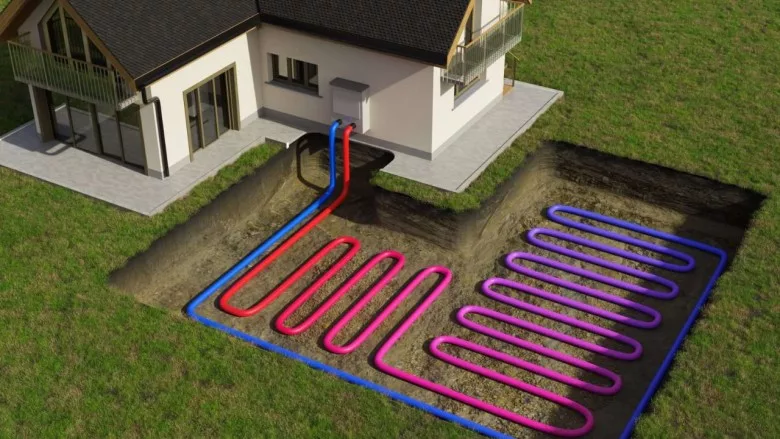
Image courtesy of IGSHPA
A new joint analysis by Oak Ridge National Laboratory (ORNL) and the National Renewable Energy Laboratory (NREL) is highlighting an often-overlooked technology as a major piece of the clean energy puzzle: geothermal heat pumps.
According to the study, installing geothermal heat pumps—also known as ground-source heat pumps—in roughly 70% of U.S. buildings could lead to massive energy savings and significantly reduce the country's carbon emissions. If paired with improvements to building insulation and efficiency (known as "building envelope" upgrades), these systems could cut electricity demand by 593 terawatt-hours per year by 2050. That’s no small figure.
“To put that in context, 593 terawatt-hours is about 15% of the current annual electricity demand in the United States,” said Jonathan Ho, the lead NREL researcher for the study.
But the benefits don’t stop at just energy savings. Widespread adoption could also reduce the need for large-scale transmission projects—by about 33%, or the equivalent of 24,500 miles of high-voltage power lines. That’s about enough wiring to cross the U.S. coast to coast eight times.
Why does this matter? Because building new long-distance transmission lines to connect renewable energy sources to where people live is one of the costliest and slowest parts of modernizing the electric grid. If less power is needed thanks to efficient systems like geothermal heat pumps, that means less new infrastructure is necessary.
“Geothermal heat pumps—also called geo-exchange—use the relatively constant temperature of Earth's subsurface to heat and cool, which is highly efficient,” explained Amanda Kolker, NREL’s geothermal lab program manager. “Widespread adoption of this resilient and mature technology could enable us to decarbonize the building sector with minimal increases in electricity demand.”
These systems aren't experimental. In fact, they’ve been around for decades and are already used in tens of thousands of homes and buildings across the U.S. They work in all climates and can be installed in both new buildings and older ones undergoing renovations.
Geothermal heat pumps operate by using underground loops that tap into the Earth’s stable underground temperatures to heat in the winter and cool in the summer. This makes them much more efficient than traditional HVAC systems, especially when combined with well-insulated buildings.
There’s also an economic upside. Most of the equipment is made domestically, and ramping up installation would boost local jobs across construction and manufacturing. “Most geothermal heat pump equipment for the U.S. market is made locally, and additional local jobs would be created to install and maintain the systems,” Ho added.
The Department of Energy sees the technology as a powerful tool in the shift to clean energy. “This report confirms that geothermal heat pumps are a ready-made strategy for decarbonizing our buildings while reducing the need for new electricity generation and transmission and bringing energy savings to Americans nationwide—all while creating U.S. jobs,” said Alejandro Moreno, the DOE’s associate principal deputy assistant secretary for energy efficiency and renewable energy.
With building energy use accounting for nearly 40% of all U.S. energy consumption, the findings suggest geothermal heat pumps could play a key role in reducing emissions—without overloading the grid or requiring massive new investments in transmission.
In a rapidly evolving energy landscape, this old-school-meets-new-tech solution could quietly become one of the cleanest and most practical tools in the box.
Looking for a reprint of this article?
From high-res PDFs to custom plaques, order your copy today!