‘Mine, Baby, Mine’: Trump’s Coal Comeback Plan Raises Eyebrows
The new initiative includes opening 13.1 million acres of federal land for mining.
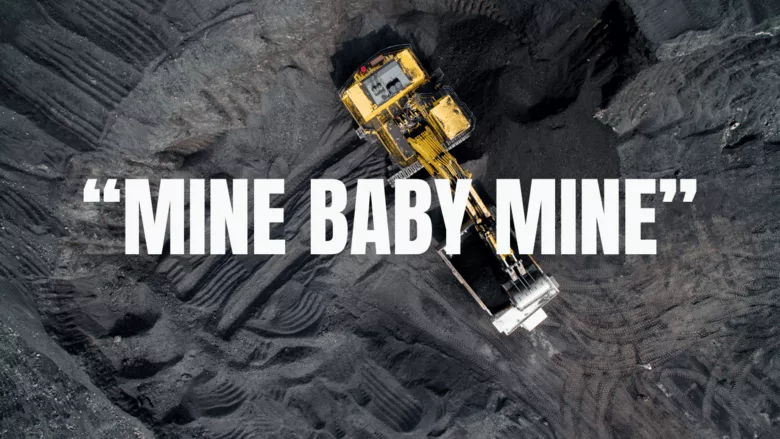
Image via Agnormark from Getty Images Pro
In a move that's as politically bold as it is environmentally controversial, the Trump administration has announced a $625 million investment in the coal industry, alongside the reopening of 13.1 million acres of federal land to mining — all part of President Trump’s push to resurrect what he calls “beautiful, clean coal.”
The initiative, unveiled Monday by the Department of Energy and Department of the Interior, signals a sharp reversal of Obama- and Biden-era climate policies. But it also raises questions — not only about its environmental impact, but about the economic logic behind doubling down on a declining industry.
The $625 million package breaks down into $350 million for recommissioning and modernizing coal plants, $175 million directed toward rural coal-powered energy projects, and $50 million earmarked for waste management and "innovations" to extend coal’s shelf life. But let’s not sugarcoat this: it’s a clear bet on the past, dressed in the language of the future.
“Beautiful, clean coal will be essential to powering America’s reindustrialization and winning the AI race,” said U.S. Secretary of Energy Chris Wright in a press release, a statement that left more than a few energy analysts scratching their heads.
Wright continued, “These funds will help keep our nation’s coal plants operating and will be vital to keeping electricity prices low and the lights on without interruption.”
But is coal really poised to power the AI revolution? Or is this another round of wishful thinking dressed up as policy?
Royal Deals and Regulatory Rollbacks
Interior Secretary Doug Burgum painted the move as a win for energy workers, stating, “By reducing the royalty rate for coal, increasing coal acres available for leasing, and unlocking critical minerals from mine waste, we are strengthening our economy.”
And yes, the federal government is doing more than just cutting checks. The Bureau of Land Management has lowered royalty rates for coal extraction, and the EPA is set to repeal a number of pollution regulations that were implemented to curb the industry's environmental toll.
If it sounds like a regulatory bonfire, that's because it is.
The administration is also hanging this initiative on the so-called “Big, Beautiful Bill,” passed over the summer, which aims to unlock domestic energy production. And of course, Trump himself made his stance crystal clear in April: “We’re ending Joe Biden’s war on beautiful clean coal once and for all.”
A Familiar Tune, a New Chorus
All of this comes as part of a broader executive order issued earlier this year, in which the president laid out the rationale: “We must increase domestic energy production, including coal,” in order to “secure America’s economic prosperity and national security.”
The logic, at least as the administration presents it, is that coal is abundant, cheap, and reliable. But critics argue that while coal may still generate 15-16% of the nation’s electricity, it's hardly the engine of the future — particularly as global energy markets accelerate toward renewables and natural gas.
Under the Biden administration, all coal leasing had been ended in top-producing states like Montana and Wyoming, and power plants faced stricter pollution controls. Those measures are now being rolled back in what can only be described as a full-blown ideological 180.
At a press event Monday, Burgum quipped: “Everybody likes to say, ‘drill baby, drill.’ I know that President Trump has another initiative for us, which is ‘mine baby, mine.’”
It’s a catchy soundbite. But beneath the slogan, the policy raises plenty of questions — about environmental costs, global competitiveness, and whether America is really investing in the future, or clinging to the past in a hard hat and a puff of soot.
For those watching from the outside, this coal comeback looks less like a renaissance and more like a revival tour — loud, nostalgic, and uncertain if anyone's still buying tickets.
Looking for a reprint of this article?
From high-res PDFs to custom plaques, order your copy today!