Don't Let the Cold Take Out Your Crew
How Drillers Can Prevent Cold Stress
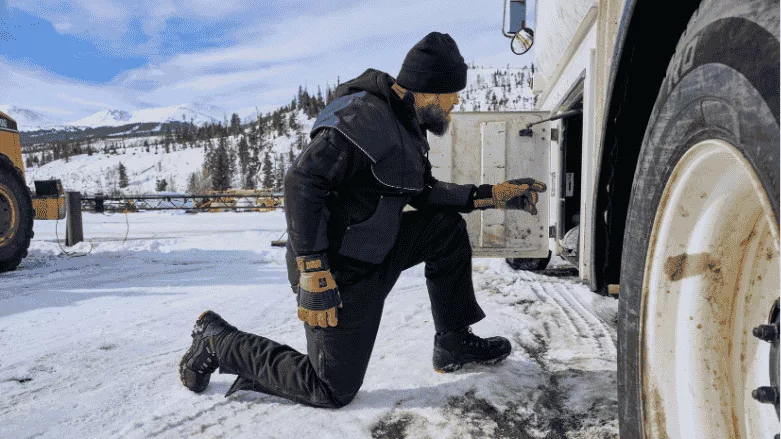
Image courtesy of RefrigiWear
Working on a drill rig in January isn’t just uncomfortable. It’s downright dangerous and cold stress can sneak up fast. When it does, it slows down production, impairs judgment, and puts the entire crew at risk.
For drilling contractors, understanding cold stress isn’t just about checking a compliance box. It’s about protecting your people, your equipment, and your business.
What is Cold Stress?
Cold stress is what the body experiences when it loses heat faster than it can be replaced. Blood retreats from the hands, feet, and limbs to protect the core. As that happens, dexterity drops, reaction times slow, and the risk of severe cold-related accidents, illness and injury increases.
It’s tempting to think cold-related injuries only happen in extreme, subzero environments. But cold stress can occur even in relatively mild temperatures around 50°F, especially if there’s wind or moisture present.
On a drill site—where precision matters—the risks of cold stress can compound quickly.
Who's at Risk?
If you're working outside, you’re exposed and vulnerable to cold stress. Certain drilling tasks come with especially high risk:
- Top-hole work and extended time on staging decks
- Rod handling or automated rack troubleshooting
- Running pumps or adjusting mud systems in wet environments
- Grouting and geothermal loops where water exposure is constant
- Air drilling where wind can be intense
- Night shifts, when temperatures plummet
- Work at elevation on towers or platforms
- Cold-storage prep areas in environmental labs or sample facilities
Even office staff or warehouse teams moving between heated and unheated spaces can experience cold stress if they’re not properly outfitted.
Workers with certain preexisting conditions, such as diabetes, hypertension, or thyroid issues, also face greater danger from cold stress.
What Are the Signs of Cold Stress?
Cold stress isn’t always dramatic at first. Subtle changes can be easy to miss during a busy shift. Here are the early signs and symptoms every foreman and crew member should look for:
- Persistent shivering
- Tingling sensations and numbness
- Slowed movements or clumsy hands
- Drowsiness, confusion or disorientation
- Slurred speech
- Exposed skin turning red, then purple, then white
- A waxy or hard texture on exposed areas of skin
Once these symptoms escalate, workers are at risk for hypothermia, frostbite, and other cold stress injuries—any of which can lead to lost workdays, crew shortages, permanent injury or death.
Hypothermia
For drill crews working in cold, wet or windy conditions, hypothermia is a real risk, even in temperatures above freezing. In fact, hypothermia can occur above 40°F when workers are exposed to rain, sleet, snow, submersion in cold water, or excessive sweating.
Slow movements, labored breathing, and mental fog are key indicators of the onset of hypothermia. When core temperature falls below 95°F, it becomes a medical emergency, so drill crews should follow established procedures for seeking emergency medical attention.
Frostbite
While hypothermia affects the body’s inner temperature, the effects of frostbite are visible externally on exposed or inadequately protected skin.
Frostbite can occur at any freezing temperature and usually appears on small patches of vulnerable skin, such as fingers, toes, ears, cheeks and noses.
Frostbite can cause irreversible tissue damage if not caught early; so, it should also be considered a medical emergency. Treatment for frostbite can range from supervised rewarming, prescription medication to restore blood flow and reduce the risk of amputation, or surgery to remove necrotic skin and tissue.
Trench Foot
Immersion foot, more commonly known as trench foot, is an injury from prolonged exposure to cold, wet conditions and a major risk for drill crews working in wet boots, mud, or standing water.
Trench foot can occur even in mild temperatures, and it only takes a few hours working in overly sweaty socks or standing over a wet bore hole to reduce blood flow in the feet, blister or break down the skin, and open the door for fungal or bacterial infections. Without prompt treatment, trench foot may result in sepsis or amputation.
According to the Bureau of Labor Statistics, dozens of fatalities each year are linked to weather conditions.
But beyond those severe cases, cold stress also reduces productivity. Cold crews may handle drill rods and equipment slowly, experience reduced dexterity and precision, suffer from delayed reaction times, or miss critical communication and safety cues during important tasks.
What Drilling Contractors Can Do to Protect Their Crew
A cold crew is a distracted crew—and on a drilling site, distractions get expensive fast. Following are simple strategies for staying ahead of cold stress:
#1. Build cold weather protocols into job planning: Give supervisors the authority to rotate workers on long outdoor tasks, adjust schedules around storms, and shift high-dexterity tasks to warmer hours when possible. Providing a heated trailer or warming station – and periodic breaks to use them – are also a best practice for working safely and productively in sustained wind or wet weather.
#2. Train crews annually on how to recognize cold stress: Deliver training in the early autumn, before cold sets in, and make sure all crew members know how to dress appropriately for conditions on the job. Train them to recognize the early signs and symptoms of cold stress and teach them how and when to see help in a medical emergency on the jobsite.
Implement a buddy system where crewmembers are responsible for monitoring conditions and what they should do if a coworker is exhibiting signs of cold stress. Training crew members to look out for their buddy prevents complacency, especially among veteran drillers who might be tempted to “tough it out.”
#3. Outfit workers with gear made for real job site conditions: Cold stress is preventable when drilling crews are properly equipped for conditions on the job. Water is the enemy of warmth. Rain, spray, mud, and sweat all accelerate heat loss, so choose cold weather workwear that handles both cold and moisture—not just one or the other.
Start with moisture-wicking base layers to pull sweat away from the skin. Then, add insulating mid-layers, such as a vest or sweatshirt, that can be added or removed as a crew member’s level of exertion changes. Choose outerwear, such as coats, bibs or coveralls, made with wind-tight and water-repellent outer shells.
Top-off protection with composite-toe boots (avoid metal toes, as they conduct cold to the foot), impact-resistant insulated gloves, and caps, gaiters or balaclavas to protect the vulnerable areas of the face and neck.
#4. Encourage smarter warm-up breaks: Short, frequent warming periods keep hands flexible and heads clear. Encourage workers to swap out wet socks or damp gloves, drink warm fluids (not caffeine or alcohol), and fuel up with calorie-dense snacks. A crew that warms up correctly works faster and safer for the rest of the shift.
Drilling crews take pride in pushing through tough conditions—but cold stress isn’t a toughness problem. It’s a physiological reality that affects concentration, dexterity, and judgment.
For contractors and drilling managers, the benefits of preventing cold stress include fewer incidents, better crew performance, less downtime, more consistent productivity and a safer, more reliable operation.
When employers provide the right training, smart cold-weather policies, and high-quality insulated PPE, crews stay sharp, efficient, and protected on every job—no matter how harsh the winter gets.
Looking for a reprint of this article?
From high-res PDFs to custom plaques, order your copy today!