Propping Up a Dying Industry: How Federal Policy Keeps Coal on Life Support
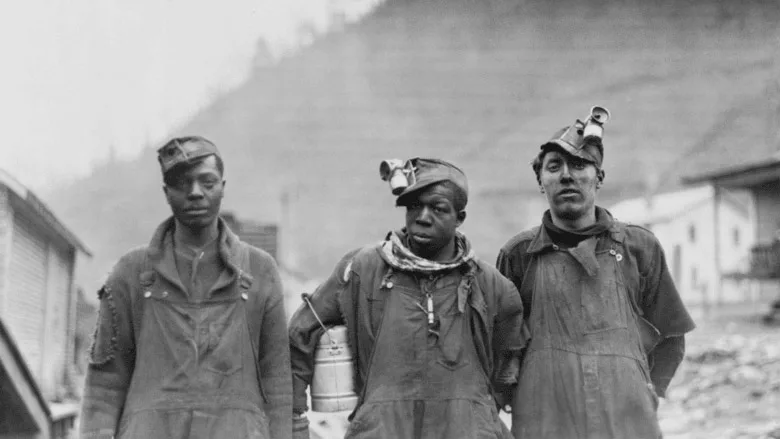
Three coal miners of the Lorain Coal & Dock Company in West Virginia in 1918.
The U.S. coal industry—long billed as the backbone of America’s energy economy—is once again being propped up by federal approvals and lease sales, even as the world continues to move away from fossil fuels and toward cleaner, cheaper alternatives.
In early September, the Department of the Interior approved a major expansion at Wyoming’s Black Butte Mine, extending its lifespan through 2039. The move gives the mine’s operator the green light to extract an additional 9.2 million tons of coal across two new pits. Officials tout the project as an economic win, with the potential to create “over 50 new jobs.” That’s in addition to the 56 full-time workers already employed at the site.
Supporters, including Interior Secretary Doug Burgum, framed the decision as an exercise in “energy dominance” and “environmental stewardship.” But in reality, the Black Butte expansion underscores just how dependent coal has become on political willpower and expedited environmental reviews to survive. The approval process included only a 10-day public comment period and a single virtual meeting, rushed through in the name of efficiency.
The Wyoming expansion isn’t an isolated case. Just a week earlier, the Interior Department advanced three competitive coal lease sales across Alabama, Utah, and Montana—leases that could unlock hundreds of millions of tons of coal and keep mines operating for decades to come.
- In Alabama, federal officials will auction two tracts with an estimated 53 million tons of metallurgical coal, designated “critical” under a 2020 energy law.
- In Utah, a much smaller tract—about 1.29 million tons—is slated for auction to support operations at the long-running Skyline Mine.
- And in Montana, a massive lease sale could put 167.5 million tons of coal into play, potentially extending the Spring Creek Mine’s life through 2051.
Together, these approvals amount to what critics see as a government-sponsored revival effort for an industry that, by market logic alone, should already be in terminal decline. Domestic coal consumption has been falling for years, outpaced by natural gas, wind, and solar. Yet coal projects continue to secure federal backing, framed in the language of “jobs,” “security,” and “dominance.”
“We found 99% of coal plants are more expensive to run than the all-in cost of new wind or solar resources in the same region.”
– Utility Drive.
The contradiction is hard to ignore. Coal-fired power plants are shutting down at a record pace, investors are steering capital into renewables, and utilities are planning for a grid powered by cheaper, cleaner energy. But in Washington, “clean coal” rhetoric and executive orders keep the mining sector on life support.
“The global coal industry will ‘never recover’ from the Covid-19 pandemic, industry observers predict, because the crisis has proved renewable energy is cheaper for consumers and a safer bet for investors,” energy experts at Guardian said.
Communities in Transition
The human side of coal’s decline is felt in places like Festus, Missouri; Sheboygan, Wisconsin; Omaha, Nebraska; and Millsboro, Delaware—all home to coal plants now slated for retirement. Operators decided they couldn’t justify the cost of running the plants any longer. The question those communities now face is: what comes after coal?
The IRA offers some answers. It created a 10% bonus tax credit for clean energy projects built in “energy communities”—regions historically dependent on fossil fuels. The Department of Energy has also unlocked $250 billion in loan guarantees to help utilities repurpose coal plants and infrastructure. And the Department of Agriculture has $9.7 billion earmarked for rural electric cooperatives to replace fossil generation with renewables.
These tools create an unprecedented opportunity: not just to replace expensive coal with cheaper clean energy, but to invest in the communities that powered the country for decades. One Energy Innovation analysis estimated that a coal-to-clean transition could deliver up to $589 billion in economic benefits, while anchoring new industries in former coal regions.
Despite this, federal policy continues to funnel support into new coal mining leases and expansions. In Alabama, Utah, and Montana alone, upcoming lease sales could unlock more than 220 million tons of coal. In Montana, one project could extend the Spring Creek Mine’s life until 2051.
These approvals may extend coal’s timeline, but they don’t change its trajectory. Power companies are retiring plants, investors are pulling out, and communities are planning for what comes next. The longer Washington props up coal, the more delayed—and costly—the inevitable transition becomes.
Coal is being kept on life support, not because it’s the best or cheapest option, but because of political commitments to an industry long past its prime. Meanwhile, cleaner, cheaper, and more sustainable alternatives are waiting in the wings—ready to deliver the jobs, tax base, and reliability that coal once provided.
For now, coal clings on. But its future is being bought, not earned—and the cost will be paid not just in subsidies and extended mine lives, but in lost time for the energy transition America can’t afford to stall.Looking for a reprint of this article?
From high-res PDFs to custom plaques, order your copy today!

John Oldani is an editor, journalist, and reporter with over a decade of experience producing clear, engaging, and well-researched content. He holds a Bachelor of Arts in Journalism from Oakland University, with a focus on financial reporting, editing, and long-form writing. Over the past year, John has specialized in covering the drilling industry, reporting on key developments, policy shifts, and impactful stories shaping the field.
email: johnnyoldaniwords@gmail.com | office: (248) 838-8535