Built for the Basin
Governor-Elect Deb Haaland Brings Interior Pedigree Home to Lead New Mexico’s Water and Energy Future
New Mexico’s governor-elect brings Interior Department experience to a state confronting groundwater restrictions, Colorado River uncertainty and growing geothermal opportunity.
Key Takeaways
- New Mexico is tightening groundwater measurement and enforcement as water scarcity increases pressure on aquifers and irrigators.
- Haaland sees geothermal development as a way to strengthen energy reliability while reducing pressure on limited water resources.
- Supreme Court mandates will require New Mexico to reduce Lower Rio Grande groundwater depletions by 18,200 acre-feet annually.
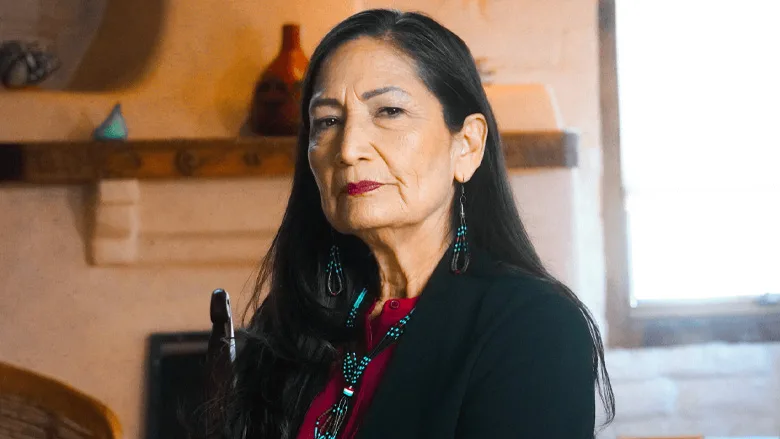
As Governor-elect Deb Haaland assembles her incoming administration in Santa Fe, she does so after defeating Republican Greggory D. Hull to become the nation’s first female Native American governor. She has named Workforce Solutions Secretary Sarita Nair as Chief of Staff and tapped former U.S. Sen. Tom Udall, alongside Pueblo and tribal leaders, to guide her transition. The Land of Enchantment now places a tested federal resource chief at the helm, and her transition arrives at the exact moment New Mexico confronts a generational reckoning over its aquifers, interstate river compacts, and clean energy grid.
With climate change straining high-desert watersheds across the Southwest, building a stronger, more resilient New Mexico requires a chief executive who understands how subsurface hydrology, federal reclamation projects, sovereign tribal rights, and drilling technology intersect on the ground. Across four years as the 54th U.S. Secretary of the Interior, Haaland oversaw the Bureau of Reclamation, the U.S. Geological Survey (USGS), and federal land management, deploying landmark infrastructure investments into Western water conveyance, clean energy permitting, and the federal orphaned oil and gas well plugging program.
In a conversation with The Driller’s Brock Yordy and Editor Kerith Gabriel, Haaland credited the technical bench she worked alongside in Washington as the foundation for advancing major resource initiatives. “I had the best team ever at Interior, right? I had a wonderful commissioner at the Bureau of Reclamation in Camille Touton and so many really amazing senior leadership... who really understood the issues and how to move our country forward,” Haaland said. “So I was really proud to serve, absolutely, and serve alongside all of them.” Bringing that Cabinet-level playbook to the Governor’s Office positions Haaland not merely to manage scarcity, but to modernize how New Mexico captures, measures, conserves, and powers its future.
Stopping the Waste: Infrastructure Renewal, Subsurface Data, and Personal Stewardship
Across the arid Southwest, dwindling surface water supplies have routinely triggered calls to simply drill deeper into basin-fill aquifers—a short-term reflex that groundwater professionals warn threatens long-term aquifer viability and water quality. Haaland’s strategy rejects the false choice between agricultural vitality and aquifer protection, focusing instead on eliminating systemic water loss, upgrading irrigation efficiency, and building a statewide culture of conservation.
Pairing public awareness with physical engineering and tighter measurement sits at the core of her blueprint for a stronger New Mexico:
- Modernizing Conveyance Systems: Antiquated municipal mains, pumps, and irrigation ditches contribute to excessive water loss before water ever reaches homes or crops, making 21st-century infrastructure renewal Haaland’s frontline defense against waste.
- Precision Agriculture Over Fallowed Heritage: Drawing lessons from touring drought-stricken California farmland during her Interior tenure—where water shortages forced growers to fallow orchards and row crops alike—Haaland has championed agricultural research, development, and targeted deep-root and drip irrigation so New Mexico’s multi-century farming and ranching communities can thrive on less water.
- Rebuilding Hydrological Science & Metering Enforcement: Following federal staffing reductions among Department of the Interior scientists who historically measured water metrics through the USGS, Haaland has prioritized stronger hydrological data collection to guide local aquifer decisions. That push gained regulatory teeth on November 13, 2026, when the New Mexico Office of the State Engineer issued Orders 200 and 201—creating a Middle Rio Grande Water Master District and mandating totalizing flow meters on all new groundwater wells (including new domestic wells) and existing agricultural, commercial, and industrial wells, backed by strict enforcement requiring permitted work by licensed well drillers.
Powering a Stronger New Mexico: Geothermal Heat and Rig-Ready Clean Energy
Strengthening New Mexico’s water security is inseparable from how the state generates electricity and conditions its buildings, especially as surging large-load power and data-center demands prompted the Governor’s Energy Affordability Council on November 12 to issue 22 grid-reliability and ratepayer-protection recommendations ahead of the 2027 legislative session. Thermoelectric plants and evaporative cooling systems consume vast volumes of water, while adopting geothermal for power generation and geothermal exchange conserves water and stabilizes energy costs.
New Mexico possesses substantial subsurface heat flow that could be a game changer for the state. Haaland views rapid deployment of that thermal potential, alongside solar and wind corridors, as essential to hitting the state’s 2050 net-zero emissions target.
For New Mexico’s drilling workforce, Haaland’s dual record on clean energy permitting and orphan well remediation translates directly into sustained jobs and rig demand, from geothermal exchange bores and deep thermal exploration to metered monitoring wells and legacy well plugging.
Navigating the Colorado River Crunch and Supreme Court Mandates
Haaland’s fluency in federal reclamation operations and tribal trust law will be tested immediately across New Mexico’s two lifeblood river systems: the Colorado River Basin and the Rio Grande.

Photo: Photo by Bill Oxford on Unsplash
Against a volatile backdrop, two landmark U.S. Supreme Court rulings frame the legal landscape awaiting Haaland
Texas v. New Mexico and Colorado: The 18,200 Acre-Foot Groundwater Mandate
For 13 years, southern New Mexico’s chile and pecan growers lived under the shadow of Texas’s 2013 Supreme Court lawsuit alleging that agricultural groundwater pumping below Elephant Butte Reservoir intercepted Rio Grande surface flows owed to Texas under the 1938 Compact. After confirming the federal government’s right to intervene (583 U.S. 407, 2018) and rejecting a state-only settlement lacking U.S. consent (602 U.S. 943, 2024), the Supreme Court entered a final consent decree on May 26, 2026.
The decree requires New Mexico to permanently reduce Lower Rio Grande groundwater depletions by 18,200 acre-feet per year over 10 years (half within five years) via voluntary farmland water-right retirements, efficient irrigation, brackish water development, and stormwater capture. Asked about absorbing an 18,000 acre-foot pullout, Haaland acknowledged the stakes plainly:
“Yes, that’s 18,000 acre-feet—it’s a lot of water... There’s no question that regardless of what happens, we all need to conserve water,” Haaland said.
Because compliance requires continuous aquifer accounting with the Bureau of Reclamation, having a governor who previously led Reclamation at the Cabinet level gives Santa Fe unmatched leverage to protect rural growers while meeting compact benchmarks.
Arizona v. Navajo Nation: Turning Paper Rights into Wet Water
While Texas v. New Mexico underscored federal enforcement power over groundwater, Arizona v. Navajo Nation, 599 U.S. 555 (2023) exposed the gulf between paper tribal water rights and wet water delivery. Ruling 5–4 against the Navajo Nation, the Supreme Court acknowledged implied reserved water rights under the 1908 Winters doctrine but held that the 1868 Treaty of Bosque Redondo imposed no affirmative duty on Washington to quantify or build infrastructure to deliver Lower Colorado River water.
Yet where the Supreme Court drew a narrow boundary on paper, a historic new chapter is opening on the ground. From the lame-duck Congressional push for the Northeastern Arizona Indian Water Rights Settlement Act to New Mexico’s own pending Zuni, Ohkay Owingeh, Rio San José, Rio Jemez, and Navajo-Gallup water bills, tribal water justice has real momentum. As Interior Secretary, Haaland shattered a century of exclusion by bringing sovereign tribes directly to the Colorado River negotiating table. Now, as a citizen of Laguna Pueblo leading from Santa Fe, she holds the executive leverage to lock arms with the Navajo Nation, the Apache Nations, and New Mexico’s 19 Pueblos—putting rigs on the ground, pressurized pipes in trenches, and clean, running water into thousands of Native homes for generations to come.

Want More Geothermal Insights?
Explore the inaugural Ground2Grid Thermal Energy Summit, launching in 2027, and connect with the ideas shaping the future of geothermal energy. Learn more.
Looking for a reprint of this article?
From high-res PDFs to custom plaques, order your copy today!

Brock Yordy, Director of Industry Engagement for The Driller, is a third-generation driller and globally recognized subject matter expert who has written for The Driller since 2013. Driven by a passion for industry education and digital media, he anchors The Driller Newscast and hosts weekly podcasts for the trade. His technical authority is backed by decades of extreme fieldwork worldwide for organizations like Halliburton, SUEZ, and the U.S. Government. Dedicated to ensuring clean water for all and advancing equitable geothermal heating and cooling, Brock actively collaborates with states nationwide through The Developed Well Group and the Geothermal Drillers Association to shape policy, safety, and workforce training.
email: brock@thedriller.com | office: (269) 348-5156