Deb Haaland: Groundwater, geothermal and conservation key components to New Mexico's future
The former Secretary of Interior and New Mexico gubernatorial candidate talks all things water and its conservation in an exclusive sitdown with The Driller
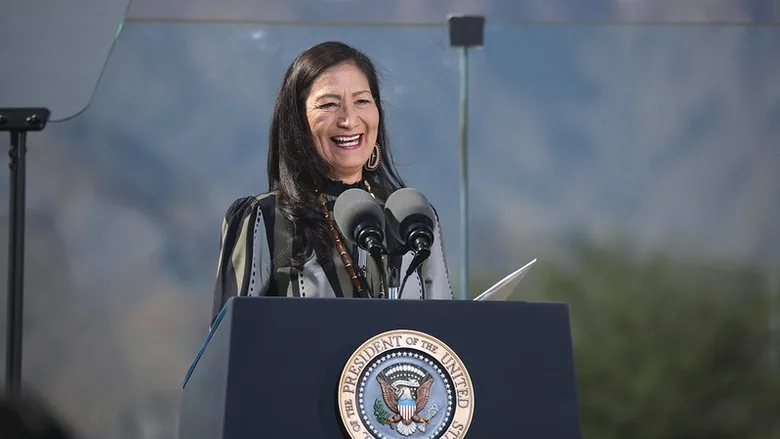
This time just last month, New Mexico dealt with massive flooding that caused damage to portions of the state.
Now, were one would think that a state thirsty for water received a relief in that respect, in many ways floods can actually exacerbate matters, as all of that wonder is running to fast to soak into the groundwater and the water that is, is generally laden with impurities.
So despite the rushing rapids seen on the nightly news from floods that ravaged the state, Deb Haaland still contends that her state is still crippled by dwindling water supplies. Now, as she runs to become the next governor of the state in November, Haaland, the former secretary of the U.S. Department of the Interior, says it's time to rethink how the state manages groundwater, brings its existing water infrastructure more current, and equally as important, begin to discover the best way to harnesses the power provided by geothermal energy.
In a sitdown with The Driller earlier this year, Haaland said that water is perhaps of the most pressing issues as the New Mexico continues to deal with the effects of climate change.
"We're in a monsoon season, and it's not raining enough," she said, about a month before floodwaters damaged parts of the state. She emphasized the need to adapt and conserve water resources. For New Mexico that conservation effort has to include groundwater.
Haaland pointed to agricultural communities as an example of how changing conditions force people to find more efficient ways to use water. In California's Imperial Valley, she saw farmers turn to research, development, and drip irrigation after drought forced fields to be fallowed.
Those conservation measures need to become more common in New Mexico, she said.
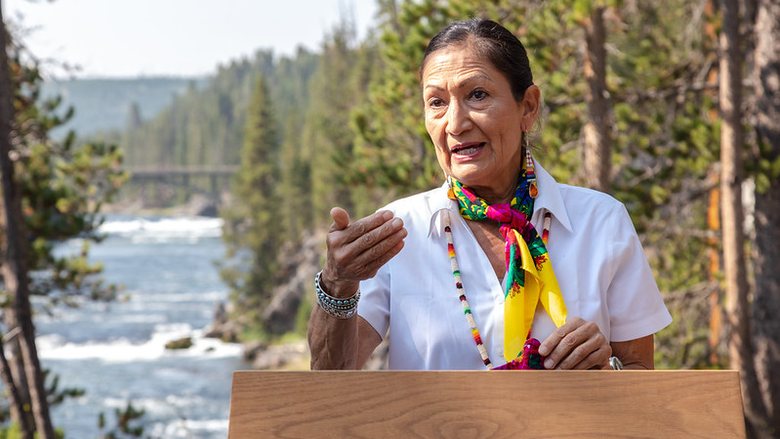
Smarter water usage and a more equitable share of the Colorado River, which provides massive amounts of water to the state is a must, says New Mexico gubernatorial candidate Deb Haaland.
Image courtesy: NPS; Jacob W. Frank
Modernizing an aging system
Haaland also highlighted the state's aging water infrastructure as a major challenge. In many communities, antiquated systems contribute to inefficient water use. Modernizing those systems could help communities use water more efficiently and reduce waste.
"Those are conversations that I would absolutely have if I'm the next governor of New Mexico," Haaland said.
Water conservation must also account for New Mexico's agricultural heritage. The state has been an agricultural hub for centuries, and Haaland said preserving that identity requires adapting to changing water supplies rather than wasting water.
"My ancestors planted in the desert before migrating to the Rio Grande Valley," she said. "We're an agricultural state, and I believe we must remain true to our roots."
Geothermal opportunities abound
There's a great deal of upside for New Mexico to think in terms of using the Earth's energy to power its resources even more than it already is.
Haaland recognizes this, saying: "There’s a lot of geothermal percolating underneath our feet," adding that the state needs to tap into those resources. New Mexico's geological history gives it significant geothermal potential, given the region's history of housing massive volcanoes.
"We were the site of the largest volcanoes in the world at one time," Haaland said. "Some companies have worked to take advantage of that but it's something I absolutely think we need to do more of, using the natural resources that are there that don't cause emissions and are healthy for our environment.
Alongside geothermal, Haaland noted that solar, and wind must be key components of a broader effort to expand clean energy resources in the state. She advocates for considering geothermal development alongside other energy sources as the state works to provide heating, cooling, and power while reducing emissions.
She also pointed to New Mexico's goal of reaching net-zero emissions by 2050, saying she takes that target seriously.
"I'm proud of the fact that when I was Secretary of the Interior, that we were able to support clean energy projects all over the southwest; and I want to continue to do that. We've made a promise to ourselves in New Mexico to get to net zero emissions by 2050. I take that very seriously."
Water disputes add pressure
New Mexico's water challenges extend beyond conservation within the state. She told The Driller about the longstanding water tensions between New Mexico and Texas, including a dispute involving roughly 18,000 acre-feet of water.
"When I was Secretary, we negotiated [the splits] of the Colorado River," Haaland said. "So many communities came to the table, including tribal communities who never had an opportunity before to be at the table. In New Mexico, we will alway fight to protect our water, and again, investing in water-efficient infrastructure will only support not just our communities, but our farmers and ranchers."
Haaland called that amount significant and drew on her experience negotiating Colorado River issues while she was Interior secretary. She said water negotiations work best when communities, including tribal communities, have a seat at the table and are willing to consider conservation.
Haaland said investments in more efficient water infrastructure could help farmers and ranchers while conserving water and supporting the restoration of rivers and aquifers.
"Nature is our best ally in the fight against climate change, and that includes what it's telling us about our water and the future of water. We just have to listen."
Better data is part of the solution
Haaland also emphasized the importance of having reliable scientific data to make decisions about water. She pointed to the U.S. Geological Survey's role in measuring water resources across the country, saying that scientific information has historically provided governments and communities with the data needed to make decisions.
Haaland criticized the recent loss of scientific personnel at the Interior Department as she says that communities depend on maintaining that scientific capacity.
That is the job of the U.S. Geological Survey," Haaland said. "They measured all of those important metrics as it pertained to our resources, all over the country. It was science that the public could use so that governments could make better decisions. It's a very sad state of affairs that the Administration has fired so many science professionals, as we need to make sure we have better data."
For New Mexico, Haaland's message is ultimately about managing several interconnected challenges at once: protecting groundwater, conserving water, maintaining agriculture, modernizing infrastructure and expanding clean energy.
The state's future, she said, will depend not simply on finding more water, but on becoming smarter and more efficient with the water it already has.
"Restoring our rivers and aquifers isn't a wish list item, it's a must," Haaland said. "I'm committed to doing that for New Mexico, but it's a state of affairs that a lot leaders across government levels need to continue to build strategy around, utilize the data to inform and act on how we can keep and continue to restore the little we have."
Looking for a reprint of this article?
From high-res PDFs to custom plaques, order your copy today!


Brock Yordy, Director of Industry Engagement for The Driller, is a third-generation driller and globally recognized subject matter expert who has written for The Driller since 2013. Driven by a passion for industry education and digital media, he anchors The Driller Newscast and hosts weekly podcasts for the trade. His technical authority is backed by decades of extreme fieldwork worldwide for organizations like Halliburton, SUEZ, and the U.S. Government. Dedicated to ensuring clean water for all and advancing equitable geothermal heating and cooling, Brock actively collaborates with states nationwide through The Developed Well Group and the Geothermal Drillers Association to shape policy, safety, and workforce training.
email: brock@thedriller.com | office: (269) 348-5156