Geothermal
The surface to subsurface standard
An examination of the operational standard that mitigates subsurface risk, minimizes surface disruption from heavy rig traffic, and reduces neighborhood impact.
The transition to district-scale thermal energy is no longer a theoretical exercise; it is an active, heavy-civil construction effort underway in the middle of established neighborhoods. As developers push for wider deployment, the industry is slamming into a dual reality: we must execute highly complex subsurface engineering while actively managing massive surface-level disruptions. We are disrupting the streets to decarbonize them, but if we lose the community's trust, the project is dead in the water.
To survive this rapid scale-up, the industry must adopt the Surface-to-Subsurface Standard (S3). This operational standard demands technical excellence in all dirt while actively mitigating subsurface risk, minimizing surface disruption from heavy rig traffic, and reducing neighborhood impact.
However, as geothermal exchange engineers design deeper bore fields and complex municipal footprints, a new threat to the industry has emerged. New voices are actively manufacturing fear and distrust of geothermal exchange designers and drillers' qualifications to design and build reliable, safe systems. They aggressively push the sector to adopt oil and gas design and construction practices, needlessly increasing costs.
Let us be clear: when the risk of volatile gas or high-pressure anomalies is real, it must absolutely be addressed. However, true risk assessment is driven by hard data from the local region, including test well information, local USGS logs, regional experts, regulatory permitting offices, and accurate local mapping records that explicitly indicate the presence of volatile gases in a specific formation. This localized, scientific reality counters fear-mongering claims that a catastrophic blowout can occur anywhere. Such claims force the unnecessary use of oversized equipment, blowout preventers, and diverters. These bottlenecks affect feasibility and limit the number of qualified geothermal exchange construction companies.
The surface: The good neighbor mandate
The success of a thermal energy network lives and dies by the quality of the bore, but community adoption is built entirely on how a civil crew operates outside the fence line.
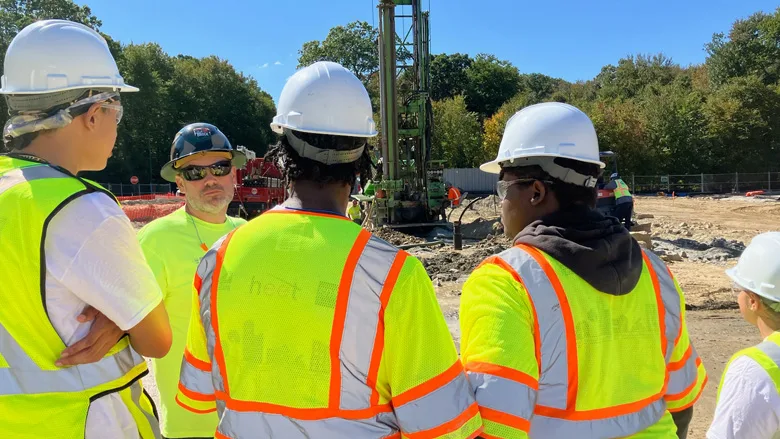
When equipment, drillers, and civil crews roll into a subdivision, the disruption is immediate. The S3 protocol redefines environmental protection to mean total footprint management. This is a tactical approach to community relations. It requires rigorous noise control and dust suppression to respect residents. Strategic rig mobilization is designed to minimize the impact on local streets, sidewalks, and municipal infrastructure. Strict water and waste management protocols ensure local utility resources are not strained. S3 operates on a simple premise: a technically perfect borefield is useless if the community petitions the city to halt construction because of surface negligence.
The subsurface: Fragile formations and aquifer risk
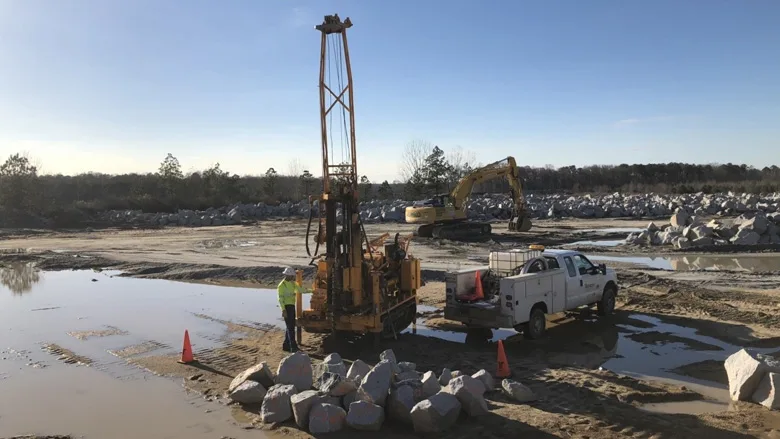
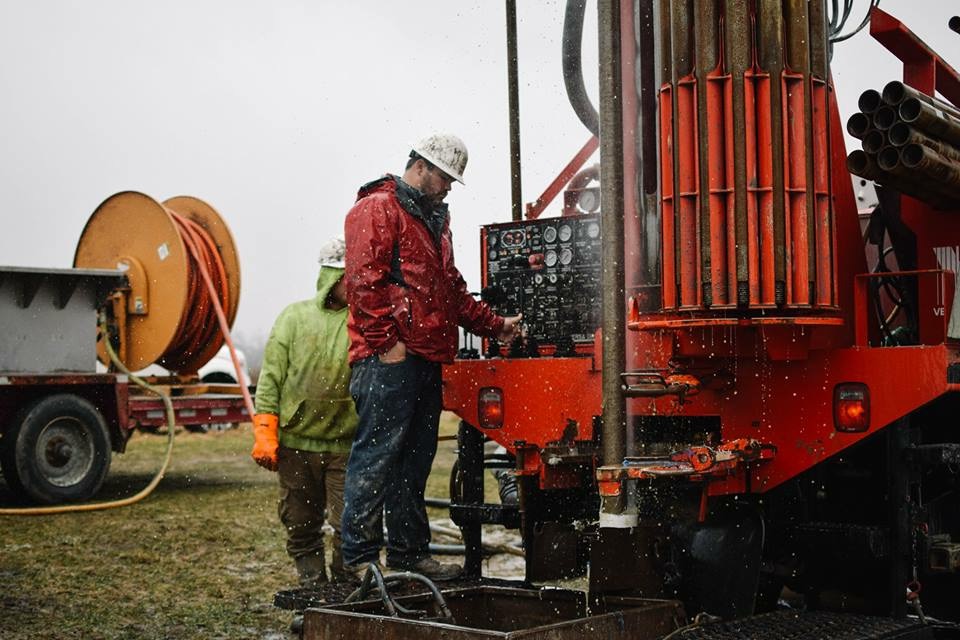
Venturing past traditional depths of 500 feet introduces a minefield of subsurface risks. Drillers are no longer just punching shallow holes; they are navigating fragile subsurface formations, varying hydrostatic pressures, and complex geologies.
The primary risk in deep district-scale drilling is the potential impact on groundwater. Advanced drilling methods, whether using traditional mud rotary or air-hammer rotary systems, exert immense downhole pressure. We must minimize disruption to prevent cross-contamination of confined aquifers. When encountered, lost fluids must not affect sensitive surrounding environments. Only NSF-approved lost circulation materials should be utilized; pumping neat cement into a porosity zone is never acceptable in unconsolidated formations.
Finally, the deeper we drill, the more likely we are to encounter trapped pockets of methane, CO2, or H2S. Trapped pockets are very different from encountering the next new million-cubic-yard gas field—both situations pose dangers, requiring appropriate monitoring and well control. But drilling at Oberlin College is very different from drilling at the University of Michigan, and risk mitigation measures should be applied appropriately.
To combat this, the S3 mandate requires an absolute commitment to subsurface integrity. It demands rigorous groundwater protection, masterful well control, and the installation of appropriately grouted impermeable seals to ensure adequate thermal transfer and isolation of the loop from subsurface production zones.
"We are disrupting the streets to decarbonize them, but if we lose the community's trust, the project is dead in the water."
--- Brock Yordy, industry expert
Mastering the mud: Industrial fluid programs and testing
Protecting the aquifer and maintaining borehole stability requires moving far beyond the days of drilling with simple high-yield bentonite and long-chain polymers. Today's deep geothermal exchange boreholes demand engineered drilling fluid packages. The fluid program cools the bit, suspends cuttings, and stabilizes the borehole wall to prevent fluid invasion into native formations.
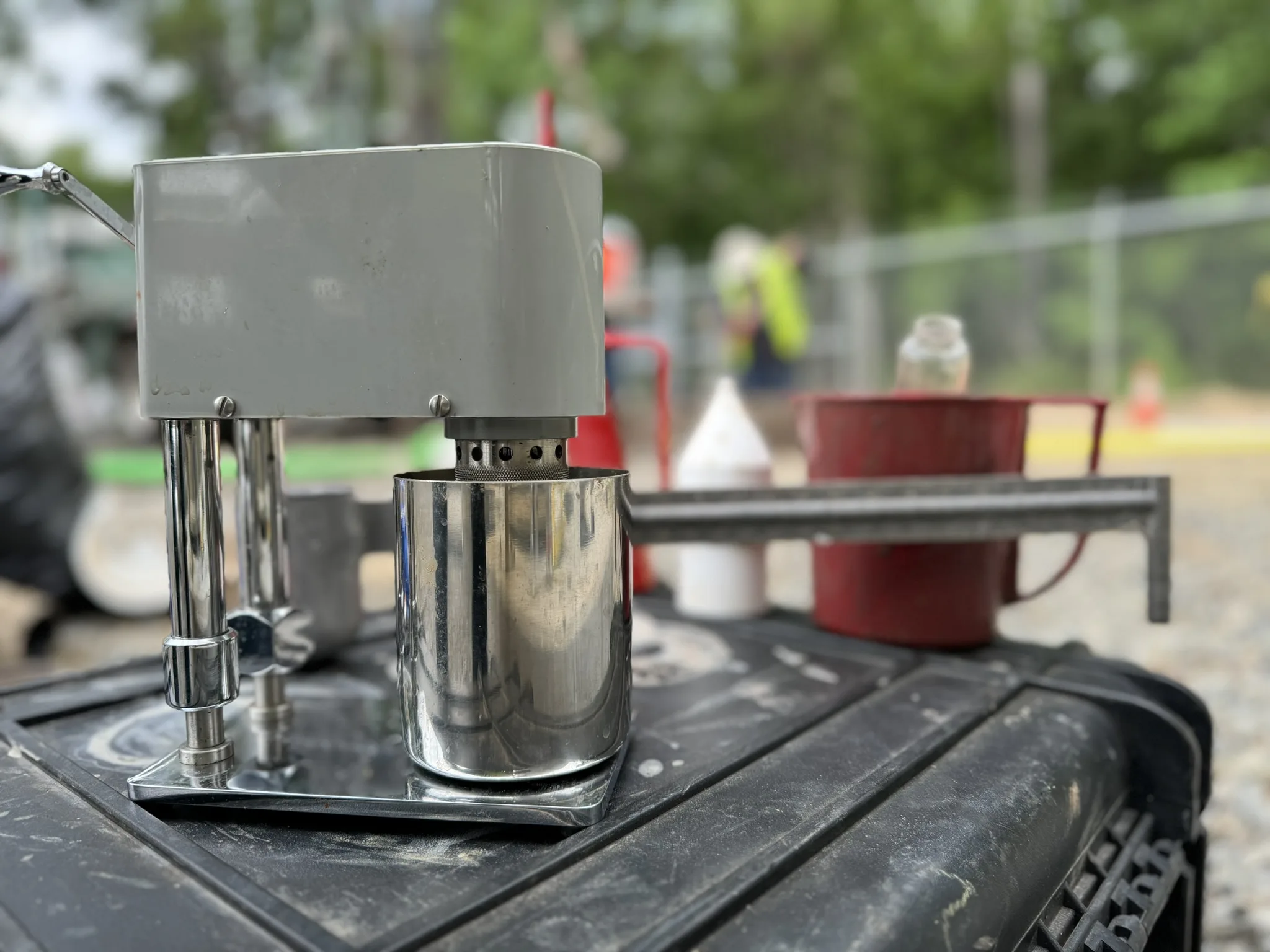
Today's geothermal exchange drillers must be their own fluid engineers, utilizing primary and secondary drilling fluid properties and continuously monitoring them with standard testing equipment. All field personnel must be able to perform funnel viscosity, mud density, and sand content tests. An unmonitored system guarantees formation damage and completion failure. Mastering mud programs and executing relentless testing eliminates most subsurface risks.
The well control debate: Defending the geothermal exchange professional
Despite S3 protocols and engineered fluid packages, a politicized debate continues to grip the industry. Most recently, following the well-control incident in Utah towards the end of May 2026, opportunists seized the narrative.
They weaponized the Cape Station blowout to sow doubt. They claim that standard contractors lack competency in geothermal drilling and propose deep well-control protocols for all GeoExchange projects.
This fear-based narrative is both disingenuous and operationally flawed. When the Cape Station blowout occurred, there were ample resources and funds to shut it in, yet it took more than a week to get under control. As Energy Central reported on May 31, 2026, the blowout was "less catastrophic" than those at oil and natural gas wells because geothermal systems are free of hydrocarbons and feature lower concentrations of toxic gases. Ironically, a geothermal well spewing thermally charged steam at over 200 ℃ is dangerous.
The reality is that a 6.5-inch geothermal exchange borehole drilled to 900 feet in Illinois does not have the hydrothermal capabilities of a 9,000-foot geothermal power generation well in Utah.
Water Well, Geothermal Exchange, and Industrial Drillers understand the risk and cannot afford to lose a rig worth ¼ the price of a 1500-horsepower deep hole rig. We are specialized professionals executing with analog equipment to drill boreholes at a tenth of the cost per foot. The push to require blanket risk mitigation for all GeoExchange boreholes, including advanced deep hole well-control standards, fundamentally misrepresents the specific hydraulic, thermal, and geological realities of closed-loop district systems. Geothermal exchange drilling focuses on harnessing continuous, low-temperature geothermal energy, managing thermal conductivity, and installing permanent lateral infrastructure.
"S3 operates on a simple premise: a technically perfect borefield is useless if the community petitions the city to halt construction because of surface negligence."
--- Brock Yordy, industry expert
Championing drillers through S3
The geothermal exchange drilling industry does not need reactionary, imported regulations to drill deeper and safer. We need to identify the risk, own the liability, and implement site-specific borefield design paired with strict adherence to the Subsurface and Surface Standards. North American Geothermal Exchange Drillers require their own standards developed in the same manner as the IADC did with the Geothermal Well Control Standards. Those same well control professionals are advising on the development of Geothermal Exchange Well Control standards.
Furthermore, the industry requires competent geothermal designers working alongside geothermal exchange professionals, supported by a rigorous, cross-disciplinary risk mitigation culture rooted in scientific analysis. The statistical reality is that 80% of construction job-site incidents stem from unsafe acts rather than unsafe conditions. Adopting an S3 protocol establishes unified, site-wide protocols to manage the distinct, high-consequence risks posed by production drilling operations, deep trenching, and overlapping spans of control between drillers and civil contractors.
By mastering fluid engineering, maintaining absolute subsurface integrity, protecting all environments, and treating the surface footprint with relentless respect, geothermal exchange professionals remain the true champions of the thermal transition. We will build the grid of the future by relying on the expertise of the trades and on standards grounded in science.
Looking for a reprint of this article?
From high-res PDFs to custom plaques, order your copy today!

Brock Yordy, Director of Industry Engagement for The Driller, is a third-generation driller and globally recognized subject matter expert who has written for The Driller since 2013. Driven by a passion for industry education and digital media, he anchors The Driller Newscast and hosts weekly podcasts for the trade. His technical authority is backed by decades of extreme fieldwork worldwide for organizations like Halliburton, SUEZ, and the U.S. Government. Dedicated to ensuring clean water for all and advancing equitable geothermal heating and cooling, Brock actively collaborates with states nationwide through The Developed Well Group and the Geothermal Drillers Association to shape policy, safety, and workforce training.
email: brock@thedriller.com | office: (269) 348-5156