World Geothermal Congress
The Global Pitch
Reducing Risk Through Better Subsurface Intelligence

To hit the massive scale required by our fast-approaching decarbonization goals, the geothermal industry is pushing past conventional surface constraints. We are focusing entirely on downhole drilling, completion innovation, and rigorous feasibility modeling. With 98 countries holding an uncompromising timeline to systematically transition away from fossil fuels, the world requires an immediate influx of clean, 24/7 baseload power. Geothermal energy is no longer relegated to the academy squad; it is positioned as the definitive option to meet surging demand from electrification, industrialization, and AI infrastructure.
Stoppage Time for the Energy Transition
The urgency of the global energy transition requires scaling up renewable capacity at a pace that matches modern demand. Since our 2050 targets were established, the global pitch has shifted, presenting complex new challenges: the need to rapidly decarbonize, surging demand from data center expansion, and heightened vulnerabilities due to geopolitical instability.
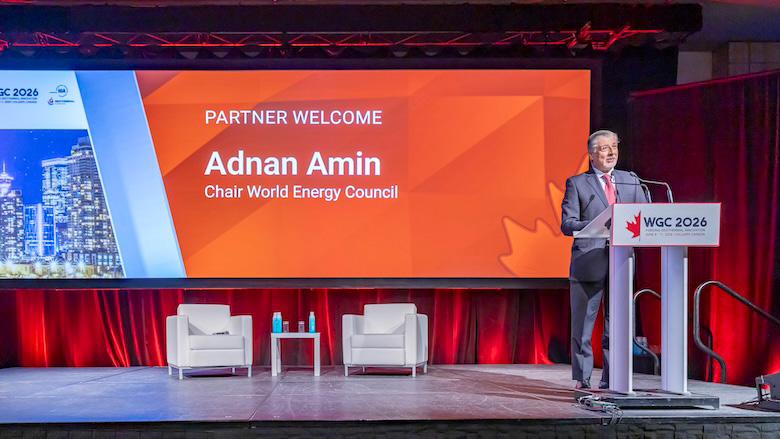
Leaders at the World Geothermal Congress like Adnan Amin, believe that with technology no longer a constraint, other pillars need to fall for geothermal to truly go mainstream.
Photo courtesy / WGC2026
Twenty-four years may feel like plenty of time left on the clock, but on a massive global infrastructure scale, the referee is already checking their watch. We are officially in stoppage time. Today, replacing fossil fuels at this scale requires a complete, tactical re-evaluation of baseload economics and national security. As Adnan Amin, Chair of the World Energy Council, emphasized at WGC2026 Calgary, this reality is reshaping how global leaders define energy security:
"Every nation is now focused on building energy systems that are secure, resilient, affordable, and ready for the surge in demand from electrification, industry, heating and cooling, and artificial intelligence. Yesterday, energy security was defined by fuel. Today it's about infrastructure and the nation's ability to keep essential services running despite external shocks." — Adnan Amin, Chair, World Energy Council (WGC2026 Calgary)
Transitioning from less than 1% of the global energy mix to multi-gigawatt targets requires moving away from shallow hydrothermal systems and executing deep, highly engineered subsurface systems capable of deploying "Geothermal Anywhere".
Feasibility and Tactical Formations
Before a drilling rig mobilizes, the path toward a successful completion must be digitally mapped. A key challenge in the industry is subsurface uncertainty, which makes it difficult for financial markets to invest due to undefined risk. With a rapidly closing window to transform global grids, capital must flow quickly and efficiently.
Rigorous feasibility studies serve as the ultimate guardrail, de-risking projects and protecting the subsurface environment. By leveraging enhanced data and subsurface imaging, operators can accurately map geological structures to deploy the exact right tactical formation for the local conditions, perfectly matching the technology to the thermal energy resource. Seequent, the leading player supporting over 60% of global high-temperature geothermal power projects, focuses directly on reducing this risk to unlock investment and scale. Graham Grant, CEO of Seequent, breaks down the foundational elements needed to build this vital market trust:
"One's about speed, one's about precision, one's about visibility, but they all point to the same thing. Confidence unlocks investment, investment unlocks projects. Projects unlock scale... And that confidence starts in the subsurface." — Graham Grant, Seequent (WGC2026 Calgary)
Drilling Innovation: Assembling the World-Class Squad
To win this race, the geothermal drilling industry must access thermal energy resources safely, rapidly, and economically—even under complex downhole conditions and extreme temperatures. Breakthroughs in drilling mechanics are fundamentally expanding our potential, accelerated heavily by lessons learned in traditional oil and gas sectors. Pointing to this advantage, Adnan Amin notes that we already have a massive head start on the equipment and supply chains:
"Up to 80% of what geothermal needs, technologies, skills, equipment, and supply chains already exist in oil and gas. Energy transitions move fastest when they build on existing industrial strengths and not from scratch." — Adnan Amin, Chair, World Energy Council (WGC2026 Calgary)
This technological shift must be matched by deliberately building a world-class roster. Executing this transition means bridging the generational gap, uniting the legacy knowledge of seasoned drilling professionals—the team captains—with the next generation of high-energy geothermal rookies. Bjarni Palsson, President of the International Geothermal Association, issued a clear call to action for this newly integrated squad:
"Young professionals will connect with experienced leaders. Together, we will help shape the future direction of our industry. I encourage all participants to take full advantage of this opportunity. Attend sessions beyond your field, engage with colleagues from other countries, meet students and young professionals, explore new technologies and business models, challenge assumptions and share your experience openly..." — Bjarni Palsson, President, International Geothermal Association (WGC2026 Calgary)
This exact spirit of disruptive innovation is what leads to breakthroughs like hybrid laser drilling. Take Quaise Energy, for example. By rethinking downhole mechanics, they developed an energy-directed hybrid drilling integration. Utilizing millimeter-wave gyrotron technology, they bypass mechanical bit wear to reach unprecedented, power-dense depths on an accelerated timeline—literally vaporizing rock. Matt Houde, Co-founder of Quaise Energy, explains the sheer operational advantage of this approach:
"[The MMW technology] simplifies everything downhole such that nothing is particularly sensitive to the high temperatures and pressures. That allows us to mitigate many of the issues we have with conventional mechanical rigs at these depths." — Matt Houde, Co-founder of Quaise Energy (WGC Tech Summary)
This collaborative, problem-solving mindset mirrors the rapid tactical adjustments seen on championship pitches as teams must adapt to win.
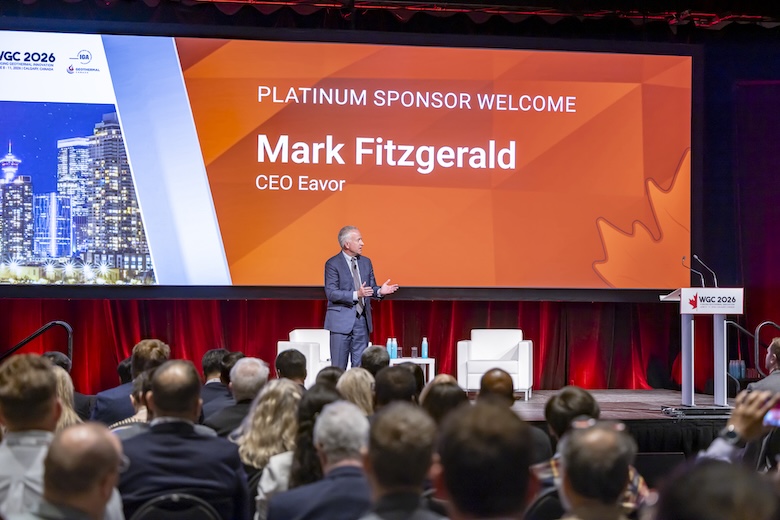
Eavor CEO Mark Fitzgerald says that a closed loop does not require energy input to create energy, at the World Geothermal Congress in June.
Photo courtesy / WGC2026
Completion Innovation and Well Configuration
Choosing the appropriate geothermal well configuration is critical to scaling capacity and minimizing a project's footprint. Feasibility studies determine whether a specific geography is best suited for Conventional Geothermal Systems, Enhanced Geothermal Systems (EGS), or the advancement of CO2 Closed-Loop Technologies. Just like a manager reading the field, these decisions dictate the play.
Closed-loop power generation systems isolate the working fluid entirely within a sealed wellbore, allowing for deployment even in areas with lower temperature gradients. Mark Fitzgerald, CEO of Eavor, summarizes why this specific play is so effective for maintaining momentum:
"We do that because we gather heat subsurface through conduction. We do it because we have the ability to use minimal water. We do that because we have no parasitic load. The thermosyphon effect. A closed loop does not require energy input to create energy." — Mark Fitzgerald, CEO, Eavor (WGC2026 Calgary)
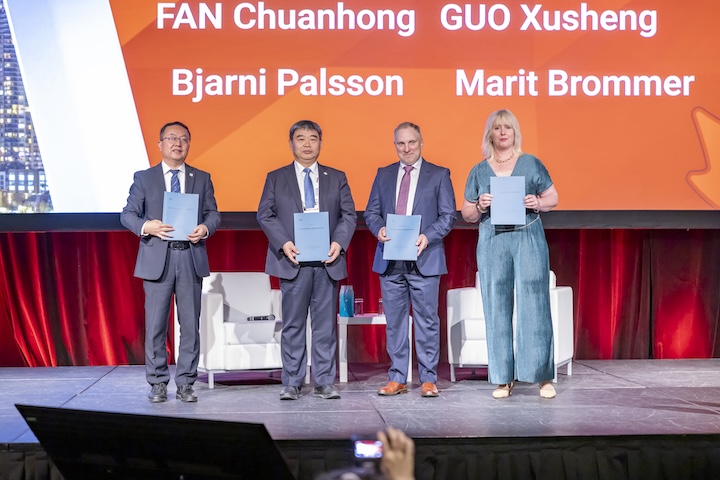
Leaders within the geothermal industry met earlier this month at the World Geothermal Congress in Calgary, Alberta.
Photo courtesy / WGC2026
Management Team Resources and Fan Integrity
Ultimately, the success of hitting our deadline relies on strict resource management across the land, surface, and subsurface. Because closed-loop configurations can drastically reduce overall water consumption, project feasibility and well planning must prioritize protecting and conserving groundwater. We must keep our teams hydrated.
The ability to drill multiple horizontal wells from a single pad allows for efficient land management. This approach empowers the industry to deliver reliable baseload power while maintaining a steadfast commitment to environmental stewardship. When we approach these projects with a minimal impact mindset, we will lower local opposition and streamline the permitting process. We want the entire stadium involved in our geothermal anthem.
Securing Geothermal's Position Before the Whistle Blows
The convergence of predictive modeling, hybrid drilling mechanics, and adopting the best way to harness local thermal energy resources demonstrates that geothermal can meet our massive global demands. However, as Adnan Amin reminds us, the final hurdles to securing a victory are no longer about science, but the execution:
"Technology is no longer a geothermal constraint. The resource is there, costs are falling, and innovation is accelerating. But the bottlenecks remain. Policy, regulation, finance, and execution. Governments that tackle those do more than unlock geothermal. They strengthen energy security, boost industrial competitiveness, cut import dependence, and create durable value." — Adnan Amin, Chair, World Energy Council (WGC2026 Calgary)
By connecting our American oilfield roots at King Ranch with the global stages of Iceland and New Zealand, we merge foundational drilling history with world-class teamwork. Just as those nations have punched above their weight both on the pitch and in the subsurface, our sector is primed to take the lead. We have the history, the playbook, and the 21st-century innovations required to secure geothermal's position as the foundation of global energy.
Looking for a reprint of this article?
From high-res PDFs to custom plaques, order your copy today!

Brock Yordy, Director of Industry Engagement for The Driller, is a third-generation driller and globally recognized subject matter expert who has written for The Driller since 2013. Driven by a passion for industry education and digital media, he anchors The Driller Newscast and hosts weekly podcasts for the trade. His technical authority is backed by decades of extreme fieldwork worldwide for organizations like Halliburton, SUEZ, and the U.S. Government. Dedicated to ensuring clean water for all and advancing equitable geothermal heating and cooling, Brock actively collaborates with states nationwide through The Developed Well Group and the Geothermal Drillers Association to shape policy, safety, and workforce training.
email: brock@thedriller.com | office: (269) 348-5156