What Today’s Water Well Workforce Says About the Future of Drilling
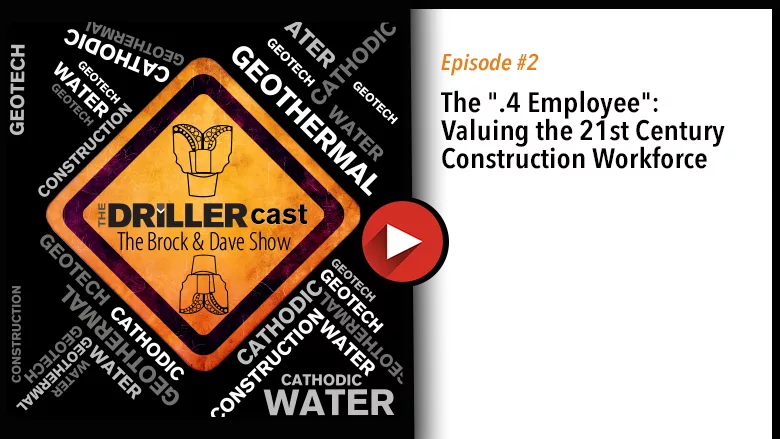
If you have ever joked about working with “the point-four employee,” you are not alone. According to the latest data, the average water well company in the United States employs 4.4 people. It is a statistic that says as much about the drilling sector’s lean efficiency as it does about the challenges ahead.
This episode of The DRILLERcast podcast examines what that number really means for business owners, field crews, and the next generation of drillers. A clear message emerged: a small workforce can be a powerful one, but only with the right investment in training, compensation, and long-term development.
▶ Listen to the full podcast now!
For more listening options, check out The DRILLERcast on BuzzSprout
A 10 Billion Dollar Industry Built on Small Teams
Despite modest crew sizes, the water well sector is far from small. The industry generated more than 10 billion dollars in revenue in 2024, and that figure continues to rise as demand for groundwater access, pump service, and residential well construction grows.
This contrast, where small teams support a large and essential industry, has become a defining feature of the trade.
“Efficiency is the backbone of this industry,” Brock explains in the episode. “A well-trained driller and a well-trained helper can outperform a much larger crew without the right skills.”
In a field where labor shortages are a constant concern, water well companies often succeed by relying on technical expertise, multitasking, and closely coordinated teams. However, that model is only sustainable when companies invest consistently in the people they have.
Training as Strategy, Not a Luxury
Training is not optional. It is the central driver of both profitability and employee retention.
Historically, the drilling industry has relied on a “learn on the job” model. While on-site learning remains vital, modern drilling demands a more structured approach because of new regulations, evolving safety expectations, and increasingly advanced rigs and monitoring systems.
Key elements of effective workforce development include:
- Clearly defined career paths from helper to lead driller and beyond
- Strong technical training in geology, hydraulics, rig operations, and safety
- Ongoing learning opportunities rather than one-time certifications
- Transparent expectations for advancement and pay
A consistent message from the podcast is that employees rarely leave the industry because the work is too difficult. They leave because they do not see a future.
Companies that invest intentionally in their crews are the ones that grow, retain talent, and build a sustainable internal culture.
Compensation remains a sensitive subject across the skilled trades, and drilling is no exception. When the average company has four or five employees, losing even one can significantly disrupt operations. Brock argues that competitive pay is not only fair but also strategic.
As geothermal drilling, construction dewatering, environmental remediation, and mining support continue to expand, more industries are competing for workers with similar technical abilities. Companies that cannot match wages or provide clear, attainable paths to higher earnings risk losing talent to sectors that offer more predictable schedules or stronger financial incentives.
Loyalty alone is no longer enough to keep employees. Wages must reflect the level of expertise required to do the job well.
Preparing Tomorrow’s Drillers Today
The average age of the drilling workforce is rising, and companies across the country are looking for ways to preserve institutional knowledge before veteran drillers retire. The podcast emphasizes the need for:
- Mentorship programs that pair experienced drillers with new hires
- Shadowing opportunities that accelerate hands-on learning
- Documented processes that prevent the loss of best practices
- A culture that values growth and knowledge sharing
Smaller companies can be particularly effective in this area. With fewer employees, new hires often take on a wide range of responsibilities early, which can accelerate skill development. However, without a formal effort to outline learning pathways, companies risk losing essential knowledge when senior employees leave.
The Bottom Line
A 4.4 person company can be incredibly productive, but only when supported by strong training, competitive compensation, and a culture that promotes learning. The drilling industry has long relied on small, highly capable teams. To remain competitive in a changing market, companies must prioritize the people behind the rigs as much as the rigs themselves.
The path forward is straightforward: train well, pay well, and create careers rather than temporary jobs. In an industry powered by small teams and large responsibilities, that may be the most important investment a company can make.
Looking for a reprint of this article?
From high-res PDFs to custom plaques, order your copy today!

Brock Yordy, Director of Industry Engagement for The Driller, is a third-generation driller and globally recognized subject matter expert who has written for The Driller since 2013. Driven by a passion for industry education and digital media, he anchors The Driller Newscast and hosts weekly podcasts for the trade. His technical authority is backed by decades of extreme fieldwork worldwide for organizations like Halliburton, SUEZ, and the U.S. Government. Dedicated to ensuring clean water for all and advancing equitable geothermal heating and cooling, Brock actively collaborates with states nationwide through The Developed Well Group and the Geothermal Drillers Association to shape policy, safety, and workforce training.
email: brock@thedriller.com | office: (269) 348-5156