Remediation
New Hydro-Excavation equipment reflects industry push for efficiency
MTech highlights larger capacities, reduced operator strain, and fewer work interruptions in latest rollout from Super Products
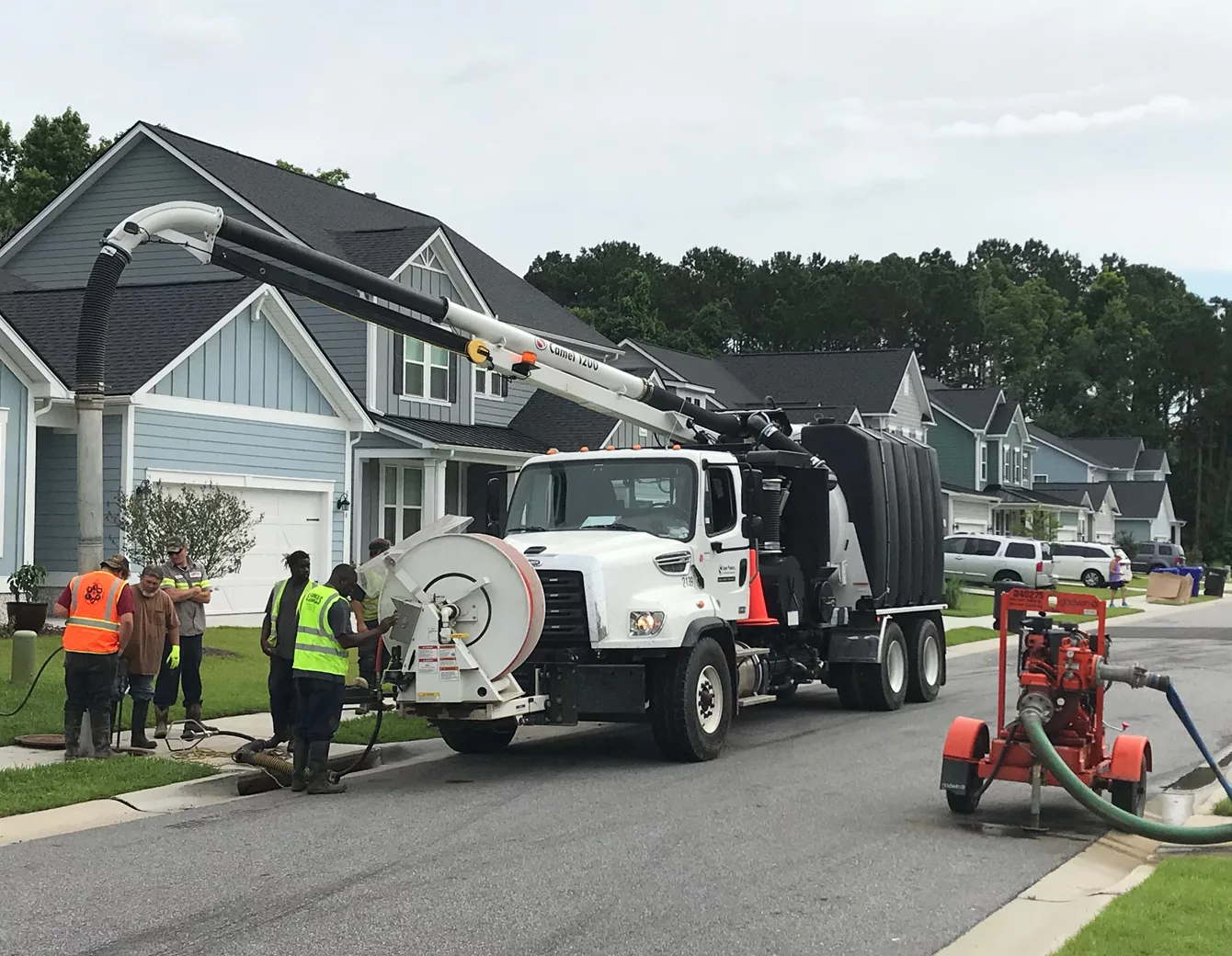
Recently, MTech introduced three new pieces of equipment from Super Products, signaling a continued industry focus on efficiency as municipalities and contractors face mounting infrastructure demands and workforce constraints.
The lineup includes the Mud Dog® 700, Camel Max® 1600, and Super Boom™, each aimed at addressing operational issues that crews routinely encounter in sewer cleaning and hydro-excavation work.
The Mud Dog® 700 centers on maneuverability and jobsite accessibility. Its compact design and 15- to 23-foot boom reach are intended to reduce how often operators need to reposition equipment in tight or congested areas, a common challenge on urban projects and roadside work.
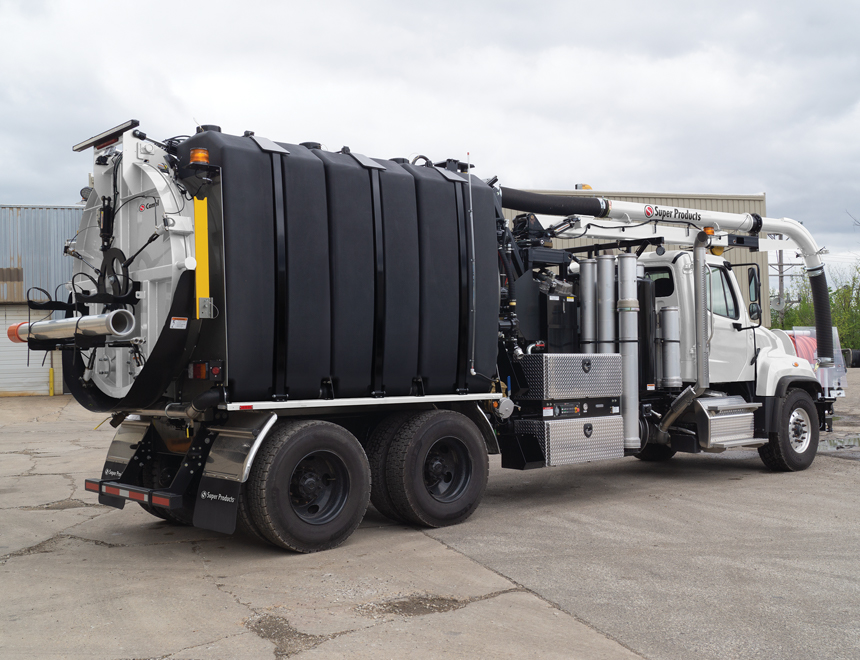
The Camel Max® 1600 expands capacity on the larger end of the company’s combination sewer cleaner lineup. The truck increases debris storage from 12 cubic yards to 16 cubic yards while boosting water capacity from 1,500 gallons to 2,000 gallons.
 Courtesy / MTech
 For municipalities and contractors, the practical impact is straightforward: fewer dump trips, longer jetting cycles, and less downtime during extended cleaning operations. The larger tank configuration may be particularly useful on high-flow sewer lines, stormwater systems, interceptors, and industrial applications where crews often lose time traveling to disposal or refill sites.
The unit also comes standard with an ejector plate system designed to improve unloading efficiency and reduce material buildup inside the debris tank.
Much of the technical attention, however, is focused on the Super Boom™, which introduces several design changes aimed at durability and operator workflow.
The system uses an 8-inch hose, larger than the 6- or 7-inch hoses commonly used on comparable systems. The wider diameter is intended to reduce clogging when handling heavier or irregular debris.
The boom also continuously rotates the hose during operation, distributing wear more evenly across the hose surface rather than concentrating stress in one location. According to the company, that approach can help extend hose life and reduce maintenance frequency.
Another departure from more traditional systems is the use of a gear-driven traction mechanism instead of a belt-driven setup. Gear drives generally provide more consistent pulling force under heavy loads and eliminate the slippage issues that can occur with belts over time.
The Super Boom™ also applies traction across all four sides of the hose rather than compressing it from only the top and bottom. The design is intended to maintain the hose’s shape and improve long-term traction consistency.
Operationally, the system is designed to reduce manual handling during setup and cleanup. Instead of carrying and assembling multiple vacuum tube sections by hand, operators can attach tubes directly to the boom, which handles much of the lifting process.
That change could help reduce physical strain on crews while also shortening setup times, particularly during lift station cleaning or work in confined areas.
The boom’s reach has also been extended from 8 feet to 10 feet, improving access to offset manholes and larger structures while minimizing the need to reposition trucks between tasks.
In low-clearance environments such as bridges or areas with overhead power lines, operators can maneuver the hose without fully raising the boom, which may help streamline work in areas where overhead movement is limited.
Taken together, the equipment rollout reflects broader trends across the sewer and hydro-excavation industry, where equipment manufacturers are increasingly prioritizing uptime, reduced labor demands, and operational efficiency as agencies and contractors look for ways to maintain productivity with fewer resources.
Looking for a reprint of this article?
From high-res PDFs to custom plaques, order your copy today!

John Oldani is an editor, journalist, and reporter with over a decade of experience producing clear, engaging, and well-researched content. He holds a Bachelor of Arts in Journalism from Oakland University, with a focus on financial reporting, editing, and long-form writing. Over the past year, John has specialized in covering the drilling industry, reporting on key developments, policy shifts, and impactful stories shaping the field.
email: johnnyoldaniwords@gmail.com | office: (248) 838-8535