Growing uncertainty for America’s clean energy future
Interior secretary Doug Burgum’s appeal of a federal renewable energy ruling could create new challenges for geothermal projects and permitting reform.
Interior Secretary Doug Burgum’s recent remarks about renewable energy permitting have created even more uncertainty for an industry that’s already dealing with political and regulatory challenges.
During a House Natural Resources Committee hearing recently, Burgum said the Department of the Interior intends to challenge a federal judge’s decision to temporarily block several agency policies that critics say have been slowing the development of solar and wind projects nationwide.
At the heart of the dispute is an April ruling by Chief Judge Denise Casper of the U.S. District Court for the District of Massachusetts. Casper issued a preliminary injunction blocking five Department of the Interior (DOI) memos that renewable energy developers said were creating major delays for projects on both public and private land. Burgum strongly disagreed with that view, calling it “absurd” that a single judge could interfere with the department’s internal review process.
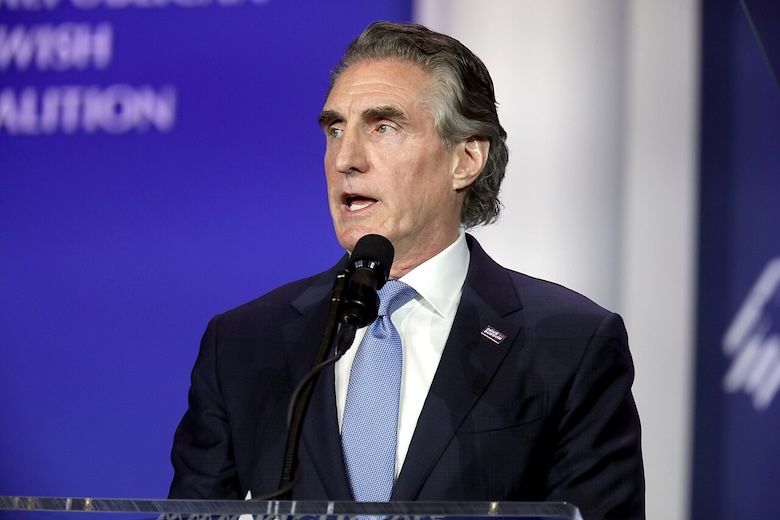
Interior secretary Doug Burgum wants to challenge a federal judge’s decision to temporarily block several agency policies that critics say have been slowing the development of solar and wind projects nationwide.
The battle goes far beyond administrative procedures. It has become part of a larger debate over how the United States should balance energy development, environmental oversight, and political influence. Democrats argue that the DOI’s additional review requirements (including a controversial three-level political approval process for solar and wind permits) have brought many projects to a standstill just as the country is trying to expand its clean energy infrastructure.
Key concerns raised during the hearing included:
New approval requirements that critics say have slowed or halted renewable energy projects.
Growing uncertainty for developers and investors planning long-term solar and wind projects.
During the hearing, Nevada Representative Susie Lee said the policies have effectively stalled 93% of planned new energy capacity in her state. She pointed out that the delays have persisted despite efforts by Nevada officials and former President Donald Trump to help move projects through the approval process.
The consequences could extend well beyond Nevada. According to a study cited in the court ruling, more than 57 gigawatts of planned solar and wind capacity could be delayed or even canceled after 2029. Those projects represent hundreds of millions of dollars already invested, as well as billions more in potential federal tax credits designed to support clean energy growth.
The dispute is also raising concerns on Capitol Hill. Lawmakers from both parties have spent months working on permitting reform aimed at speeding up approvals for major energy projects. However, Burgum’s decision to stand by the DOI policies could make a bipartisan deal harder to reach. Democrats have indicated they are unlikely to support broader permitting reforms if renewable energy projects continue to face significant delays.
What do these delays mean for geothermal energy?
The uncertainty is also affecting other parts of the clean energy sector, including geothermal energy. Often seen as a reliable, low-carbon alternative to fossil fuels, geothermal has gained new attention in recent years thanks to drilling technologies adapted from the oil and gas industry. But like solar and wind developers, geothermal companies depend on federal permits and access to public lands. If permitting processes become more complicated or legal disputes continue to drag on, geothermal projects could face many of the same challenges.
That is a growing concern for an industry widely viewed as one of the most dependable sources of clean energy. Unlike solar and wind power, geothermal can generate electricity around the clock, regardless of weather conditions. However, developing large geothermal projects is a long and expensive process that often requires years of planning, detailed environmental reviews, and substantial upfront investment. When regulatory uncertainty increases, investors can become hesitant to commit funding, especially for projects that may already take a decade or more to complete.
For now, the administration is standing firm on its approach to energy permitting, despite criticism that the policies are slowing the development of new clean energy projects. The legal battle is likely to continue for months, and possibly years, before a final resolution is reached.
Until then, renewable energy developers, lawmakers, and related industries such as geothermal drilling will be left dealing with uncertainty. As the debate plays out in the courts and in Washington, the future pace of clean energy development may depend as much on political decisions and regulatory policies as it does on technological innovation or market demand.
Looking for a reprint of this article?
From high-res PDFs to custom plaques, order your copy today!

John Oldani is an editor, journalist, and reporter with over a decade of experience producing clear, engaging, and well-researched content. He holds a Bachelor of Arts in Journalism from Oakland University, with a focus on financial reporting, editing, and long-form writing. Over the past year, John has specialized in covering the drilling industry, reporting on key developments, policy shifts, and impactful stories shaping the field.
email: johnnyoldaniwords@gmail.com | office: (248) 838-8535