Still Drilling, Still Building
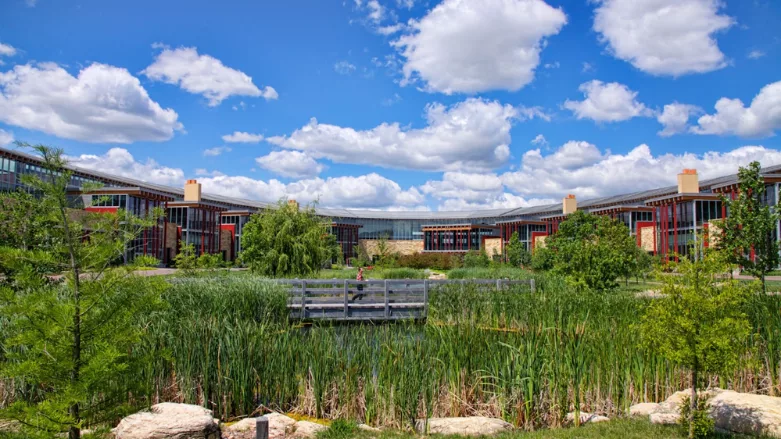
Image courtesy of Epic
A year ago, I walked into NY-GEO feeling energized. Geothermal no longer felt like an outlier technology trying to prove itself. It felt organized, practical, and focused. Less of a rally, more of a working session.
Now, after a full year as editor of The Driller — covering policy swings, market forecasts, workforce shortages, tariff ripple effects, and some of the most ambitious geothermal projects in the country — I returned to NY-GEO with a different lens.
Less wide-eyed. More grounded.
When you spend twelve months talking to drillers, engineers, manufacturers, and regulators, you start to see where the real pressure points live. Incentives matter. Trade policy matters. Supply chains matter. But what matters most, over and over again, is execution.
And execution in this industry begins with boreholes.
Last year, one moment stuck with me: a room full of contractors and drillers being reminded that nothing in geothermal happens until they go into action. After a year of reporting, I can say that wasn’t a motivational line — it was operational reality. District-scale systems, commercial campuses, community loop networks — they all hinge on drilling capacity. Without the boreholes, there is no geothermal.
Coming back this year, that truth felt even clearer. Demand isn’t the big question anymore. Scaling responsibly is.
Workforce conversations have evolved, too. In 2026, the dialogue feels more mature. Training pipelines are improving and standards are tightening. The amount of success stories is growing immensely. And there's more recognition that culture is infrastructure, too.
What I’ve also learned in a year’s time is that regulation and drillers don’t have to sit on opposite sides of the table. The most successful projects I’ve covered are the ones where engineers consult drillers early, where regulators engage before plans are finalized, and where practical field knowledge shapes design decisions. The industry works best when it trusts its experts — especially the ones running the rigs.
Policy, of course, still looms large. Incentives shift. Trade dynamics affect refrigerant pricing and equipment costs. Federal and state energy priorities ebb and flow. But after watching projects move forward through uncertainty, I’m convinced geothermal’s value proposition runs deeper than any single tax credit. When treated like long-term infrastructure — not a trend — it proves its durability.
If there’s one shift I didn’t expect over the past year, it’s the tone. Conversations at NY-GEO 2026 will revolve around financing structures, safety protocols, insurance pressures, apprenticeship programs, and long-term maintenance. That’s not a loss of momentum. It’s a sign of maturity.
Geothermal is no longer trying to prove it belongs in the energy conversation. It’s trying to prove it can scale without losing its center.
NY-GEO still feels like a checkpoint — a place to compare notes, challenge assumptions, and measure progress honestly. But this year, more than anything, it feels like we’re firmly in a build cycle. The projections are big and the ambition is real. Yet the focus has narrowed to what actually moves the industry forward: skilled people, thoughtful design, and holes in the ground done right. The past year has reinforced what I sensed walking out of this conference in 2025: the real story isn’t the forecast. It’s the drillers doing the work to make it possible.
Looking for a reprint of this article?
From high-res PDFs to custom plaques, order your copy today!

John Oldani is an editor, journalist, and reporter with over a decade of experience producing clear, engaging, and well-researched content. He holds a Bachelor of Arts in Journalism from Oakland University, with a focus on financial reporting, editing, and long-form writing. Over the past year, John has specialized in covering the drilling industry, reporting on key developments, policy shifts, and impactful stories shaping the field.
email: johnnyoldaniwords@gmail.com | office: (248) 838-8535

.webp?height=200&t=1779937816&width=200 "Screenshot 2026-05-27 at 11.06.05 PM (2).png")


